By Traveller Type
Rishikesh for Yoga Travelers
The world’s yoga capital — how to plan the perfect yoga trip, from a single class to a month-long training.
By Traveller Type
Rishikesh is the yoga capital of the world — the ultimate destination for a yoga trip. Choose your path: drop-in classes, a retreat, or a teacher training (200/300-hour). Hundreds of schools teach every style; base yourself in Tapovan, come in the cooler months (Sep–Apr), and pair yoga with meditation and Ayurveda. This guide helps you plan the right yoga trip for you — choosing a path, school, base and timing. For the practice itself, see the yoga hub.
The yoga traveler’s ultimate destination
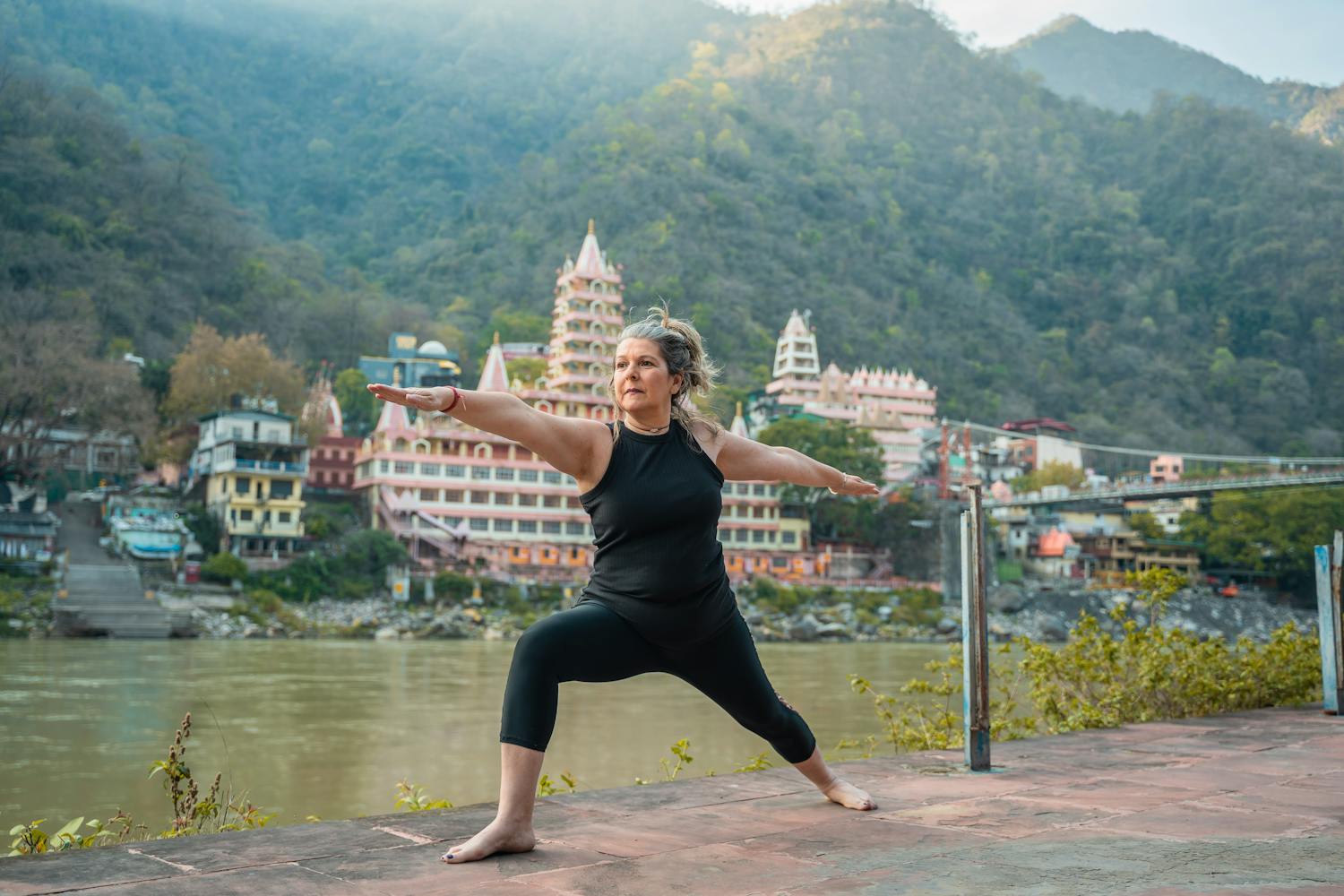
If yoga is your reason to travel, there is no more iconic destination than Rishikesh. Recognised globally as the yoga capital of the world, this town on the Ganga has drawn seekers and teachers for generations, and today hundreds of schools, ashrams and retreats teach every style and level imaginable. Practising here — at the source, by the sacred river, in the foothills of the Himalayas — is a bucket-list experience for yogis worldwide, and the reason the global community gathers each International Day of Yoga.
The beauty of Rishikesh for yoga travelers is the sheer range: you can drop into a single class on a whim, deepen your practice on a week’s retreat, or transform it (and perhaps your career) with a month-long teacher training. Whatever your level or commitment, there’s a path here for you. This persona guide — part of our guides by traveller type — focuses on planning your yoga trip: choosing the right path, school, base and timing. For the practice, styles and courses themselves, lean on the detailed yoga hub.
Your yoga trip at a glance
| Path | Best for | Typical length |
|---|---|---|
| Drop-in classes | Casual practice, sampling styles | Any — pay per class |
| Beginner retreat | First-timers, a gentle reset | 3–7 days |
| 7-day retreat | Deepening practice, a focused week | 7 days |
| 200-hour TTC | Becoming a teacher / deep immersion | ~3–4 weeks |
| 300-hour TTC | Advanced training (RYT-500 path) | ~3–4 weeks |
Decide which path fits your goals and time, and the rest of the planning — school, base, timing — follows. The sections below walk you through each choice.
Choose your yoga path
Drop-in classes
Perfect for casual practice or sampling styles, drop-in classes are offered all over Tapovan for a small fee. Ideal if you want flexibility, are combining yoga with other activities, or aren’t ready to commit to a course. Turn up a little early and try a few teachers to find your fit. See the yoga hub.
Yoga retreats
A retreat bundles accommodation, daily practice, meals and often meditation and workshops into a structured package — the sweet spot for most yoga travelers. Beginner retreats welcome those new to yoga; a focused week deepens an existing practice. It’s immersive without the intensity of a training.
Teacher training (TTC)
The big one: a teacher training is an intensive ~month-long immersion that certifies you to teach (and transforms your own practice). The 200-hour is the foundation; the 300-hour is the advanced path toward RYT-500. Rishikesh is the world’s leading place to train, with many schools certified by Yoga Alliance.
Choosing a school & style
With hundreds of options, choosing well matters more than choosing fast. Key considerations:
- Style — Hatha, Vinyasa, Ashtanga, Kundalini and more; match it to your interest and level.
- Accreditation — for a TTC, confirm Yoga Alliance registration if you want a recognised certificate.
- Teachers — experience and teaching quality matter most; read recent reviews.
- Class size & vibe — intimate vs large; traditional vs modern.
- What’s included — for retreats/TTCs: room, meals, materials, extras.
- Drop in first — if you can, sample a class before committing to a long course.
Our best yoga schools guide covers how to choose, and yoga costs breaks down prices.
Local tip: for a teacher training, arrive a few days early and drop into classes at two or three schools before committing your money and a month of your life. Brochures and websites tell you little; an actual class reveals the teacher, the style and the vibe. The best TTC is the one that feels right in person.
Where to stay for yoga
Most yoga travelers base themselves in Tapovan — the dense heart of the yoga scene, with the most schools, healthy cafes and like-minded company on your doorstep. If you’re on a retreat or TTC, accommodation is usually included on or near campus (see yoga retreat stays). For drop-in practice, a guesthouse or monthly room near the schools is ideal. Laxman Jhula and the ashrams around Ram Jhula are also good yoga bases. See the where to stay hub.
How long should a yoga trip be?
Match your stay to your chosen path:
- A few days — drop-in classes alongside sightseeing and adventure
- 1 week — a 7-day retreat, the popular sweet spot for real benefits
- 2–3 weeks — a longer retreat or deep self-directed practice
- 3–4 weeks — a full teacher training
- 1 month+ — a long stay to study, practise and live the yogic lifestyle
Many travelers underestimate how much they’ll want to stay — build in buffer time, as a planned week often becomes a month here.
Best time for a yoga trip
Yoga runs year-round, but September to April offers the most pleasant practice weather — cool mornings, comfortable days. Spring and autumn are ideal. Summer is hot (early-morning practice helps); the monsoon is lush, quieter and cheaper, and indoor practice continues regardless. TTCs and retreats run on fixed start dates throughout the year, so check your school’s calendar. See best time to visit and weather.
What to bring
Pack light and practical for a yoga trip:
- 2–3 sets of quick-dry yoga clothes — modest enough for the town too
- Your own mat (optional) — schools provide them, but some prefer their own
- A warm layer — for cool morning practice and meditation
- A notebook — essential for trainings and philosophy
- A reusable water bottle, modest cover-ups & basics — see the packing list
You can buy yoga clothes, mats and props cheaply on arrival, so don’t overpack.
Combine yoga with wellness & adventure
A yoga trip needn’t be only yoga. Rishikesh lets you weave in:
- Meditation & sound healing — natural companions to practice
- Ayurveda — massage, treatments and eating for your constitution
- Healthy food — sattvic and vegan cuisine to support your practice
- Gentle adventure — a rafting day or trek on a rest day
- The aarti & temples — the spiritual context that deepens it all
Cost & practicalities
Yoga in Rishikesh is excellent value: drop-in classes a few hundred rupees, 7-day retreats and 200-hour TTCs far cheaper than in the West (see yoga costs and the budget guide). On practicalities, most visitors enter on a tourist e-Visa, which covers retreats and short courses — apply via indianvisaonline.gov.in and check current rules for longer or formal study. Sort a local SIM, carry cash, and read the safety guide for health and water tips.
Tips for first-time yoga travelers
- Don’t over-commit on day one — sample classes before booking a long course.
- You don’t need to be flexible or experienced — beginners are welcome everywhere.
- Match the style to you — dynamic Ashtanga vs gentle Hatha are very different.
- Eat sattvic & rest — the food and the early nights are part of the practice.
- Embrace the philosophy & pranayama, not just asana — it’s where the depth is.
- Stay open — a yoga trip here is often as much inner as physical.
Related guides
- Yoga in Rishikesh — the full practice hub
- Teacher training, 7-day retreats & beginner retreats
- Best yoga schools & yoga costs
- Yoga retreat stays & Tapovan — where to base
- Meditation & Ayurveda — deepen the wellness side
- First-time visitors & trip-planning hub
A sample yoga trip
Not sure how to structure your time? Here are two simple templates:
- The yoga taster (1 week): arrive, settle in Tapovan, drop into classes at a few schools, add meditation and an Ayurvedic massage, a rafting day, and the aarti each evening.
- The deep dive (1 month): a 200-hour teacher training or extended retreat as the core, with rest days for the river, temples, treks and the wider town.
Whichever you choose, front-load the practice and leave space to absorb it — the rest of Rishikesh deepens the experience rather than distracting from it.
Why practise in Rishikesh
You can do yoga anywhere — so why travel to Rishikesh for it? Because practising at the source changes the experience. Here, yoga isn’t a fitness class slotted into a busy life; it’s woven into the fabric of the town — the sunrise practice, the sattvic food, the river, the chanting, the ashrams, the company of fellow practitioners from around the world. That total immersion accelerates your progress and deepens your understanding in a way a weekly studio class at home simply can’t. People routinely describe a yoga trip here as transformative, not just for their asana but for how they live.
There’s also the lineage and authenticity: this is where much of modern yoga was carried to the world, taught by experienced Indian teachers steeped in the tradition. Whether you come to deepen a practice, become a teacher, or simply experience yoga in its spiritual home, doing it in Rishikesh adds a depth and meaning that stays with you long after you leave.
The bottom line for yoga travelers
For anyone who loves yoga, Rishikesh is the ultimate trip — the world’s yoga capital, with a path for every level from a single drop-in class to a life-changing teacher training, all at remarkable value and in a beautiful, sacred setting. Decide your path, choose a school carefully (drop in first if you can), base yourself in Tapovan, come in the cooler months, and weave in meditation, Ayurveda and the spiritual life of the town to round it out.
Do that, and a yoga trip to Rishikesh becomes far more than a holiday — it’s an immersion in the practice at its source that many travelers call a turning point. Start at the yoga hub to choose your path, browse the schools and stays, and plan the trip from the trip-planning hub.
Yoga styles you’ll find in Rishikesh
Part of choosing your trip is knowing what’s on offer. Rishikesh teaches the full spectrum of styles, so you can stick with what you know or try something new:
- Hatha — the classical, foundational style; great for beginners and alignment
- Vinyasa / Flow — dynamic, breath-linked movement
- Ashtanga — a vigorous, structured traditional series
- Kundalini — energy, breathwork and kriyas
- Iyengar — precise, prop-supported alignment
- Yin & restorative — slow, deep, calming practice
- Pranayama & meditation — breath and mind work, central to the tradition here
Most schools teach Hatha and Vinyasa as their core, with others available. If you’re unsure, start with Hatha to build a foundation, then branch out — the yoga hub explains the styles in depth.
Yoga travelers: who comes, and why
Rishikesh draws an extraordinary mix of yoga travelers, and almost everyone finds their place:
- Complete beginners — drawn to try yoga at its source, welcomed by beginner-friendly schools.
- Dedicated practitioners — deepening their practice on retreats and intensives.
- Aspiring teachers — here for the world’s most respected teacher trainings.
- Working teachers — topping up with a 300-hour or specialist course.
- Wellness seekers — combining yoga with Ayurveda, meditation and a reset.
- Curious travelers — adding a class or two to a broader Rishikesh trip.
Whatever brings you, you’ll be in good company — and you’ll likely leave with a deeper practice, new friends from around the world, and a connection to the place that draws many people back year after year. That shared devotion to the practice is a big part of what makes a Rishikesh yoga trip so special.
Avoiding common yoga-trip mistakes
A few missteps trip up yoga travelers — all easy to sidestep:
- Booking a long course sight-unseen. Sample drop-in classes first; the right school feels right in person.
- Choosing on price alone. For a training, teaching quality and accreditation matter far more than saving a little.
- Picking the wrong style. A dynamic Ashtanga course and a gentle Hatha retreat are very different — know what you’re signing up for.
- Over-scheduling. Intensive practice is tiring; build in rest, good food and downtime.
- Ignoring the credentials check. Confirm Yoga Alliance registration if your certificate must be recognised.
- Coming for too short a time. Yoga here rewards immersion; give it more than a couple of days.
Avoid those, choose thoughtfully, and your yoga trip will deliver exactly what you came for — and probably more. When you’re ready, the yoga hub helps you choose your path and school, and the trip-planning hub handles the logistics. Namaste — and welcome to the home of yoga.
For yoga travelers, Rishikesh isn’t just another place to practise — it’s a kind of homecoming. Whether you stay a week or a month, leave with a certificate or simply a calmer mind, practising in the town where so much of modern yoga began is an experience that tends to stay with you for life, and to call you back.
Frequently asked questions
Why is Rishikesh called the yoga capital of the world?
Rishikesh has drawn yogis, gurus and seekers for generations and is home to hundreds of yoga schools, ashrams and retreats teaching every style and level. Its setting on the sacred Ganga in the Himalayan foothills, deep yogic heritage and global teacher-training scene have earned it the title.
What yoga options are there for travelers in Rishikesh?
You can take pay-as-you-go drop-in classes, join a structured retreat from a few days to a couple of weeks, or do an intensive teacher training of around a month. Beginner retreats welcome newcomers, while 200-hour and 300-hour trainings certify you to teach.
Do I need to be experienced to do yoga in Rishikesh?
No. Beginners are welcome everywhere, and you do not need to be flexible or fit to start. Many retreats and classes are designed for newcomers, and beginner teacher trainings exist too. Just tell the school your level so they can place you appropriately.
How long should a yoga trip to Rishikesh be?
It depends on your path: a few days for drop-in classes, a week for a retreat (the popular sweet spot), two to three weeks for deeper practice, and three to four weeks for a teacher training. Many travelers extend, so build in buffer time.
How do I choose a yoga school in Rishikesh?
Match the style to your interest and level, check teacher experience and recent reviews, and for a teacher training confirm Yoga Alliance registration if you want a recognised certificate. Where possible, drop into a class before committing to a long course. See our best yoga schools guide.
What is the difference between a yoga retreat and a teacher training?
A retreat is a relaxing, structured immersion in practice, meals and wellness over a few days to a couple of weeks. A teacher training is an intensive, roughly month-long course that certifies you to teach and transforms your own practice. Choose a retreat to deepen, a training to qualify.
When is the best time for a yoga trip to Rishikesh?
September to April offers the most pleasant practice weather, with cool mornings and comfortable days, and spring and autumn are ideal. Summer is hot, so practise early, and the monsoon is lush and quieter. Retreats and trainings run on fixed dates year-round, so check school calendars.
Where should yoga travelers stay in Rishikesh?
Most base themselves in Tapovan, the heart of the yoga scene with the most schools, healthy cafes and community. Retreats and trainings usually include accommodation on or near campus. For drop-in practice, a guesthouse or monthly room near the schools is ideal.
How much does yoga cost in Rishikesh?
It is excellent value. Drop-in classes cost a few hundred rupees, while 7-day retreats and 200-hour teacher trainings are far cheaper than in the West, typically a fraction of Western prices including accommodation and meals. See our yoga costs guide for detail.
What should I pack for a yoga trip?
Bring two or three sets of quick-dry, modest yoga clothes, a warm layer for morning practice, a notebook for trainings, and a reusable water bottle. Your own mat is optional as schools provide them. You can buy yoga clothes, mats and props cheaply on arrival, so pack light.
Can I combine yoga with other activities?
Yes, easily. Rishikesh lets you weave in meditation, sound healing and Ayurveda, healthy food, gentle adventure like rafting or trekking on rest days, and the spiritual context of the aarti and temples. Many yoga travelers build a balanced trip around their practice.
Do I need a special visa for a yoga course?
Most visitors enter on a tourist e-Visa, which covers retreats and short courses. For longer or formal study, check the current rules, as a different visa category may apply. Always confirm requirements on the official government portal and with your chosen school before booking.
Plan your yoga journey
Explore teacher trainings and retreats, compare schools, or visit the yoga hub.