Food & Cafes
Local Food in Rishikesh
Thalis, street snacks, Garhwali specialities and proper masala chai — the authentic, affordable side of eating in Rishikesh.
Quick answer
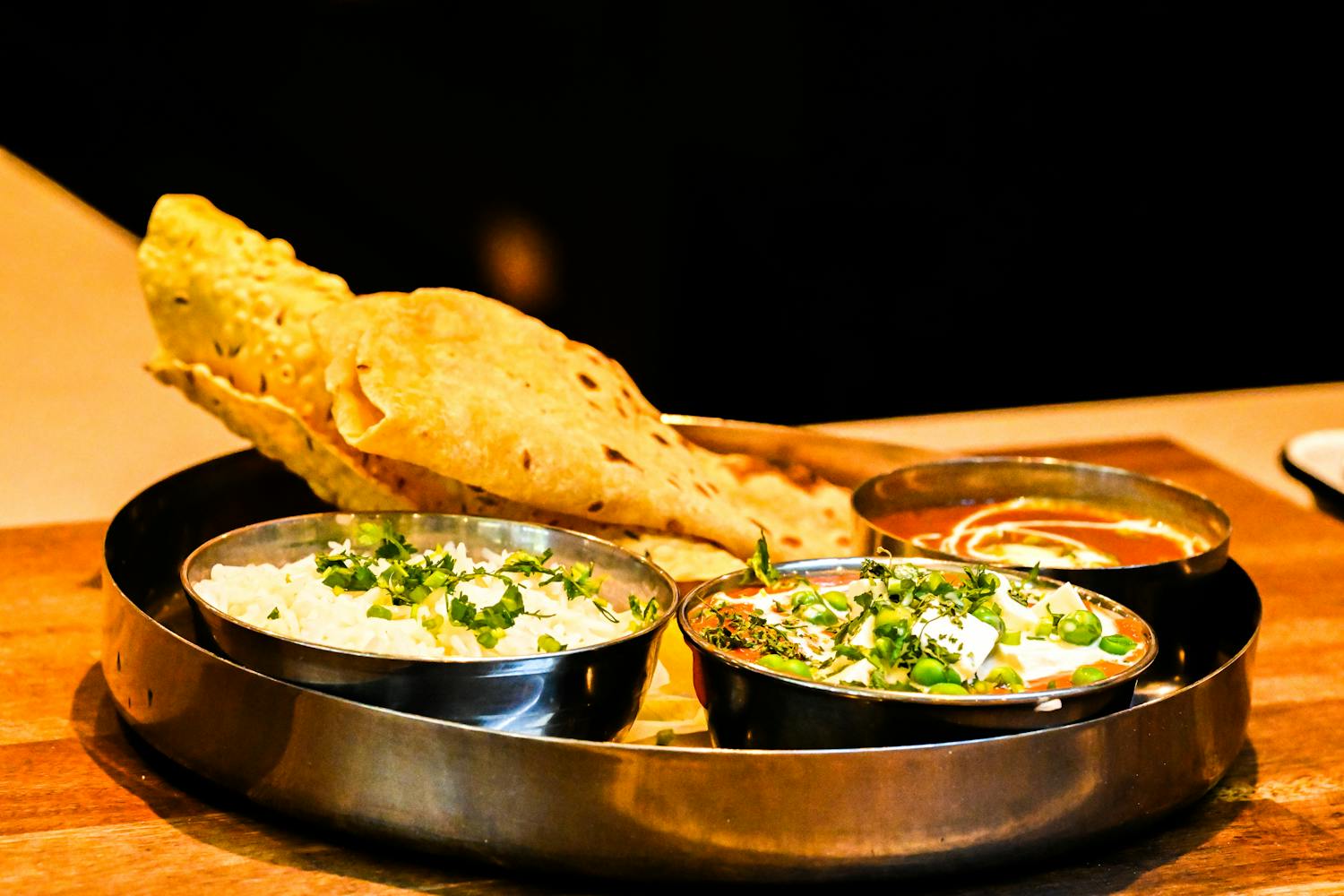
Beyond the international cafes, Rishikesh has wonderful local Indian food — all vegetarian, fresh and very cheap. Look for thalis (a complete platter, ₹80–250), North Indian classics like chole bhature and paneer dishes, Garhwali hill specialities, street snacks (samosas, pakoras, chaat) and hot sweets, washed down with masala chai. The best spots are local dhabas, the bazaar near Triveni Ghat, the famous Chotiwala near Ram Jhula, and ashram canteens. This guide covers what to eat, where and how to do it safely.
The local food scene in Rishikesh
It’s easy to spend a whole trip in Rishikesh’s rooftop cafes and never taste the food the town actually runs on — which would be a shame, because the local Indian fare here is fresh, flavourful and absurdly cheap. As a holy town, Rishikesh is entirely vegetarian (and alcohol-free), but that’s no limitation: North Indian vegetarian cooking is one of the world’s great cuisines, and you’ll eat richly on dals, curries, breads, rice, snacks and sweets without ever missing meat.
Layered on top of the familiar North Indian dishes is the food of the Garhwal Himalaya, the mountain region Rishikesh sits at the edge of — hearty, grain- and lentil-based hill cooking that you can seek out if you want something distinctive. The state tourism board at Uttarakhand Tourism celebrates this regional cuisine, and trying it connects you to the place in a way a smoothie bowl never will. This guide is your map to the authentic, affordable, local side of eating in Rishikesh — a companion to the food & cafes hub.
Local dishes at a glance
| Dish | What it is | Rough price |
|---|---|---|
| Veg thali | A complete platter: dal, sabzi, rice, roti, salad, pickle | ₹80–250 |
| Chole bhature | Spiced chickpeas with fluffy fried bread | ₹60–120 |
| Aloo puri | Potato curry with puffed fried bread — a pilgrim breakfast | ₹50–100 |
| Paneer dishes | Cottage-cheese curries (butter masala, palak, etc.) | ₹120–250 |
| Chaat & pakora | Tangy street snacks & fritters | ₹30–100 |
| Masala chai | Spiced milk tea — the national ritual | ₹10–30 |
Prices are typical 2026 ranges — a full, satisfying local meal often costs less than a single coffee in a rooftop cafe.
North Indian classics to try
These familiar, beloved dishes are everywhere in Rishikesh and a perfect introduction to vegetarian Indian cooking:
- Chole bhature — spiced chickpea curry with pillowy fried bread; a filling favourite.
- Paneer dishes — paneer butter masala, palak (spinach) paneer, kadai paneer; rich and satisfying.
- Dal makhani & dal tadka — creamy black lentils or tempered yellow dal, comfort in a bowl.
- Aloo gobi, mixed veg, baingan bharta — everyday vegetable curries done well.
- Stuffed parathas — griddled breads filled with potato, paneer or cauliflower, with curd and pickle.
- Biryani & pulao — fragrant rice dishes, vegetarian here but full of flavour.
Order a couple of these with rice, roti and a dal to share, and you have a feast. Or simply order a thali and get a taste of several at once.
Garhwali & Himalayan specialities
For something genuinely regional, seek out the food of the surrounding Garhwal hills — simpler, grain-and-lentil based mountain cooking you won’t find on a generic menu:
- Aloo ke gutke — spiced sauteed potatoes, a hill staple
- Kafuli — a thick green curry of spinach and fenugreek leaves
- Chainsoo — a hearty roasted black-gram (urad dal) dish
- Phaanu / thichwani — lentil and tuber preparations from the hills
- Mandua (ragi) roti — nutritious finger-millet flatbread
- Bhang ki chutney — a tangy hemp-seed chutney (a regional curiosity)
These aren’t on every menu, so ask at local dhabas or look for places advertising Garhwali or Pahari food — it’s a delicious window into the mountains beyond the river.
Street food & snacks
Rishikesh’s streets and bazaars serve up cheap, fresh snacks all day. The best are made to order in front of you:
- Samosas & kachoris — crisp fried pastries with spiced fillings
- Pakoras — vegetable fritters, the perfect monsoon snack with chai
- Chaat — tangy, crunchy, sweet-sour snacks like aloo tikki and papdi chaat
- Tikki & chana — potato patties and spiced chickpeas
- Fresh fruit & coconut — from carts along the lanes
- Roasted corn & peanuts — simple roadside treats
Local tip: for street food, follow the crowds. A stall with a steady line of locals is making fresh, popular, high-turnover food — the single best sign of both flavour and safety. An empty stall with food sitting out is the one to skip.
Sweets & desserts
Indians love sweets, and Rishikesh’s sweet shops and stalls won’t disappoint. Try hot jalebis (crisp syrup spirals), gulab jamun (syrup-soaked dumplings), rabri and kheer (thickened-milk and rice puddings), barfi and laddoo (milk and gram-flour sweets), and seasonal treats. Many double as prasad — sweets blessed and offered at temples. The sweet shops near Triveni Ghat and the main town are the places to indulge.
Chai culture
No guide to local food is complete without chai. Masala chai — black tea simmered with milk, sugar and spices like cardamom, ginger and cloves — is the rhythm of the Indian day, and Rishikesh’s roadside chai stalls serve it beautifully for a few rupees a cup. Pausing for chai between activities, or with a samosa on a rainy afternoon, is one of the simplest and most authentic pleasures of the town. Ginger and tulsi (holy basil) teas are common too, and pair naturally with the wellness scene. For coffee, see coffee shops.
Where to eat local in Rishikesh
The best local food is found away from the rooftop-cafe strip, in the places locals and pilgrims actually eat. Use the area guides to orient, and head for:
- Local dhabas & bhojanalayas — simple eateries serving fresh thalis and curries; cheap and authentic.
- Chotiwala (near Ram Jhula) — a famous, long-running thali institution, a Rishikesh rite of passage.
- Ashram canteens — several ashrams serve simple sattvic meals, sometimes open to visitors for a small fee or donation.
- Triveni Ghat & main-town bazaar — the most local scene, with chaat, sweets and street snacks among everyday shops.
- Roadside chai & snack stalls — dotted everywhere; the heart of the street-food experience.
Don’t judge by decor — some of the best food comes from the plainest rooms. A busy local eatery is a far better bet than a fancy-looking but empty one.
The thali: the perfect local meal
If you try one thing, make it a thali — a round platter holding small bowls of dal, vegetable curry, rice, freshly made rotis, salad, curd, pickle and often a sweet. It’s balanced, generous, usually unlimited (servers top up your bowls until you wave them off), and superb value at ₹80–250. A thali is the ideal introduction to local food: you taste several dishes at once, you eat as much as you like, and you experience how Indians actually eat — a little of everything, scooped up with bread or mixed with rice. Order one on your first day and you’ll understand the local food scene in a single sitting.
Eating local safely
Local and street food in Rishikesh is generally safe and delicious, but a little care helps your stomach adjust, especially early on. India’s food sector is regulated by the Food Safety and Standards Authority of India (fssai.gov.in), and the same simple habits that work across India work here:
- Eat freshly cooked, hot food — the golden rule; avoid anything sitting out.
- Choose busy stalls & dhabas — high turnover means fresh food.
- Drink only filtered or bottled water — and be cautious with ice and raw salads at first.
- Peel fruit yourself or stick to fruit you can peel.
- Ease in gradually — give your system a few days before diving into the spiciest street food.
- Carry rehydration salts — just in case; see the safety guide and packing list.
Most travellers eat local food happily throughout their stay. India’s tourism portal, Incredible India, celebrates the country’s regional cuisines, and foreign visitors usually arrive on an electronic visa via the official portal at indianvisaonline.gov.in.
Prices & value
Local food is the cheapest way to eat well in Rishikesh by far. A thali runs ₹80–250, street snacks ₹30–100, chai ₹10–30, and even a generous dhaba meal for two rarely tops ₹400. Eating local a few times a day keeps your food budget tiny — see the budget guide for how this fits a daily spend. Carry small cash, as local spots and stalls are usually cash-only.
Tips for ordering local food
- Say your spice level — ask for “less spicy” if you’re unsure; most places happily adjust.
- Eat with your right hand (or ask for a spoon) — bread is for scooping curry.
- Share dishes — order a few curries, breads and a dal between you, family-style.
- Try the thali for variety, then branch out to specific dishes you liked.
- Ask locals or your guesthouse for their favourite dhaba — the best tips are word of mouth.
- Accept prasad graciously if offered at a temple — with your right hand.
Related guides
- Food & cafes in Rishikesh — the full eating hub
- Best cafes & best breakfast — the international scene
- Healthy food & vegan food — lighter eating
- Coffee shops & riverside restaurants — more ways to eat
- Ram Jhula & Tapovan — where to find it
- Budget guide & safety guide — eating cheap & well
A day of eating local
To taste the real food culture of Rishikesh, weave the local scene through your day:
- Breakfast — aloo puri or chole bhature at a busy local spot, with a glass of chai
- Mid-morning — a roadside masala chai and a few biscuits or a samosa
- Lunch — an unlimited veg thali at a dhaba or Chotiwala — the day’s main feast
- Afternoon snack — chaat or hot pakoras from the bazaar, especially in the rains
- Sweet stop — fresh jalebis or a piece of barfi from a sweet shop
- Dinner — paneer or dal with rice and roti, or a simple ashram-style meal
Done this way, you’ll eat superbly for a few hundred rupees a day and taste the town as locals do — a world away from, and a perfect complement to, the rooftop cafes.
Why eat local
It’s tempting to stay in the comfortable bubble of international cafes, but eating local is one of the easiest and most rewarding ways to connect with Rishikesh. A few reasons to make the effort:
- Authenticity — you taste the food the town actually lives on, rooted in this place and region.
- Value — it’s a fraction of cafe prices, stretching your budget for experiences.
- Variety — a thali alone offers more flavours than most single cafe dishes.
- Connection — sharing a dhaba bench or accepting prasad links you to everyday and spiritual life.
- Discovery — Garhwali specialities and street snacks you simply won’t find at home.
You don’t have to choose between the two worlds — the best approach is to enjoy both, balancing a rooftop coffee with a street-side thali, and getting the full flavour of Rishikesh in the process.
The bottom line on local food
Beneath Rishikesh’s famous cafe scene lies an authentic, affordable and delicious world of local Indian and Garhwali food — thalis, curries, street snacks, sweets and endless cups of masala chai, all vegetarian and all bargain-priced. Seek out the busy dhabas, try a thali on day one, follow the crowds to the best street stalls, sample a regional hill dish, and pause often for chai. Eat fresh and hot, drink filtered water, and your stomach will thank you while your taste buds celebrate.
It’s the side of Rishikesh eating that connects you most directly to the place — and it costs next to nothing. Pair this with the rest of the food & cafes guides, from breakfast to riverside dining, and plan the practical side of your trip from the trip-planning hub.
Local food, festivals & the sattvic tradition
Food in Rishikesh is bound up with its spiritual life, which shapes both what’s served and how. Much of the cooking follows the sattvic principles valued by yogis and ashrams — fresh, vegetarian, lightly spiced food without onion or garlic in stricter kitchens, intended to keep the body and mind calm and clear. Eating this way for a few days, especially alongside yoga or an ashram stay, is part of the Rishikesh experience and noticeably gentle on the system.
Festivals add another dimension. Around major Hindu festivals, special sweets and dishes appear, temples distribute prasad (blessed food) freely, and the bazaars buzz with seasonal treats — a wonderful, if crowded, time to eat your way through local culture. Even outside festivals, accepting prasad at a temple or sharing a simple meal in an ashram hall connects food to the deeper rhythm of the town. To taste this side fully, time part of your trip with the festival calendar and keep an open, respectful curiosity — the food will repay it many times over.
In the end, the local food of Rishikesh — humble, fresh, vegetarian and steeped in tradition — is as much a part of the town’s character as its temples and its river, and getting to know it is one of the most satisfying things you can do here.
Frequently asked questions
What local food should I try in Rishikesh?
Try a vegetarian thali for variety, North Indian classics like chole bhature and paneer dishes, Garhwali hill specialities such as aloo ke gutke and kafuli, street snacks like samosas, pakoras and chaat, and sweets like jalebi and gulab jamun, all washed down with masala chai.
Is Rishikesh food all vegetarian?
Yes. As a holy town, Rishikesh is almost entirely vegetarian and alcohol-free. North Indian vegetarian cooking is rich and varied, so you eat very well on dals, curries, paneer, breads, rice, snacks and sweets without any meat. Eggs are limited and meat is not served in most of the town.
What is a thali?
A thali is a complete meal served on a round platter with small bowls of dal, vegetable curry, rice, freshly made rotis, salad, curd, pickle and often a sweet. It is usually unlimited, with servers topping up your bowls, balanced and great value at 80 to 250 rupees, and the best introduction to local food.
What is Garhwali food?
Garhwali food is the regional cuisine of the surrounding Garhwal Himalaya, based on grains and lentils. Dishes include aloo ke gutke, kafuli, chainsoo, phaanu and mandua (finger-millet) roti. It is simpler and heartier than typical restaurant fare, and worth seeking out at local dhabas for an authentic taste of the hills.
Where can I eat local food in Rishikesh?
Head for local dhabas and bhojanalayas, the famous Chotiwala near Ram Jhula, ashram canteens serving sattvic meals, and the bazaar and stalls around Triveni Ghat and the main town. The best local food is usually away from the rooftop-cafe strip, in plainer but busier spots.
Is street food safe to eat in Rishikesh?
Generally yes, if you choose busy stalls with high turnover and eat freshly cooked hot food. Follow the crowds, drink only filtered or bottled water, be cautious with ice and raw salads early on, and ease in gradually. These simple habits keep most travellers well throughout their stay.
How much does local food cost?
Local food is very cheap. A thali costs 80 to 250 rupees, street snacks 30 to 100, and chai 10 to 30. A generous dhaba meal for two rarely tops 400 rupees, far less than the rooftop cafes. Carry small cash, as local spots and stalls are usually cash-only.
What is masala chai?
Masala chai is black tea simmered with milk, sugar and spices such as cardamom, ginger and cloves. It is the everyday ritual drink of India, served at roadside stalls across Rishikesh for a few rupees a cup, and pausing for chai is one of the simplest, most authentic local pleasures.
Can I find Garhwali food easily?
Not on every menu, as most tourist cafes serve generic Indian and international dishes. Look for local dhabas or places advertising Garhwali or Pahari food, and ask locals for recommendations. It takes a little seeking out, but the regional hill dishes are a delicious reward.
What sweets should I try in Rishikesh?
Try hot jalebis, gulab jamun, rabri and kheer (milk and rice puddings), and barfi and laddoo. Many are also offered as prasad, blessed sweets, at temples. The sweet shops near Triveni Ghat and the main town are the best places to indulge.
How spicy is local food in Rishikesh?
It varies, and most places will adjust to your taste if you ask for less spicy. Much vegetarian food is flavourful rather than fiery, but some dishes and street snacks pack heat. Tell the cook your preference, ease in gradually, and keep curd or a sweet lassi handy to cool things down.
Should I eat at ashram canteens?
If you can, yes. Several ashrams serve simple, sattvic vegetarian meals, sometimes open to visitors for a small fee or donation. The food is wholesome and inexpensive, and eating in an ashram dining hall is a quietly memorable, authentic experience of Rishikesh’s spiritual food culture.
Taste the real Rishikesh
Balance it with healthy food, find a riverside table, or browse the full food & cafes hub.