Adventure
Bungee Jumping in Rishikesh
India’s highest fixed-platform jump — 83 metres of pure free-fall over a Himalayan gorge.
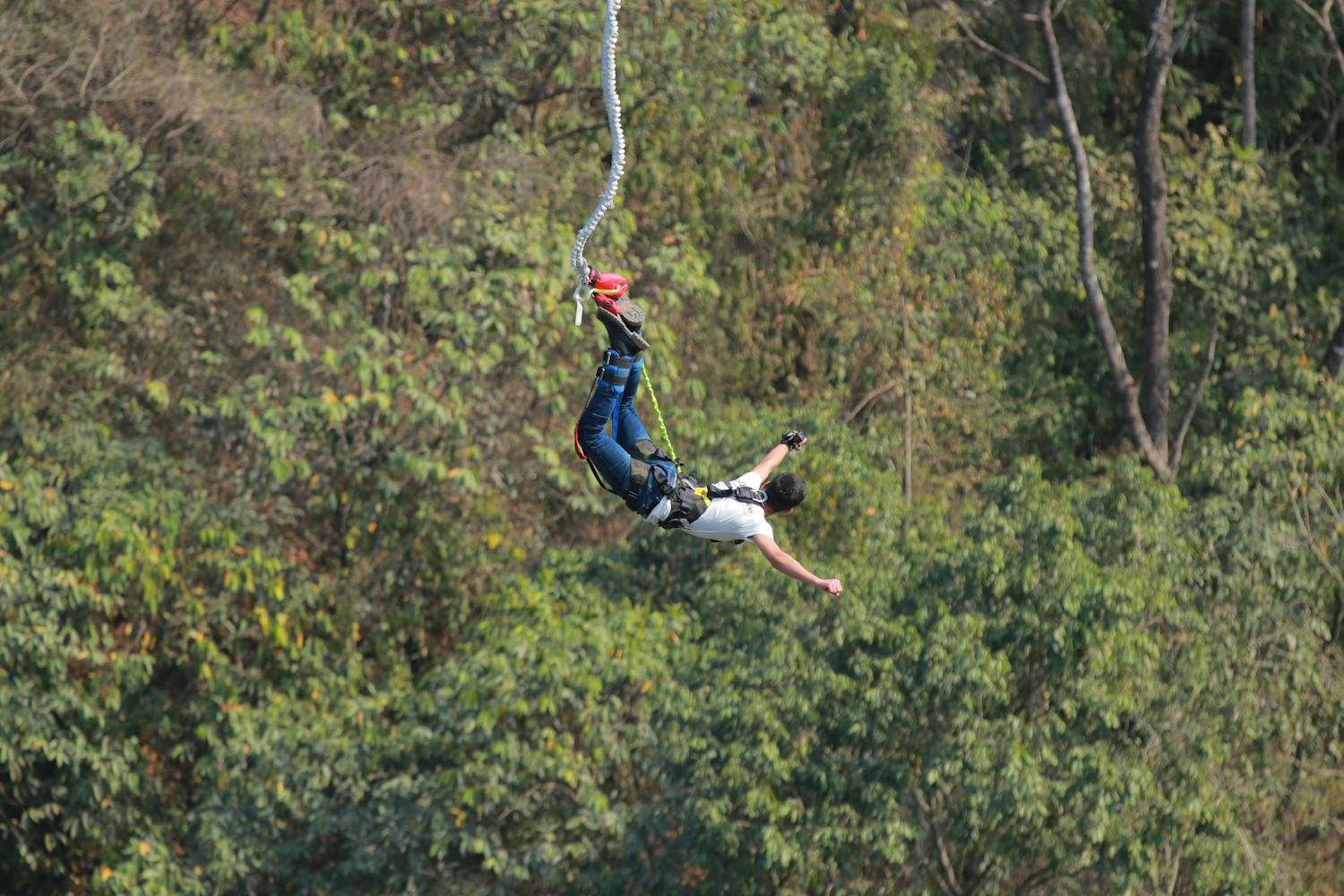
If rafting is Rishikesh’s most popular adventure, bungee jumping is its most adrenaline-charged. Rishikesh is home to India’s highest fixed-platform bungee jump — a 83-metre leap from a cantilever platform over a rocky gorge, designed and operated to international standards. It is the bucket-list jump that draws thrill-seekers from across the country. This guide covers the experience, the exact height and cost, the eligibility limits, the other jumps and swings on offer, and — most importantly — how safe it really is and how to prepare.
Quick answer: Rishikesh has India’s highest fixed-platform bungee at 83 metres, run to international safety standards with imported equipment and trained jump masters. It costs around ₹3,500–₹4,000 per jump. Requirements: roughly age 12+ (under 18 with consent), weight ~40–110kg, and no disqualifying medical conditions. There is also a giant swing and a flying fox/zipline at the same site. Located at Mohan Chatti, about an hour from town. Book ahead in peak season. Open most of the year except heavy monsoon days.
India’s highest bungee: the basics
Rishikesh’s signature jump is an 83-metre leap from a fixed cantilever platform built out over a seasonal river and rocky gorge near the village of Mohan Chatti, roughly an hour from the main town. It is widely billed as India’s highest fixed-platform bungee (as opposed to crane or bridge jumps), and it was set up by experienced operators using equipment and protocols modelled on international bungee standards. The platform itself is an engineering feature — a steel cantilever reaching out over the drop so you fall into open air, not alongside a structure.
For most jumpers the appeal is simple: it is the real thing, done properly, in a spectacular Himalayan setting — a genuine bucket-list tick that also happens to be one of the most photogenic adventures in Rishikesh.
What the experience is actually like
From arrival to the leap, here is how a jump unfolds:
- Check-in & weigh-in: you register, are weighed (your weight sets the cord and harness setup), and get a wristband.
- Briefing & harness: trained staff fit your full-body harness and ankle attachment and explain exactly what happens.
- The walk out: you walk onto the cantilever platform — for many, the most nerve-wracking part is looking down.
- The countdown: the jump master positions you at the edge, counts down, and you leap — arms wide, into open air.
- The fall & rebound: a few seconds of genuine free-fall, then the cord catches and bounces you back up, several times, before you settle.
- The recovery: you are lowered to a safe point and unclipped, usually buzzing with adrenaline.
The whole thing — fall, rebounds and recovery — is over in a couple of minutes, but the rush lasts far longer. Most people describe the moment of stepping off as the hardest, and the float back up as pure elation.
💡 Tip: Do not look down for too long on the platform — it feeds the fear. Listen to your jump master, commit on the countdown, and go. Hesitation makes it harder, not safer; the equipment is the same whether you jump on “three” or stall.
Overcoming the fear
The single biggest barrier to bungee jumping is not physical — it is the moment of voluntarily stepping off a high platform, which every instinct in your body screams against. That fear is completely normal and, importantly, it is not information about danger; it is just your nervous system reacting to height. Understanding that distinction is half the battle.
What helps in practice: keep your time on the edge short — the longer you stand there debating, the louder the fear gets, so commit to going on the jump master’s countdown. Focus on a point on the horizon rather than straight down. Breathe out as you step off rather than holding your breath. And remember that the hardest part is over in the first second — once you are falling, instinctive panic flips almost instantly into exhilaration. Nearly everyone who hesitates and then jumps says the same thing at the bottom: that the build-up was far worse than the jump itself.
💡 Tip: Do not psych yourself out by watching a dozen other people jump first. If you know you want to do it, get harnessed and go early — anticipation is the real enemy, not the leap.
Cost & what is included
- Bungee jump (83m): ~₹3,500–₹4,000 per person
- Giant swing: ~₹3,500–₹4,000
- Flying fox / zipline: ~₹2,000–₹2,500
- Combo packages (e.g. bungee + swing) often offer a small saving
The price usually includes the jump, all safety equipment, and a certificate of completion. Photos and video are typically extra (and worth it — you cannot take your own device on the jump). Prices are fairly fixed at the official site, unlike the negotiable street pricing of rafting. See our adventure hub and budget guide to plan overall spend.
Eligibility: age, weight & health
Bungee has stricter requirements than most Rishikesh adventures, for obvious safety reasons. Typical limits (confirm current rules with the operator):
- Age: usually 12+ (minors require par/guardian consent; some activities 18+).
- Weight: roughly 40kg minimum to about 110kg maximum — weight determines the cord setup, so it is checked precisely.
- Health exclusions: heart conditions, high or low blood pressure, epilepsy, recent fractures or surgery, neurological/spinal issues, and pregnancy generally rule out jumping.
- Influence: no alcohol or drugs beforehand.
- Honesty matters: declare conditions truthfully — the limits exist to keep you safe, not to inconvenience you.
💡 Tip: If you are close to the weight limits or have any health question, message the operator before travelling out — it is an hour each way, and you do not want to be turned away at the platform.
Is bungee jumping in Rishikesh safe?
Bungee jumping looks terrifying but, done by a professional operation, is statistically very safe — the entire activity is engineered around redundancy. Rishikesh’s main site was established with international expertise and uses imported cords and harnesses, trained jump masters, and systematic equipment checks. Reassuringly:
- Every jump uses a full-body harness in addition to the ankle attachment — a key safety redundancy.
- Equipment is logged and inspected, and cords are retired on schedule based on jump counts — the same disciplined approach to gear lifecycle promoted by international bodies such as the British Elastic Rope Sports Association.
- Your weight is measured and the system adjusted for each jumper.
- Trained jump masters run every jump and have the final say.
- The fear is psychological, not a sign of danger — the body’s alarm at stepping off a height is natural, even when you are objectively safe.
That said, it is an extreme activity: follow every instruction, be truthful about your health, and never jump anywhere unofficial. For broader guidance see our Rishikesh safety guide.
Other jumps & swings at the site
The giant swing
Often considered scarier than the bungee: instead of falling straight down, you free-fall and then swing in a huge pendulum arc across the gorge. Many adrenaline junkies rate it the bigger thrill of the two.
Flying fox / zipline
A high-speed zipline across the valley — the gentlest of the three, and a good option for those who want the views and a rush without the free-fall. Covered more in our ziplining guide.
Doing more than one? Combo packages exist, and many people pair the bungee with the giant swing for the full experience.
Bungee vs giant swing vs zipline: which to pick
All three run from the same adrenaline park, but they deliver very different sensations. If you are choosing one (or ordering them), here is how they compare:
| Activity | Sensation | Fear factor | Best for |
|---|---|---|---|
| Bungee (83m) | Straight vertical free-fall & rebound | High | The classic bucket-list leap |
| Giant swing | Free-fall then huge pendulum arc | Highest (per many jumpers) | Those who want maximum intensity |
| Flying fox / zipline | Fast glide across the valley | Low–moderate | Views & a rush without free-fall |
A common strategy: if you only do one, do the bungee for the bragging rights; if you want the biggest scare, add the giant swing; and if free-fall is a step too far, the zipline still gives you the height and the views. Combo tickets make doing two or three more affordable.
When can you jump? Season & timing
Bungee operates most of the year, with closures mainly during heavy monsoon rain (July–August) when conditions and access are affected. As with all Rishikesh adventures, the most comfortable months are Sept–Nov and Feb–Apr. Slots fill on weekends and in peak season, so book in advance. See best time to visit.
How it feels physically — and afterwards
It helps to know what your body will actually do. In the first second of free-fall you get the classic stomach-lurch of weightlessness — brief, intense, and the part people scream through. As the cord stretches and catches, you decelerate smoothly (a good system spreads this out, so it is a firm pull rather than a jolt), then you rebound upward and bounce through several gentler oscillations before settling, hanging upside down, while staff lower you to a recovery point.
Afterwards, expect a flood of adrenaline — shaky legs, a racing heart, often uncontrollable grinning or laughter. A little light-headedness or wobbliness for a few minutes is normal as the adrenaline subsides; sit down, drink water, and it passes. Hanging head-down briefly can feel strange but is fleeting. By the time you have walked back up, most people are already asking about doing the giant swing. The after-glow — that giddy, accomplished high — tends to last the rest of the day, which is exactly why people travel out to Mohan Chatti for those few seconds in the first place.
Who is bungee jumping for?
| Traveller type | Recommendation |
|---|---|
| Adrenaline junkie | The headline act — do the bungee, then the giant swing. |
| Bucket-list tickers | India’s highest fixed platform — exactly the jump you came for. |
| Nervous but tempted | Start with the flying fox/zipline, or commit and jump — the fear fades fast. |
| Families | Check minimum age; the zipline suits younger or cautious members. |
| Health conditions / pregnant | Not suitable — choose gentler activities like rafting (a 9km stretch) or sightseeing. |
| Couples / friends | Great shared dare; book together and buy the video. |
Making a day of it at Mohan Chatti
Because the jump site sits about an hour from town at Mohan Chatti, it is worth treating the trip as a half- or full-day outing rather than a quick dash. The site itself has a cafe and viewing areas, so non-jumping friends can watch and soak up the (considerable) drama from solid ground. The road out winds through forest and village scenery, a pleasant journey in its own right.
Many travellers combine the adrenaline park with other nearby adventures to make the journey worthwhile — pairing it with a day of rafting, an overnight at a riverside camp, or a short trek or waterfall walk in the area. If you are building a dedicated thrill trip, our adventure itinerary shows how to stack it all efficiently. Arrange a return taxi or a package that includes transport, since public options to Mohan Chatti are limited.
Common mistakes
- Not checking eligibility first — an hour’s drive wasted if you are over the weight limit or excluded.
- Hesitating on the platform — commit on the countdown; stalling makes it mentally harder.
- Bringing your phone to the edge — you cannot jump with it; buy the official video.
- Eating a huge meal first — jump on a light stomach to avoid nausea on the rebounds.
- Booking the giant swing assuming it is the “easy” option — many find it scarier than the bungee.
- Turning up without a booking in peak season — slots sell out.
Local tips you should know
- The jump site is at Mohan Chatti, ~1 hour from town — arrange transport or a package that includes it.
- Book online or by phone ahead, especially weekends and peak season.
- Buy the photo/video package — it is the one souvenir you cannot capture yourself.
- Wear secure clothing and trainers; remove loose items, glasses and jewellery before jumping.
- Go in the morning when you are fresh and slots are easier.
- Apply for your tourist e-Visa early if visiting from abroad; see how to reach Rishikesh.
Related adventures & nearby
- Ziplining & giant swing — the same adrenaline site.
- River rafting — the other must-do Rishikesh adventure.
- Riverside camping — pair adventures with an overnight.
- All adventure in Rishikesh — the full hub.
- Adventure trip itinerary — combine it all.
Frequently asked questions
How high is the bungee jump in Rishikesh?
It is 83 metres — widely billed as India’s highest fixed-platform bungee jump, leaping from a steel cantilever platform over a gorge near Mohan Chatti.
How much does bungee jumping cost in Rishikesh?
A single bungee jump costs around ₹3,500–₹4,000. The giant swing is similar, and the flying fox/zipline is cheaper at about ₹2,000–₹2,500. Photos and video are usually extra.
Is bungee jumping in Rishikesh safe?
Yes, when done at the professional operator, which uses internationally modelled equipment, full-body harnesses, logged and inspected cords, and trained jump masters. It is an extreme sport, so follow all instructions and declare health conditions honestly.
What is the weight limit for bungee jumping?
Roughly 40kg minimum to about 110kg maximum. Your weight is measured at check-in because it determines the cord and harness setup. Confirm exact limits with the operator.
What is the minimum age for bungee jumping in Rishikesh?
Usually 12 years and above, with parental or guardian consent required for minors. Some activities may be 18+. Check current rules with the operator before travelling out.
Who should not do bungee jumping?
People with heart conditions, high or low blood pressure, epilepsy, neurological or spinal issues, recent fractures or surgery, and pregnant women should not jump. Declare any condition honestly during check-in.
Where is the bungee jump located?
At Mohan Chatti, roughly an hour’s drive from central Rishikesh. Arrange transport in advance or book a package that includes the transfer.
Can I take my phone or GoPro on the jump?
No — you cannot take personal devices on the jump for safety reasons. The operator offers an official photo and video package, which is the best way to capture it.
Is the giant swing scarier than the bungee?
Many people think so. Instead of a straight free-fall, the giant swing drops you and then swings you in a huge arc across the gorge, which a lot of jumpers find more intense than the bungee.
Do I need to book bungee jumping in advance?
It is strongly recommended, especially on weekends and during peak season (Sept–Nov, Feb–Apr), as slots sell out. Booking ahead also avoids a wasted hour-long trip.
What should I wear for bungee jumping?
Secure, comfortable clothing and trainers. Remove loose items, glasses, jewellery and anything in your pockets before jumping, as they can fall during the leap and rebounds.
Is bungee jumping available during the monsoon?
It generally operates most of the year but can close during heavy monsoon rain (July–August) due to conditions and access. The most reliable and comfortable months are September to November and February to April.
Ready to take the leap?
India’s highest fixed-platform bungee is a genuine bucket-list rush in a stunning Himalayan setting. Check your eligibility, book ahead, and step off the edge. These guides will help:
- Ziplining & giant swing — more at the same site
- River rafting — the other must-do
- Adventure trip itinerary — combine your thrills
- Rishikesh for backpackers — plan a budget adventure trip