Food & Cafes
Vegan Food in Rishikesh
One of India’s easiest places to eat plant-based — dedicated vegan cafes, plant milks and the one ingredient to watch for.
Quick answer
Rishikesh is one of the best places in India to eat vegan. The whole town is vegetarian, and a strong wellness scene means dedicated vegan cafes, plant milks, smoothie bowls, raw desserts and plant-based versions of Indian classics, especially in Tapovan. The one thing to watch is dairy — ghee, paneer, curd, butter and milk are common in Indian cooking, so learn to ask. Many naturally vegan dishes (dal, chana, veg curries, rice) make it easy. This guide covers what to order, how to ask, and where to go; see also healthy food.
Is Rishikesh good for vegans?
Yes — genuinely one of the easiest places in India, and arguably the world, to eat plant-based. Two things make it so. First, the entire town is vegetarian, so meat and fish are simply never an issue; you start from a plant-and-dairy base rather than having to avoid meat. Second, decades of health-conscious, international yoga travellers have created real demand for vegan food, so dedicated vegan and plant-forward cafes, plant milks and clearly labelled menus are abundant — far more so than in most Indian towns.
The one genuine challenge is dairy. Traditional Indian vegetarian cooking leans heavily on milk, ghee (clarified butter), paneer (cottage cheese), curd (yoghurt) and butter, so “vegetarian” here does not mean vegan. The good news is that a huge amount of Indian food is naturally vegan, and Rishikesh’s cafes are unusually clued-up about plant-based requests. With a little know-how — which this guide gives you — eating vegan here is easy, varied and delicious. For balanced plant-based nutrition on the road, the UK’s health service has a clear free guide at nhs.uk.
Vegan eating at a glance
| Aspect | The situation |
|---|---|
| Meat & fish | Never an issue — the whole town is vegetarian |
| Dairy | The main thing to watch — ghee, paneer, curd, milk, butter are common |
| Dedicated vegan cafes | Plenty, especially in Tapovan |
| Plant milks | Almond, soy, oat widely available at healthy cafes |
| Naturally vegan dishes | Many — dals, chana, veg curries, rice, chapati (check for ghee) |
| Vegan desserts | Raw cakes, date-nut treats, vegan bakes at wellness cafes |
In short: the framework is hugely vegan-friendly; you just need to manage dairy. The sections below show you exactly how.
The dairy challenge — and how to handle it
The single thing every vegan needs to understand in Rishikesh (and India generally) is the central role of dairy. Unlike meat, it’s woven through everyday vegetarian cooking, often invisibly. The main culprits to ask about:
- Ghee (clarified butter) — used to cook and finish many dishes, dals and breads; the sneakiest one.
- Paneer — fresh cottage cheese, the star of many “veg” mains (paneer butter masala, etc.).
- Curd / dahi (yoghurt) — in raitas, marinades, lassis and some gravies.
- Butter & cream / malai — in “butter” and “makhani” dishes and rich gravies.
- Milk — in chai, coffee, sweets and some sauces.
- Honey — not dairy, but avoided by many vegans; common in teas and desserts.
The fix is simple: ask, every time. The key question is whether a dish is cooked in ghee or oil — many places will happily make it with oil instead. Tapovan’s cafes are well used to this; smaller local dhabas may need a clearer explanation.
Key phrase: “Vegan — no milk, no ghee, no butter, no paneer, no curd. Cooked in oil, please.” At wellness cafes “vegan” is understood instantly; at local spots, listing the items (and saying “tel mein, ghee nahi” — “in oil, not ghee”) gets you there.
Naturally vegan Indian dishes
Plenty of Indian food is vegan as standard, or easily made so by swapping ghee for oil. Safe bets include:
- Dal (lentils) — ask for it cooked in oil, not finished with ghee/butter
- Chana / chole — chickpea curry, usually vegan
- Vegetable curries — aloo gobi, bhindi, mixed veg, baingan bharta (check for cream)
- Chana masala, rajma — chickpea and kidney-bean curries
- Rice & pulao — plain or veg (check pulao isn’t ghee-fried)
- Chapati / roti — ask for no ghee brushed on top; papad and plain dosa/idli too
- Dal-rice or veg-curry thali — a vegan-friendly staple with the right swaps
Order a couple of these together and you have a complete, satisfying vegan meal almost anywhere — even at a simple local dhaba.
Vegan cafes & what they serve
Beyond adapting Indian dishes, Rishikesh has dedicated vegan and plant-forward cafes, concentrated in Tapovan, serving the full modern plant-based menu:
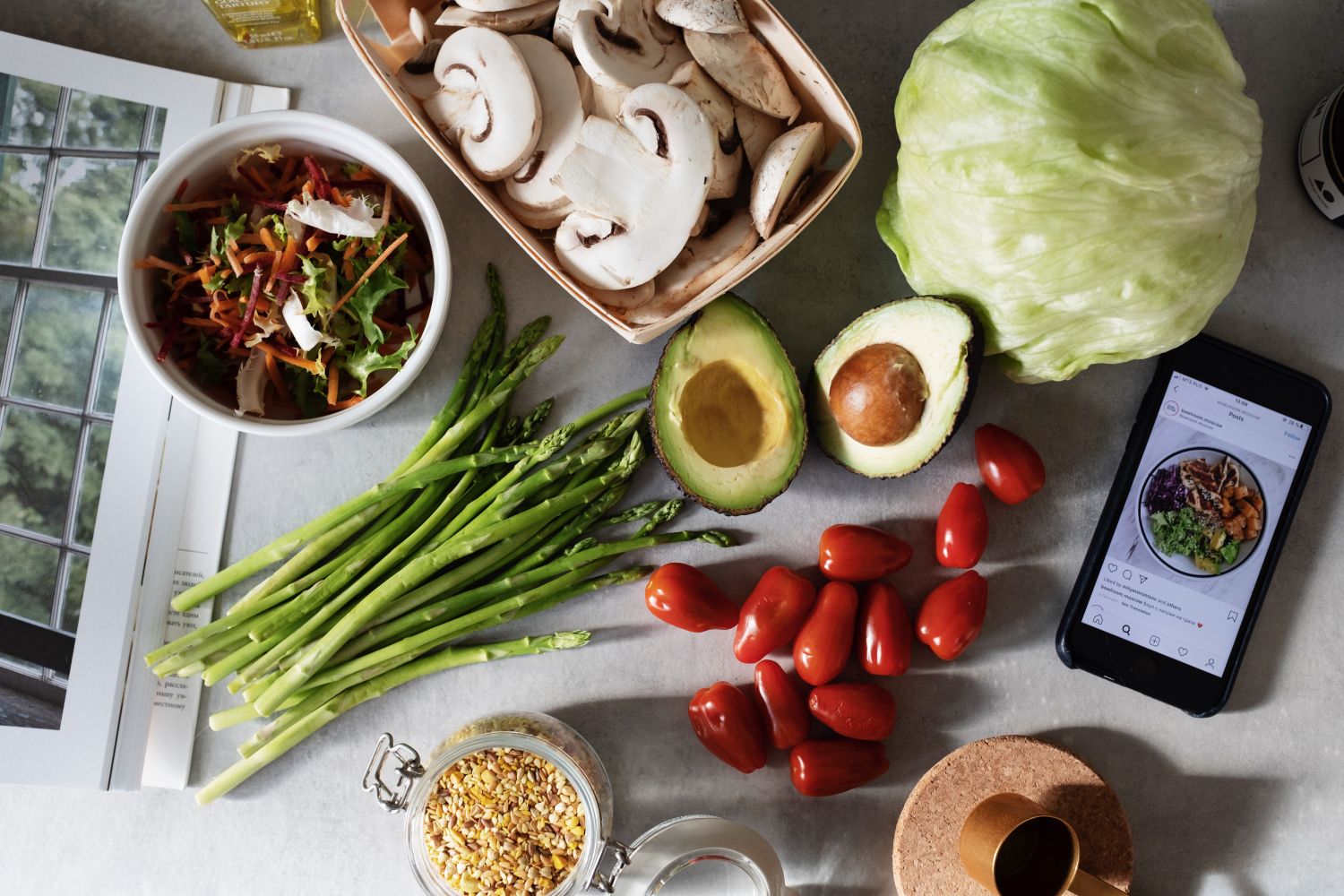
- Smoothie & acai-style bowls with fruit, granola and seeds
- Buddha bowls & big salads — grains, greens, legumes, dressings
- Vegan curries & thalis — dairy-free versions of the classics
- Plant-based burgers, wraps & pasta — Western comfort food, veganised
- Raw & living dishes — zoodles, raw lasagne, sprouted plates
- Tofu & tempeh dishes — increasingly common at wellness spots
These overlap heavily with the healthy-food scene, so a cafe that flags “healthy” or “raw” will almost always have strong vegan options too.
Plant milks & vegan coffee
Coffee culture and veganism meet happily in Rishikesh. Healthy and specialty coffee shops in Tapovan and Laxman Jhula commonly stock almond, soy and oat milk, so a vegan latte or cappuccino is easy to find — just specify your milk. Plant milks also power the smoothie bowls and shakes at wellness cafes. At a simple chai stall, though, masala chai is made with dairy milk by default; ask for black tea (or a herbal/ginger/lemon tea) if you want to avoid it. Many cafes will make a plant-milk chai on request.
Vegan desserts & treats
Vegans don’t miss out on sweets here. Wellness cafes serve raw vegan cakes, date-and-nut energy balls, chia puddings, vegan brownies and banana breads, often refined-sugar-free too. Traditional Indian sweets are mostly dairy-based (milk, ghee), so they’re usually off-limits — but fresh fruit, coconut, and the cafe raw-dessert scene more than compensate. Ask wellness cafes what’s vegan; many label it clearly on the menu.
Where to find vegan food
| Area | Vegan scene |
|---|---|
| Tapovan | The hub — most dedicated vegan & plant-forward cafes |
| Laxman Jhula | Rooftop healthy cafes with vegan options & river views |
| Ram Jhula / Swarg Ashram | Simple veg thalis — ask for oil not ghee |
| Ashrams / retreats | Often plant-based-friendly sattvic meals; ask in advance |
Base yourself in Tapovan and vegan eating is effortless; venture to local spots and a little asking unlocks plenty too.
Vegan nutrition on the road
Eating vegan in Rishikesh is easy; eating a balanced vegan diet just takes a little attention, as it does anywhere. With the abundance of fresh produce, legumes, nuts, seeds and plant milks, you can cover your bases well — the UK’s health service has a clear, free guide to balanced plant-based eating at nhs.uk. A few pointers for a longer stay:
- Protein — lean on dals, chana, rajma, tofu, tempeh, nuts and seeds.
- B12 — bring a supplement if you’re vegan long-term, as plant foods don’t reliably provide it.
- Iron & calcium — plentiful in legumes, greens, seeds and fortified plant milks.
- Variety — with so much choice, eating a wide range is easy and keeps things balanced.
Eating vegan safely & on a budget
The usual India food-safety basics apply — favour busy, reputable cafes, drink filtered or bottled water, and be a little cautious with raw items early on; India’s food sector is overseen by the Food Safety and Standards Authority of India (fssai.gov.in). On budget: trendy vegan bowls and raw cakes cost ₹250–450, but the cheapest vegan food is the everyday local fare — dal, chana, veg curry and rice for a fraction of the price. Mix the two to eat plant-based cheaply (see the budget guide). Foreign visitors usually arrive on an electronic visa via indianvisaonline.gov.in.
How to order vegan: quick tips
- Lead with “vegan” at wellness cafes — it’s understood; ask which menu items qualify.
- At local spots, list it out — no milk, ghee, butter, paneer, curd; cooked in oil.
- Check breads — ask for no ghee brushed on roti/naan; naan often contains dairy, so chapati is safer.
- Watch “butter” & “makhani” dishes — assume dairy unless told otherwise.
- Specify plant milk for coffee and request black or herbal tea over masala chai.
- When unsure, keep it simple — dal, a veg curry and rice is reliably vegan with oil.
Related guides
- Food & cafes in Rishikesh — the full eating hub
- Healthy food & best cafes — closely related
- Local food & coffee shops — everyday eats & vegan coffee
- Best breakfast — vegan-friendly mornings
- Tapovan — the vegan-cafe hub
- Budget guide & safety guide — eating cheap & safely
A vegan day in Rishikesh
To show how easy it is, here’s a delicious, entirely vegan day:
- Breakfast — a smoothie bowl or fruit-and-oat porridge with a plant-milk coffee on a Tapovan rooftop
- Mid-morning — a fresh juice or a black ginger tea after yoga
- Lunch — a vegan thali, or dal, chana and rice at a local dhaba (cooked in oil)
- Afternoon — a date-and-nut energy ball or vegan brownie with an oat-milk latte
- Dinner — a Buddha bowl, or aloo gobi and chapati (no ghee) with a salad
- Evening — a herbal tea before bed
Varied, satisfying, and plant-based start to finish — with zero sense of compromise. That’s the everyday reality of being vegan in Rishikesh.
Why vegans love Rishikesh
Word has spread among plant-based travellers that Rishikesh is a haven, and for good reason:
- No meat to navigate — the vegetarian baseline removes the hardest part of vegan travel.
- Clued-up cafes — “vegan” is understood, and menus often label plant-based options.
- Huge variety — from Indian classics to Western comfort food and raw cuisine, all veganised.
- Wellness alignment — the yoga and Ayurveda culture naturally supports plant-based eating.
- Great value — plant-based local food is some of the cheapest healthy eating anywhere.
- Community — you’ll meet plenty of fellow vegans and swap cafe tips.
For many vegans, Rishikesh is the most relaxing place they’ve ever eaten on the road — a town where being plant-based is normal, easy and delicious rather than a constant negotiation.
The bottom line on vegan food
Rishikesh is a genuine vegan paradise. The vegetarian, wellness-focused culture means dedicated plant-based cafes, plant milks, vegan versions of Indian and Western dishes, and an endless supply of naturally vegan local food — all you have to do is manage dairy by asking about ghee, paneer, curd and butter. Learn the simple phrases, lean on reliable dishes like dal and veg curry with rice, enjoy the smoothie bowls and raw cakes, and you’ll eat wonderfully plant-based for your whole trip, cheaply and without stress.
Whether you’re a committed vegan or just eating more plants, Rishikesh makes it a pleasure. Pair this with the healthy food, local food and coffee guides in the food & cafes hub, and plan the rest of your trip from the trip-planning hub.
Common vegan pitfalls to avoid
Even in a vegan-friendly town, a few things catch plant-based travellers out. Knowing them keeps your meals genuinely dairy-free:
- Assuming “vegetarian” means vegan. It doesn’t — dairy is everywhere; always confirm.
- Ghee on dal and breads. The classic hidden ingredient; ask for oil and for no ghee brushed on roti.
- Paneer and “butter/makhani” dishes. These are dairy-rich by definition — skip or ask for a tofu/oil version.
- Curd in marinades, raitas and some gravies. Not always obvious; ask.
- Milk in chai and coffee by default. Specify plant milk, or choose black/herbal tea.
- Honey in teas and “healthy” desserts. Mention it if you avoid it.
- Naan and some breads contain milk/yoghurt. Plain chapati or roti (no ghee) is the safe bet.
None of these are dealbreakers — they’re just the handful of habits worth building in your first day or two. After that, ordering vegan becomes second nature, and you’ll move through Rishikesh’s food scene with total confidence.
A final reassurance: people here are warm and accommodating, and the wellness crowd has made plant-based requests completely normal. A clear, friendly explanation almost always gets you exactly what you want — and often a genuine enthusiasm to help, since so many cooks and cafe owners are health-conscious themselves. Eat well, ask freely, and enjoy one of the most vegan-friendly towns in India.
Vegan groceries & self-catering
If you’re on a long stay or in a room with a kitchen, self-catering vegan is easy and cheap. Local markets and shops stock fresh fruit and vegetables, lentils and beans, rice, nuts, seeds, peanut butter, oats and spices, and health stores in Tapovan carry plant milks, tofu, and vegan staples for the international crowd. Cooking a simple dal or stir-fry with market produce costs very little and gives you full control over ingredients — a relief on a long trip.
It also opens the door to cooking classes, where you can learn to make vegan Indian dishes to take home. Between the cafes, the local dhabas, the markets and your own kitchen, a vegan in Rishikesh has more good options than in most cities anywhere — which, for plant-based travellers used to scanning every menu in vain, is a genuine and welcome novelty.
Frequently asked questions
Is Rishikesh good for vegans?
Yes, it is one of the easiest places in India to eat vegan. The whole town is vegetarian, so meat is never an issue, and a strong wellness scene means dedicated vegan cafes, plant milks and plant-based versions of Indian dishes. The main thing to manage is dairy.
Why is dairy a challenge for vegans in India?
Indian vegetarian cooking relies heavily on dairy, ghee (clarified butter), paneer (cottage cheese), curd, butter and milk, often invisibly. So vegetarian does not mean vegan. The solution is to ask whether dishes are cooked in ghee or oil and to avoid paneer, curd and cream-based dishes.
What Indian dishes are naturally vegan?
Many are, or can be with oil instead of ghee: dal, chana and chole (chickpea curries), rajma, vegetable curries like aloo gobi and bhindi, plain rice and veg pulao, and chapati without ghee. A dal, a veg curry and rice make a complete vegan meal almost anywhere.
Are there dedicated vegan cafes in Rishikesh?
Yes, especially in Tapovan, with smoothie bowls, Buddha bowls, salads, vegan curries and thalis, plant-based burgers and wraps, raw dishes, and tofu and tempeh options. These overlap with the healthy-food scene, so cafes flagged as healthy or raw usually have strong vegan menus.
Can I get plant milk for coffee in Rishikesh?
Yes, almond, soy and oat milk are widely available at healthy and specialty coffee shops in Tapovan and Laxman Jhula, so vegan lattes and cappuccinos are easy. Just specify your milk. At simple chai stalls, masala chai uses dairy milk, so ask for black or herbal tea instead.
How do I order vegan food in Rishikesh?
At wellness cafes, just say vegan, it is understood. At local spots, list it out: no milk, ghee, butter, paneer or curd, and ask for dishes cooked in oil. Check that breads have no ghee, avoid butter and makhani dishes, and when unsure, order dal, a veg curry and rice.
Are Indian sweets vegan?
Mostly not, as traditional sweets are based on milk and ghee. However, wellness cafes serve vegan raw cakes, date-and-nut energy balls, chia puddings and vegan bakes, often refined-sugar-free. Fresh fruit and coconut are also easy vegan treats, so vegans are well catered for.
Is vegan food in Rishikesh expensive?
Trendy vegan bowls and raw cakes cost around 250 to 450 rupees, but the cheapest vegan food is everyday local fare, dal, chana, veg curry and rice, for a fraction of the price. Mixing dedicated vegan cafes with simple local meals keeps plant-based eating very affordable.
Where is the best vegan food in Rishikesh?
Tapovan has the densest concentration of dedicated vegan and plant-forward cafes, with Laxman Jhula offering rooftop healthy cafes with vegan options and river views. Local dhabas everywhere can do vegan Indian dishes with oil instead of ghee if you ask clearly.
Is honey considered vegan in Rishikesh cafes?
Honey is not dairy but is avoided by many vegans, and it appears in teas, desserts and some dishes here. If you avoid honey, mention it specifically when ordering, as cafes may not assume it. Dates, jaggery and maple are common plant-based sweeteners in vegan cafes.
Can I eat a balanced vegan diet in Rishikesh?
Yes. With abundant legumes, nuts, seeds, fresh produce and plant milks you can eat well-balanced. Lean on dals, chana, tofu and tempeh for protein, eat plenty of variety, and bring a B12 supplement for a long-term vegan diet. The NHS has a useful free guide to balanced vegan eating.
Do ashrams and yoga retreats cater to vegans?
Often yes. Many ashrams and yoga retreats serve sattvic vegetarian meals that are easily made vegan, though some use ghee and dairy by default. Mention your vegan needs in advance when booking, and most will accommodate you with plant-based versions of their meals.
Eat plant-based with ease
Explore healthy food, find vegan coffee in coffee shops, or browse the full food & cafes hub.