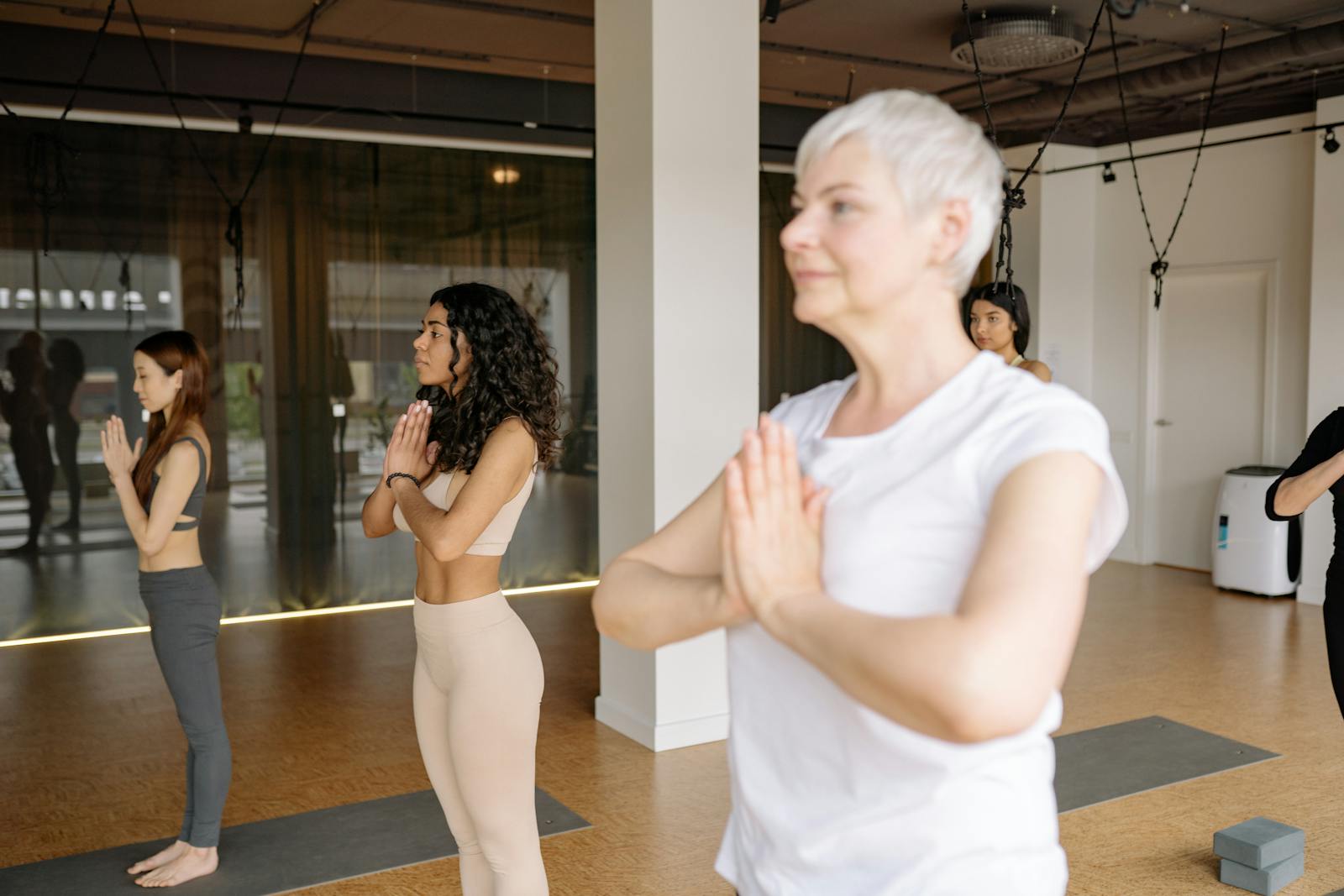
Yoga & Wellness
Beginner Yoga Retreats in Rishikesh
No experience, no flexibility, no pressure — just a gentle, welcoming introduction to yoga.
You do not need to touch your toes, own matching activewear, or have ever set foot in a yoga studio to do a yoga retreat in Rishikesh. In fact, the world’s yoga capital is one of the most welcoming places on earth to start — and a beginner yoga retreat is purpose-built for exactly that: a gentle, supported introduction to yoga in a setting that makes it easy to relax and learn. This guide explains what a beginner retreat actually is, what to expect day to day, how it differs from teacher training, and how to choose one if you have never practised before.
Quick answer: A beginner yoga retreat in Rishikesh is a short, gentle, all-inclusive programme — usually 3 to 10 days — designed for people with little or no experience. Expect slower Hatha-style classes, meditation, healthy food and rest, with no pressure to perform. Costs typically run ₹2,000–₹5,000 per day all-inclusive depending on comfort level. You need zero prior experience — just willingness. Best months: Sept–Nov and Feb–Apr.
What is a beginner yoga retreat?
A retreat is simply a short, structured stay where yoga and wellbeing are the focus — you practise, eat well, rest, and step away from everyday life for a few days. A beginner retreat pitches everything at the newcomer: classes move slowly, teachers explain the basics, and there is no assumption that you can already do anything. It is the opposite of being thrown into an advanced flow class and left to keep up.
This is quite different from a Yoga Teacher Training, which is an intensive, full-time qualification. A retreat has no exams, no teaching practice and no certificate to earn — just guided practice and time to unwind. If you eventually catch the bug, the foundation course is there later; many people start with a retreat precisely to find out whether they want more.
What kind of yoga will you actually learn?
Beginner retreats in Rishikesh are almost always built on Hatha yoga — the traditional, slower-paced style that holds postures longer and pays close attention to alignment and breath. This is exactly right for a newcomer: there is time to understand each posture, and nothing moves so fast that you feel left behind. You will also be introduced to simple pranayama (breathing techniques) and short, guided meditation, both of which are beginner-friendly and surprisingly powerful from day one.
What you will not typically face as a beginner is fast, athletic Vinyasa or Ashtanga “flow” that assumes you already know the postures. If a retreat described as “beginner” is built around dynamic flow, ask careful questions — it may be pitched higher than its label suggests. For the difference between the styles, our choosing a yoga school guide breaks them down, and if the calmer, inner side appeals most, look at meditation retreats too.
“But I’m not flexible / fit / spiritual enough”
This is the single biggest worry beginners bring, and it is based on a misunderstanding. Flexibility is a result of yoga, not a requirement for it. Good beginner teachers expect stiff hips and tight hamstrings — that is who the class is for. A few honest reassurances:
- You do not need to be flexible. Postures are modified to your body, with props and easier variations always offered.
- You do not need to be fit. Beginner practice is gentle; you build gradually.
- You do not need to be religious or “spiritual.” You can take as much or as little of the philosophy and chanting as you like — the breathing and movement stand on their own.
- You will not be judged. Everyone in a beginner retreat is, by definition, a beginner. Most arrive nervous and leave wishing they had come sooner.
💡 Tip: If you are truly anxious, email the retreat beforehand and say so. A good one will reassure you with specifics about how they support first-timers — and that reply tells you a lot about whether it is the right place.
What to expect day to day
Beginner retreats are far gentler than a teacher training. A typical day is balanced, not punishing:
- Morning: a gentle Hatha class, often preceded by simple breathing (pranayama) and a short meditation.
- Breakfast: wholesome, usually vegetarian, sometimes Ayurvedic.
- Midday: free time — rest, walk by the river, journal, or join an optional workshop.
- Afternoon: a slower, restorative or alignment-focused session, or a talk on breathing, relaxation or yoga basics.
- Evening: meditation, gentle stretching, or the Ganga Aarti by the river; early night.
Mornings start earlier than you might be used to (yoga is traditionally practised at dawn), but the pace is unhurried and rest is built in. You will likely feel calmer and sleep better within a couple of days.
How long should a beginner retreat be?
- 3–4 days — a taster: enough to learn the basics and feel the benefits, ideal if you are short on time or unsure.
- 5–7 days — the sweet spot: long enough to settle in, build a small daily habit and genuinely unwind. See our 7-day yoga retreats guide.
- 10+ days — a deeper reset, good if you want the habit to really take hold or are combining it with travel.
For a first experience, 5–7 days is usually the best balance of value, learning and relaxation.
What it costs
Beginner retreats are usually all-inclusive — accommodation, daily classes and meals — and priced per day or per package:
- Budget / shared room: ~₹2,000–₹3,000 per day
- Mid-range / private room: ~₹3,000–₹4,500 per day
- Premium / boutique wellness: ₹5,000+ per day
A 5–7 day beginner retreat therefore typically lands somewhere between ₹15,000 and ₹35,000 all-in. See our yoga costs guide for the full picture, and remember a price far below these bands usually means very large classes.
What is included — and what is not
Most beginner retreats are sold as all-inclusive packages, but “all-inclusive” means slightly different things at different schools. Confirm before you book.
Usually included:
- Accommodation for the full stay (shared or private)
- Daily yoga and meditation classes
- Three wholesome vegetarian meals a day
- Basic course materials, and mats/props for class
- Sometimes a guided walk, river visit or one local excursion
Usually not included:
- Flights, visa and travel insurance
- Airport or station transfer (often available for a fee)
- Personal expenses, laundry and tips
- Optional add-ons such as Ayurvedic treatments, massages or private sessions
- Nights before or after the retreat dates
None of these are surprises if you ask up front. A clear, itemised answer about inclusions is also a good sign of a well-run, honest retreat.
Retreat or drop-in classes — which should a beginner choose?
If you only have a day or two in Rishikesh, you do not need a full retreat — you can simply take drop-in beginner classes (typically ₹200–₹500 each) at a local school and arrange your own stay. That is the cheapest, most flexible way to try yoga, and perfect for travellers passing through.
A retreat, by contrast, gives you structure, consistency and immersion: classes are sequenced to build day by day, your meals and rest are taken care of, and you step fully out of normal life. For most beginners who can spare 4–7 days, the retreat delivers far more than a few scattered drop-ins — you actually establish a small practice rather than sampling one. If you are unsure, start with a drop-in class or two on arrival, then commit to a short retreat once you have a feel for it. Our choosing a yoga school guide covers both routes.
How to choose a beginner retreat
- Confirm it is genuinely for beginners — the words “beginner-friendly” should be backed by a gentle, Hatha-based schedule.
- Check the daily timetable — you want balance and rest, not a punishing TTC-style day.
- Look for small groups so you get attention and corrections.
- Verify the school — even for a retreat, a Yoga Alliance-registered school is a good sign of quality teaching.
- Read recent reviews from other beginners, not just seasoned yogis.
- Check the location — most beginner-friendly retreats are in or near Tapovan; calmer options sit toward Ram Jhula or upriver.
For the complete vetting framework, our guide to choosing a yoga school applies to retreats too.
Why Rishikesh is the ideal place to start
It might seem odd to fly to the “yoga capital of the world” as a complete beginner — surely that is for serious yogis? In fact the opposite is true. Because yoga is woven into daily life here, beginner instruction is abundant, affordable and genuinely skilled, and nobody finds it strange that you are new. You are surrounded by people at every level, in a town that runs on early mornings, simple food and the rhythm of the river — conditions that make a first practice far easier to sustain than squeezing a class into a busy week back home.
There is also the setting itself: practising beside the Ganga with the Himalayan foothills around you does something a city studio cannot. Add an alcohol-free, largely vegetarian, unhurried environment, and the whole experience nudges you gently toward rest and presence — exactly what a beginner needs. For many people, a few days here achieve what months of stop-start studio classes never did.
What a beginner retreat actually does for you
Beyond learning a few postures, a well-run beginner retreat tends to deliver a handful of real, noticeable benefits within just a few days:
- Better sleep — early nights, movement and meditation reliably improve rest.
- Less stress — breathwork and slowing down calm the nervous system quickly.
- A starter toolkit — a handful of postures and breathing techniques you can actually use at home afterwards.
- Body awareness — you begin to notice tension, posture and breath in everyday life.
- A gentle reset of habits — wholesome food, hydration, and a daily rhythm that often carries home with you.
- Confidence — you discover yoga is for you, not just for the bendy people on social media.
None of this requires talent or prior experience. The benefits come from simply showing up and following along, which is exactly what a beginner retreat is built to make easy.
How to prepare for your first retreat
Very little preparation is needed — that is part of the appeal — but a few small things make the first day smoother:
- Don’t “train” beforehand — you genuinely do not need to. If anything, just walk a little more in the weeks before.
- Ease your sleep earlier so the early mornings feel less abrupt.
- Tell the retreat about any injuries or conditions so teachers can adapt your practice.
- Pack light and modest — comfortable clothes you can move in and a warm layer; see the packing list.
- Sort logistics early — arrival, visa and a local SIM; see how to reach Rishikesh.
- Arrive a day early if you can, to shake off travel before day one.
💡 Tip: Bring an open mind more than anything else. The students who get the most from a beginner retreat are not the fittest — they are the ones who let go of needing to be “good” at it and simply experience each session.
Is a beginner retreat right for you?
| Traveller type | Recommendation |
|---|---|
| Total beginner | Perfect — this is exactly who beginner retreats are designed for. |
| Nervous / not flexible | Ideal — gentle pace, modifications and a supportive group. |
| Stressed / burnt out | Excellent reset; choose one with plenty of rest and meditation. |
| Couples / friends | Great shared experience; confirm private/twin rooms. |
| Solo female traveller | Very suitable; pick an established school — see our solo female guide. |
| Experienced yogi | Look beyond beginner level — a 7-day retreat or 200-hour will suit better. |
Common mistakes beginners make
- Assuming you must be flexible or fit — you genuinely do not.
- Booking an intensive TTC by mistake when you wanted a gentle retreat.
- Choosing a non-beginner retreat and feeling lost in advanced classes.
- Over-packing the trip — leave room to actually rest.
- Picking the wrong season — see best time to visit.
- Skipping the school check — even short retreats vary a lot in quality.
Local tips you should know
- Arrive a day early to settle in — see how to reach Rishikesh.
- Pack comfortable, modest clothing and a warm layer for evenings; mats are usually provided. See the packing list.
- Stay hydrated and ease into the early mornings — your body adjusts within a couple of days.
- Rishikesh is alcohol-free and largely vegetarian, which supports the retreat lifestyle naturally.
- Apply for your tourist e-Visa online in advance if visiting from abroad.
- Get a local SIM for maps and contact — see our SIM & internet guide.
Related guides & nearby
- 7-day yoga retreats — the natural next length up.
- Meditation retreats — if stillness appeals more than movement.
- Ayurveda — pair your retreat with a wellness reset.
- Yoga Teacher Training — for when you want to go deeper.
- Rishikesh for yoga travellers — the full planning hub.
Frequently asked questions
Do I need any experience for a beginner yoga retreat?
None at all. Beginner retreats are designed for people who have never practised yoga. Classes are gentle and fully explained, with no assumption of prior knowledge.
Do I need to be flexible to start yoga?
No. Flexibility is a result of practising yoga, not a requirement. Postures are modified to your body using props and easier variations.
How long is a typical beginner yoga retreat?
Most run 3 to 10 days. A 5–7 day retreat is the sweet spot for first-timers — long enough to learn and unwind without feeling like a big commitment.
How much does a beginner yoga retreat cost in Rishikesh?
Typically ₹2,000–₹5,000 per day all-inclusive of accommodation, classes and meals. A 5–7 day retreat usually totals around ₹15,000–₹35,000 depending on comfort level.
What is the difference between a retreat and a teacher training?
A retreat is a gentle wellbeing-focused stay with no exams or certificate. A teacher training (YTT) is an intensive, full-time qualification course. Beginners should start with a retreat.
Will the classes be too hard for me?
No — beginner retreats use slow, gentle Hatha-style classes with modifications. The whole point is that everyone is new and the pace suits first-timers.
Do I have to take part in the spiritual or chanting parts?
No. You can engage with as much or as little of the philosophy, meditation and chanting as you like. The physical practice and breathing stand on their own.
What should I pack for a yoga retreat?
Comfortable, modest clothing you can move in, a warm layer for evenings, personal toiletries and any medication. Mats and props are usually provided.
When is the best time for a beginner retreat in Rishikesh?
September to November and February to April offer the most comfortable weather. Winter mornings are cold and summer is hot; the monsoon (July–August) is humid.
Is Rishikesh safe for solo female beginners?
Generally yes — Rishikesh is one of India’s safer towns and many retreat guests are solo women. Choose an established school with on-campus female accommodation.
Are meals included, and what kind of food is served?
Retreat packages almost always include meals — usually wholesome vegetarian or sattvic food, sometimes Ayurvedic. Tell the retreat about any dietary needs in advance.
Can I do a beginner retreat as a couple or with a friend?
Yes. Many retreats offer private or twin rooms and welcome pairs. The classes are shared with the group regardless of your room.
Ready to take your first class?
Starting yoga is far less intimidating than it looks — especially here. Pick a gentle, beginner-specific retreat, choose a comfortable season, and arrive with nothing but willingness. These guides will help:
- 7-day yoga retreats — the popular next step up
- How to choose a yoga school
- Yoga costs in Rishikesh
- Rishikesh for yoga travellers — plan the whole trip