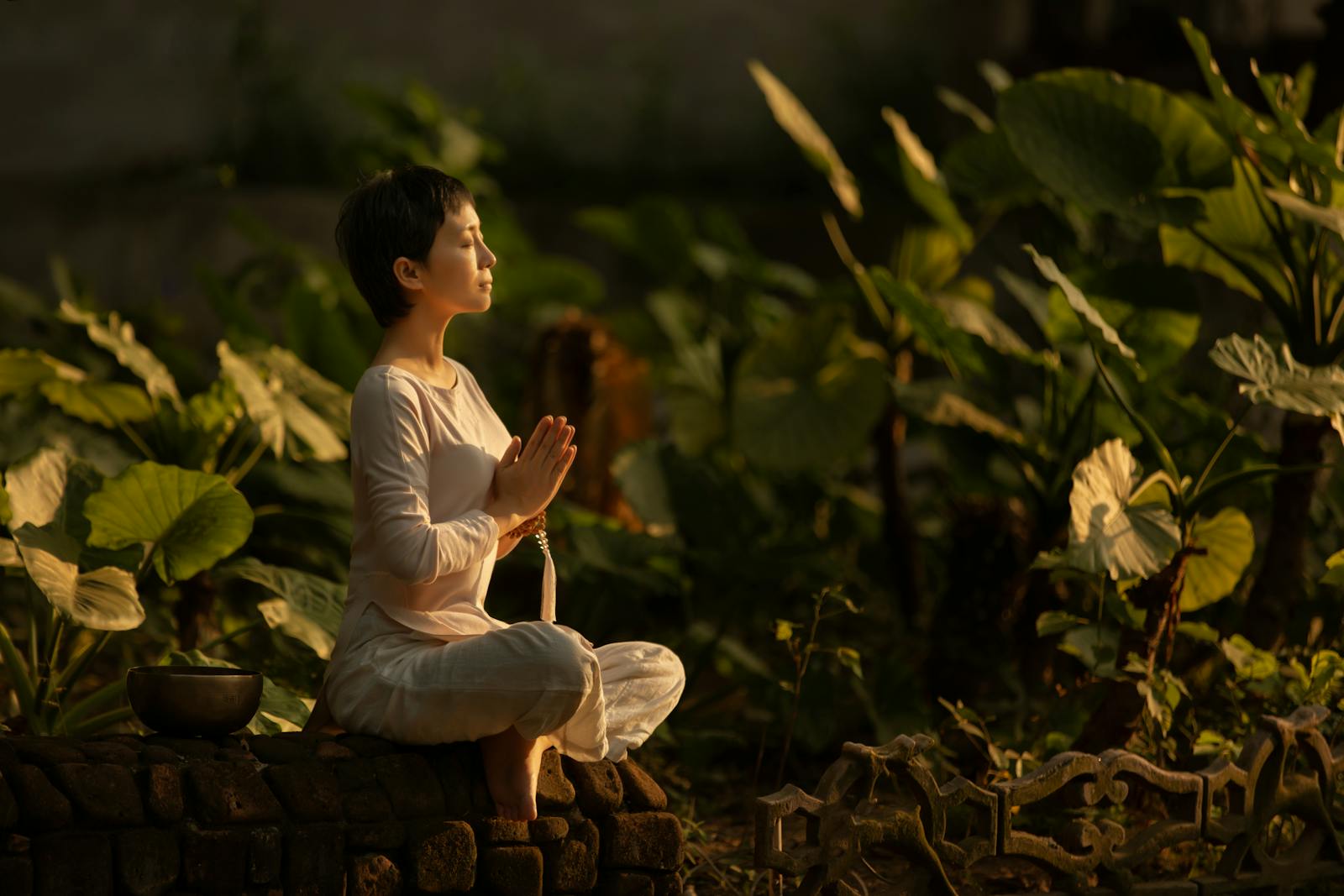
Yoga
Kundalini Yoga in Rishikesh
The yoga of awareness — breath, mantra and energy, where the tradition runs deep.
Of all the styles taught in Rishikesh, Kundalini yoga is the one most focused on energy rather than athleticism. Sometimes called “the yoga of awareness,” it blends dynamic breathing, repetitive movement, mantra, mudra and meditation into sequences (kriyas) designed to awaken and move energy through the body. It feels quite different from the Hatha and Vinyasa classes that dominate the town — less about perfecting postures, more about breath, sound and inner experience. This guide explains what Kundalini yoga actually is, how it differs from other styles, what a class feels like, where to practise it in Rishikesh, and the cautions worth knowing.
Quick answer: Kundalini yoga in Rishikesh is an energy-focused style combining breathwork (pranayama and “breath of fire”), repetitive movements, mantra chanting, mudras and meditation in set sequences called kriyas. It suits those drawn to the energetic and spiritual side of yoga more than physical workout. Available as drop-in classes, retreats and dedicated trainings; verify schools on Yoga Alliance. Best practised with an experienced teacher. It pairs naturally with meditation. Best months: Sept–Nov and Feb–Apr.
Why practise Kundalini in Rishikesh specifically?
Kundalini classes exist in cities everywhere, but Rishikesh offers something those studios cannot: context and immersion. Here, the breathwork, mantra and chakra philosophy that Kundalini is built on are part of the surrounding culture, not a niche offering. You can take a Kundalini class in the morning, sit in meditation by the river, attend the Ganga Aarti in the evening, and eat sattvic food all day — the whole environment reinforces the energetic, inward focus the practice cultivates.
There is also the calibre and affordability of teaching. Rishikesh draws practitioners who have spent years — sometimes decades — in these traditions, and you can learn from them for a fraction of Western prices. For a practice as dependent on skilled, experienced guidance as Kundalini, that combination of authenticity, immersion and value is hard to beat anywhere else.
What is Kundalini yoga?
Kundalini yoga takes its name from kundalini — in yogic philosophy, a dormant spiritual energy said to rest at the base of the spine, often pictured as a coiled serpent. The practice aims to awaken this energy and let it rise through the body’s energy centres (chakras), cultivating awareness, vitality and a sense of expanded consciousness. Whether or not you take that framework literally, the methods are concrete and powerful: rhythmic breath, repeated movement, sound and stillness, combined to shift how you feel.
A defining feature is the kriya — a specific sequence of movements, breath and sound performed together for a set time, each intended to produce a particular effect. Rather than flowing freely between postures as in Vinyasa, you commit to a structured set, often holding or repeating a movement with a strong breath while chanting a mantra. Classes typically open with a tuning-in mantra, move through warm-ups and a kriya, and close with meditation and relaxation.
A brief history & the Rishikesh connection
Kundalini is among the oldest streams of yoga, with roots in the tantric and yogic traditions of India described in texts going back many centuries. For most of that history it was a esoteric practice, passed quietly from teacher to student. It reached a global audience in the late 1960s when it began to be taught widely in the West, and today it is practised worldwide — but its conceptual home remains the Indian yogic tradition that Rishikesh embodies.
That heritage is exactly why practising Kundalini here is special. The chakra system, pranayama, mantra and meditation that Kundalini draws on are not exotic imports in Rishikesh — they are part of the living culture, taught by people steeped in the tradition. Practising breath and mantra by the Ganga, where seekers have worked with these same energies for millennia, gives the practice a depth and context that a studio elsewhere struggles to match.
How Kundalini differs from Hatha & Vinyasa
| Hatha / Vinyasa | Kundalini | |
|---|---|---|
| Main focus | Postures & alignment / flow | Energy, breath & awareness |
| Movement | Held or flowing asana | Repetitive movements in set kriyas |
| Breath | Steady, supportive | Central — including rapid “breath of fire” |
| Sound | Optional | Integral — mantra & chanting throughout |
| Feel | Physical, grounding or athletic | Meditative, energetic, sometimes intense |
| Best for | Fitness, flexibility, foundations | Inner experience, spirituality, energy work |
If you want a workout or to master postures, Hatha or Vinyasa will serve you better. If you are drawn to the meditative, spiritual and energetic dimension, Kundalini may resonate more deeply.
The core elements of a Kundalini practice
Pranayama & breath of fire
Breath is the engine of Kundalini. Alongside slow pranayama, classes use breath of fire — rapid, rhythmic breathing through the nose — to build and move energy. It can feel intense at first; you build up gradually.
Kriyas
The signature structured sequences — a set combination of posture, movement, breath and sound held for a fixed time, each with a specific intended effect (energising, calming, balancing).
Mantra & chanting
Sound is woven throughout, from the opening Adi Mantra to mantras repeated during kriyas. Chanting focuses the mind and is considered to carry vibrational effect — a natural bridge to sound healing.
Mudras & bandhas
Hand gestures (mudras) and energetic locks (bandhas) channel and contain energy during practice.
Meditation & relaxation
Most kriyas culminate in meditation and deep relaxation, integrating the energy raised — closely related to the meditation practices Rishikesh is known for.
What a Kundalini class feels like
Expect something more inward and unusual than a typical yoga class. You might repeat an arm movement with breath of fire for several minutes while chanting, sit in long-held meditations, or experience waves of heat, tingling, emotion or euphoria as energy moves. Some find it blissful; some find parts challenging or strange the first time. Many traditional Kundalini practitioners wear white and cover the head, though this is not required as a visiting student.
Crucially, it is less about “doing it right” and more about showing up fully and breathing. The repetition is the point — it takes you past the thinking mind into direct experience.
💡 Tip: Don’t judge Kundalini by one class. The first session can feel odd — the chanting, the repetition, breath of fire. Give it two or three classes before deciding; many people who found it strange at first end up loving it most.
What to expect across your first few classes
Kundalini rewards a little persistence, so it helps to know the typical arc:
- Class 1: often disorienting — the chanting, repetition and breath of fire feel unfamiliar. Focus on simply following along; do not worry about “getting it right.”
- Class 2–3: the format starts to make sense. You stop self-consciously watching yourself and begin to feel the effects of the breath and movement.
- By class 4–5: many people report the practice “clicking” — energy, calm or emotional release become noticeable, and the strangeness turns into something you look forward to.
This is why a single drop-in is a poor test of Kundalini. If you are curious, commit to a short series rather than judging it on one unfamiliar hour. The practice is cumulative — it builds on itself in a way one class cannot reveal.
Benefits people report
- Increased energy and a feeling of aliveness
- Reduced stress and a calmer, clearer mind
- Emotional release and a sense of lightness
- Deeper, faster access to meditative states
- A strong sense of spiritual connection or expanded awareness
As with any practice, experiences vary. Kundalini tends to produce more pronounced energetic and emotional effects than gentler styles — part of its appeal, and the reason it deserves a capable teacher.
Why Kundalini affects you so quickly
One thing surprises newcomers: Kundalini can produce noticeable effects faster than gentler styles — a rush of energy, warmth, emotion or deep calm within a single session. The reason is its combination of tools working at once. Rapid breathwork like breath of fire directly stimulates the nervous system and oxygenates the body; repetitive movement held past the point of comfort takes you beyond the thinking mind; and mantra plus rhythm occupy the attention so fully that ordinary mental chatter simply drops away. Layered together for the fixed duration of a kriya, these create a potent shift in a short time.
This intensity is precisely why Kundalini is both loved and treated with respect. It is also why an experienced teacher matters: they know how to build the energy safely, when to ease off, and how to guide the integration and relaxation that should always follow. Approached with that respect, the speed and depth of Kundalini’s effects are exactly what make it so rewarding for people drawn to the energetic side of practice.
Cautions & who should take care
Kundalini is powerful, and honesty serves you better than hype. A few sensible cautions:
- Practise with an experienced teacher, especially for intense breathwork and longer kriyas — not from random online videos.
- Breath of fire is not for everyone — generally avoided during pregnancy and menstruation, and approached carefully with high blood pressure, heart conditions or recent surgery. Substitute long deep breathing.
- Emotional intensity can surface — the practice can stir up feelings; a good teacher holds space for this. If you have a significant mental-health condition, check with a professional first.
- Build up gradually — don’t force long holds or rapid breath; dizziness means slow down.
- Tell your teacher about any health conditions, pregnancy or injuries before class.
💡 Tip: If you ever feel light-headed during breath of fire, simply return to slow, natural breathing. There is no prize for pushing through — the practice works with your capacity, not against it.
Who is Kundalini yoga for?
| Traveller type | Recommendation |
|---|---|
| Drawn to spirituality & energy | Ideal — Kundalini speaks directly to this. |
| Wants a physical workout | Choose Hatha or Vinyasa instead. |
| Loves breathwork & chanting | A natural fit; pairs with sound healing. |
| Experienced meditator | Excellent — a dynamic route to deep meditative states. |
| Pregnant / specific health conditions | Practise gently with a qualified teacher; skip intense breath of fire. |
| Complete yoga beginner | Fine with a good teacher, though a Hatha foundation first can help. |
Kundalini teacher training & deeper study
If Kundalini truly resonates, Rishikesh offers ways to go far beyond drop-in classes. Dedicated Kundalini teacher trainings — ranging from short immersions to full multi-week certifications — teach the kriyas, the philosophy of the chakras and energy body, advanced pranayama, and how to sequence and lead a class safely. Some are standalone; others are offered as a specialisation within a broader 300-hour YTT.
As with any training, the school matters enormously — perhaps even more here, because teaching intense breathwork and energy practices responsibly requires genuine experience. Verify the school on Yoga Alliance, look for teachers with a real Kundalini lineage rather than a quick certificate, and apply the full vetting checklist in our choosing a yoga school guide. For the general path into teaching, start with our Yoga Teacher Training overview and 200-hour guide.
Where to practise Kundalini in Rishikesh
Kundalini is less ubiquitous than Hatha here, but readily found:
- Drop-in classes at yoga schools and studios, often in Tapovan — the easiest way to try it.
- Specialised Kundalini schools & teachers for those who want depth.
- Kundalini-focused retreats and dedicated teacher trainings for serious students.
- Within ashram practice, where energetic and meditative yoga is part of daily life — see our ashrams guide.
Always verify a school’s credentials — our guide to choosing a yoga school applies here too.
Common mistakes
- Judging it on one class — it often takes a few sessions to click.
- Forcing breath of fire — build up gradually; light-headedness means slow down.
- Expecting a workout — Kundalini is energetic and meditative, not a fitness class.
- Practising intense kriyas unsupervised — learn with an experienced teacher first.
- Ignoring health cautions — disclose pregnancy or conditions before class.
- Wrong season — see best time to visit.
Local tips you should know
- Try a drop-in class before committing to a Kundalini retreat or training.
- Wear loose, comfortable clothing — natural fibres are traditional but not required.
- Practise on a fairly empty stomach — intense breathwork is uncomfortable after a big meal.
- Pair it with meditation and sound healing for a complete energetic practice.
- Apply for your tourist e-Visa early for longer trainings.
- See how to reach Rishikesh and the packing list to plan logistics.
Related guides & nearby
- Best yoga schools — compare styles & choose well.
- Meditation in Rishikesh — the natural companion practice.
- Sound healing — shares Kundalini’s use of sound.
- Yoga Teacher Training — including Kundalini specialisations.
- Rishikesh for spiritual seekers — the full hub.
Frequently asked questions
What is Kundalini yoga?
Kundalini yoga is an energy-focused style that combines breathwork, repetitive movements, mantra, mudras and meditation in set sequences called kriyas. It aims to awaken dormant energy and cultivate awareness — sometimes called “the yoga of awareness.”
How is Kundalini different from regular yoga?
Compared with Hatha or Vinyasa, Kundalini focuses on energy, breath and sound rather than postures and fitness. It uses repetitive movements, chanting and intense breathwork, and feels more meditative and energetic than physical.
What is “breath of fire”?
Breath of fire is a rapid, rhythmic breathing technique through the nose, central to Kundalini practice. It builds and moves energy. Build up gradually, and avoid or modify it during pregnancy, menstruation, or with certain health conditions.
Do I need experience to try Kundalini yoga?
No — beginners can attend drop-in classes with a good teacher. That said, some find a Hatha foundation helpful first, and intense kriyas and breathwork are best learned under experienced guidance.
Is Kundalini yoga safe?
For most people, practised with an experienced teacher, yes. Take care with intense breathwork if pregnant or with heart conditions or high blood pressure, build up gradually, and disclose any health issues before class.
What does a Kundalini class involve?
Typically a tuning-in mantra, warm-ups, a kriya (set sequence of movement, breath and sound held for a fixed time), then meditation and relaxation. Expect chanting and repetitive movement.
Can Kundalini yoga be intense or emotional?
Yes. It can produce strong energetic sensations and emotional release. This is considered part of the process; a good teacher holds space for it. If you have a significant mental-health condition, check with a professional first.
Is Kundalini yoga religious?
It is rooted in yogic and spiritual philosophy, including chakras and energy, but you can engage with the framework as much or as little as you like and still benefit from the breath, movement and meditation.
Where can I practise Kundalini yoga in Rishikesh?
At various yoga schools and studios (often in Tapovan), specialised Kundalini teachers and retreats, dedicated teacher trainings, and within some ashram practices. Verify the school’s credentials before booking.
Should I wear white for Kundalini yoga?
Many traditional practitioners wear white and cover the head, believing it affects the energy field, but it is not required for visiting students. Loose, comfortable clothing is fine.
Can beginners do breath of fire?
Yes, but gently and gradually. Start slowly, keep it light, and return to normal breathing if you feel dizzy. Pregnant women and those with certain conditions should substitute long deep breathing.
How is Kundalini related to meditation and sound healing?
Closely. Kundalini uses mantra and chanting (like sound healing) and culminates in meditation, making it a dynamic, energetic route into the meditative states Rishikesh is known for.
Ready to feel the energy?
If the spiritual, energetic side of yoga calls you more than the physical, Kundalini is worth seeking out in Rishikesh. Start with a drop-in class and an open mind. These guides will help:
- How to choose a yoga school
- Meditation in Rishikesh — the companion practice
- Sound healing — shares the use of sound
- Rishikesh for spiritual seekers — plan the whole trip