Spiritual
Ganga Aarti in Rishikesh
The nightly riverside ceremony of fire, light and chant — the soul of Rishikesh.
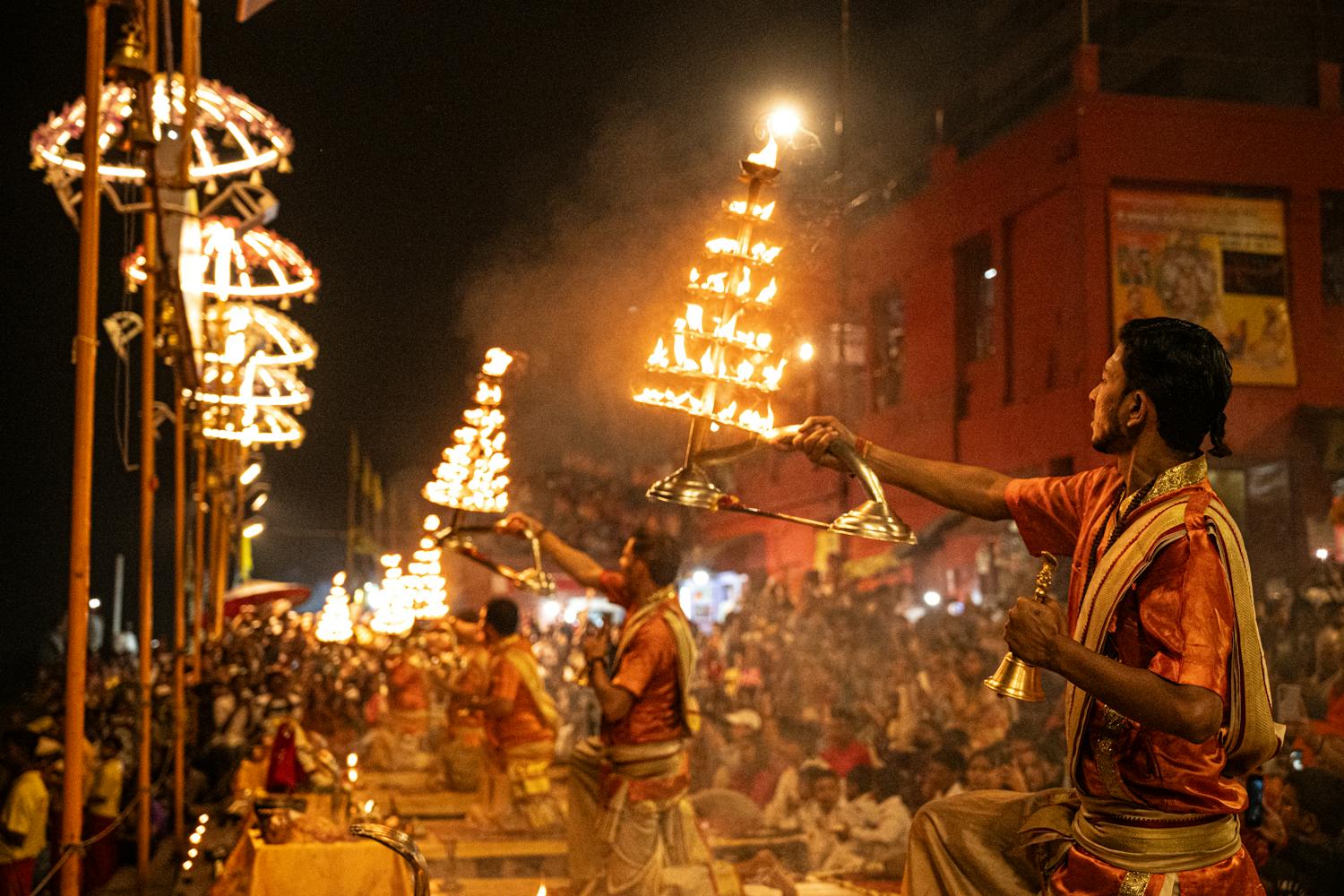
As dusk falls over the Ganga, lamps are lit, bells ring, drums beat and voices rise in ancient chant — and for a few luminous minutes, the riverbank becomes pure devotion. The Ganga Aarti is the spiritual heartbeat of Rishikesh and the one experience almost every visitor remembers most, whether they came for yoga, adventure or the soul of the place. This guide explains what the aarti is, where to see it, exact timings, what to expect, the etiquette, and how to experience it respectfully — as a participant, not just a spectator.
Quick answer: The Ganga Aarti is a nightly Hindu fire-and-light ceremony honouring the river Ganga, held at sunset on the ghats. In Rishikesh the two main spots are Parmarth Niketan (Ram Jhula — serene, led by ashram students) and Triveni Ghat (town — larger, grander, more crowded). It is free and open to all. Timings shift with sunset (roughly 5:30–6pm winter, 6:30–7pm summer) — arrive 30–45 min early for a good spot. Dress modestly, remove shoes, and be respectful — it is a living act of worship.
What is the Ganga Aarti?
Aarti is a Hindu ritual of worship in which light — traditionally flames from oil lamps or camphor — is offered to a deity, accompanied by song, bells and devotion. The Ganga Aarti offers this worship to the river Ganga herself, revered in Hinduism as a goddess (Ma Ganga) and the most sacred river in India. Held each evening at the water’s edge, it is a gesture of gratitude and reverence to the river that gives life to so much of the subcontinent.
The ceremony is a feast for the senses: priests and participants circle large multi-tiered brass lamps ablaze with fire, conch shells sound, drums and cymbals keep rhythm, and everyone joins in chanting and devotional songs (bhajans). Tiny leaf-boats of flowers and lamps (diyas) are floated onto the dark river, carrying prayers downstream. Even for non-religious visitors, the atmosphere is profoundly moving.
The meaning behind the ritual
Understanding what is happening deepens the experience immeasurably. The offering of light in aarti is symbolic: the flame represents the removal of darkness and ignorance, and offering it to the deity is an act of surrender, gratitude and devotion. By offering fire to the Ganga, devotees thank the river for the life she sustains — water for drinking, farming and ritual across hundreds of millions of people — and honour her as a divine mother.
Each element carries meaning. The ringing bells and conch are said to invoke the divine and clear the mind. The circling of the lamps draws the deity’s blessing into the gathered light, which devotees then symbolically draw toward themselves by passing their hands over the flame. The floated diyas carry prayers and gratitude downstream. Even the collective chanting has a purpose — uniting hundreds of voices and hearts in a single devotional rhythm. When you know what each gesture means, the ceremony stops being a spectacle and becomes a shared act you can genuinely take part in.
Where to see the Ganga Aarti in Rishikesh
Parmarth Niketan (Ram Jhula) — the serene, spiritual one
Held at the riverfront of Parmarth Niketan, Rishikesh’s largest ashram, near Ram Jhula. This aarti is led largely by the ashram’s resident students (young priests in training), and has a more intimate, devotional and musical character — melodic chanting, a seated crowd on the ghat steps, and a genuine ashram atmosphere. It is the favourite of most yoga students and spiritual seekers, and the one to choose if you want depth and serenity over spectacle.
Triveni Ghat (town) — the grand, lively one
Held at Triveni Ghat, the main bathing ghat in Rishikesh town, this is the larger, grander and more crowded ceremony — bigger lamps, bigger crowds, and a powerful collective energy. It feels more public and festive, drawing pilgrims and tourists in large numbers. Choose this for scale and spectacle; expect it to be busy.
💡 Tip: If you can, see both on different evenings — they are genuinely different experiences. Parmarth Niketan for the intimate, musical, ashram feel; Triveni Ghat for the grand, bustling, classic riverside spectacle.
Timings: when does the aarti start?
The Ganga Aarti is held every evening at sunset, so the exact start time shifts through the year:
- Winter (roughly Nov–Feb): around 5:30–6:00pm
- Summer (roughly Apr–Aug): around 6:30–7:00pm
- Spring/autumn: around 6:00–6:30pm
The whole ceremony lasts about 45 minutes to an hour. Because times vary and occasionally change, confirm locally on the day. Arrive 30–45 minutes early — especially at Parmarth Niketan, where the best seats on the ghat steps fill up, and at Triveni Ghat on weekends and holidays.
What to expect & how it unfolds
- Gathering: people settle on the ghat steps as the light fades; an air of anticipation builds.
- Opening prayers & bhajans: devotional singing and chanting begin, often led by ashram students or priests.
- The fire offering: large flaming lamps are raised and circled to the rhythm of bells, drums and conch shells — the visual climax.
- Collective participation: the crowd claps, sings and joins the chant; the energy peaks.
- Floating the diyas: small leaf-boats of flowers and flame are released onto the river, glowing as they drift away.
- Prasad & close: blessed offerings (prasad) may be shared; the gathering slowly disperses into the night.
You are welcome to simply sit and absorb it, or to join in — clapping, singing along, and floating a diya are all part of being a participant rather than an onlooker.
Why it moves even non-believers
You do not have to be Hindu, religious, or spiritual at all to be deeply affected by the Ganga Aarti — and most visitors are surprised by how much it moves them. There is something universal in it: hundreds of people gathered at dusk by an ancient river, united in light, sound and gratitude, with the day dissolving into night and tiny flames drifting away on dark water. It bypasses belief and speaks to something older and more human.
Many travellers describe the aarti as the emotional high point of their entire trip — a moment when, whatever they came to Rishikesh for, they felt the soul of the place. The combination of fire and reflection on the water, the swell of the chanting, the press of devoted humanity, and the sheer beauty of the setting creates an atmosphere that lingers long after. If you arrive sceptical, come anyway; the aarti has a way of quietly disarming even the most rational visitor.
💡 Tip: Go without expectations and let the experience wash over you. The travellers who get the most from the aarti are not the most devout — they are the ones who simply allow themselves to be present and open to it.
Etiquette: how to attend respectfully
The aarti is a living act of worship, not a tourist show — attending respectfully matters. A few simple guidelines:
- Dress modestly — cover shoulders and knees; this is a sacred riverside temple setting.
- Remove your shoes where required (on the ghat/temple area) and keep them where indicated.
- Sit when others sit and follow the crowd’s lead; do not block views or the priests.
- Be quiet and present during prayers — no loud talking or phone calls.
- Photography: generally allowed, but be discreet and respectful; do not use flash in people’s faces or treat worshippers as photo props. Some inner areas may restrict photos — follow signs and staff.
- Join in if you wish — clapping and singing along is welcomed; participation is a sign of respect, not intrusion.
- Receive prasad with your right hand if it is offered.
💡 Tip: Put the phone away for at least part of the ceremony. The aarti is far more powerful experienced directly than through a screen — film a little if you like, then simply be present for the rest.
Getting there & where to sit
A little planning gets you to the right ghat with time to find a good spot:
- Parmarth Niketan: on the Ram Jhula side of the river. Cross the Ram Jhula footbridge (vehicles cannot) and walk along the riverside path to the ashram’s ghat. From Tapovan or Laxman Jhula it is a short auto ride plus the bridge walk.
- Triveni Ghat: in downtown Rishikesh, reachable by auto-rickshaw from the riverside areas; it is a larger open ghat in the town itself.
- Where to sit: the ghat steps facing the river are prime — lower steps give you closeness to the lamps and water, higher steps give a fuller view of the whole scene. Aim for a step with a clear sightline to the priests and the river.
- For families or anyone wanting space: slightly higher or to the side is calmer and easier with children, while still fully part of the ceremony.
Whichever ghat you choose, plan to walk back after dark — staying in Ram Jhula or Swarg Ashram for Parmarth Niketan makes the evening seamless. The riverside paths are busy and safe right after the aarti as the crowd disperses together. For getting around generally, see our areas guide.
Practical tips for your visit
- Arrive early for a good spot on the steps, especially at Parmarth Niketan.
- Go light — leave valuables at your stay; crowds can be dense.
- Mind your footwear — you will remove shoes, so wear easy slip-ons.
- Carry a small note if you wish to make a donation or buy a diya to float (a few rupees).
- Dress warmly in winter — riverside evenings get cold once the sun sets.
- Be patient with crowds at Triveni Ghat and on festival days.
Festivals when the aarti is extra special
The Ganga Aarti happens every night, but on certain festival days it becomes truly spectacular — grander, more crowded and charged with extra devotion. If your visit coincides with one, it is unforgettable (though far busier):
- Ganga Dussehra — celebrating the descent of the Ganga to earth; one of the most significant river festivals, with an especially grand aarti.
- Kartik Purnima & other full-moon nights — considered auspicious for river worship, drawing larger, more fervent gatherings.
- Makar Sankranti — a major bathing festival when the ghats are thronged with pilgrims.
- Major Hindu festivals (Diwali, Navratri and others) — the riverside takes on a heightened, festive devotional energy.
Dates follow the Hindu lunar calendar and shift each year, so check ahead if you want to time your visit — or simply enjoy whichever evening you are there, as the nightly aarti is beautiful regardless. Be prepared for big crowds on festival days, and arrive very early for a spot.
Who is the Ganga Aarti for?
| Traveller type | Recommendation |
|---|---|
| Everyone | A must-see — the defining Rishikesh experience, religious or not. |
| Spiritual seekers | Parmarth Niketan for the intimate, devotional ashram aarti; see our spiritual guide. |
| Yoga students | A perfect rest-day evening; Parmarth Niketan is closest to the ashrams. |
| Photographers | Triveni Ghat for scale; be respectful and avoid flash. |
| Families | Wonderful for all ages; hold children’s hands in the crowd. See our family guide. |
| First-timers | The single best introduction to spiritual Rishikesh. |
Common mistakes
- Arriving late — the good spots fill 30–45 min ahead.
- Treating it as a show — it is worship; attend with respect.
- Using flash photography in worshippers’ faces — don’t.
- Wearing revealing clothing — dress modestly for a sacred setting.
- Filming the entire time — you miss the experience; be present.
- Bringing valuables into dense crowds — travel light.
Local tips you should know
- Parmarth Niketan near Ram Jhula is the spiritual seeker’s choice; Triveni Ghat in town is the grand one.
- Combine the aarti with an ashram stay or a yoga rest day for a perfect evening.
- Confirm the exact time locally on the day — it follows sunset and can change.
- Stay nearby (Ram Jhula or Swarg Ashram) so you can walk back after dark.
- Visit during a festival (like Ganga Dussehra) for an especially grand aarti — but expect big crowds.
- Apply for your tourist e-Visa early; see how to reach Rishikesh.
Related guides & nearby
- Ashrams in Rishikesh — stay where the aarti happens.
- Famous temples — more of spiritual Rishikesh.
- Ram Jhula area guide — base near Parmarth Niketan.
- Rishikesh for spiritual seekers — the full hub.
- Meditation in Rishikesh — deepen the inner experience.
Frequently asked questions
What is the Ganga Aarti in Rishikesh?
It is a nightly Hindu ceremony of light and fire honouring the river Ganga, held at sunset on the ghats with lamps, bells, drums, chanting and the floating of flower-and-flame offerings on the river. It is the defining spiritual experience of Rishikesh.
Where is the best place to see the Ganga Aarti in Rishikesh?
The two main spots are Parmarth Niketan near Ram Jhula — serene, intimate and led by ashram students — and Triveni Ghat in town, which is larger, grander and more crowded. Parmarth Niketan suits seekers; Triveni Ghat suits those wanting scale.
What time is the Ganga Aarti?
It is held every evening at sunset, so the time shifts: roughly 5:30–6pm in winter and 6:30–7pm in summer. The ceremony lasts about 45 minutes to an hour. Confirm the exact time locally and arrive 30–45 minutes early.
Is the Ganga Aarti free?
Yes — it is free and open to everyone, regardless of religion. You may optionally make a small donation or buy a leaf-boat of flowers and a lamp (diya) to float on the river.
How long does the Ganga Aarti last?
The ceremony typically lasts about 45 minutes to an hour, building from opening prayers and bhajans to the fire offering and the floating of diyas on the river.
Can non-Hindus attend the Ganga Aarti?
Absolutely — it is open to people of all faiths and backgrounds. Visitors are welcome to watch respectfully or join in the clapping, singing and floating of diyas. Modest dress and respectful behaviour are expected.
What should I wear to the Ganga Aarti?
Dress modestly — cover your shoulders and knees, as it is a sacred riverside temple setting. In winter, bring a warm layer, as riverside evenings get cold after sunset. Wear easy slip-on shoes since you will remove them.
Can I take photos at the Ganga Aarti?
Photography is generally allowed, but be discreet and respectful — do not use flash in worshippers’ faces or treat people as photo props. Some inner areas may restrict photos, so follow signs and staff, and consider simply being present for part of it.
Do I need to book or get a ticket?
No — there is no booking or ticket. Simply arrive early to find a good spot on the ghat steps, especially at Parmarth Niketan or on busy weekends and festival days at Triveni Ghat.
Which aarti is better, Parmarth Niketan or Triveni Ghat?
Neither is objectively better — they differ. Parmarth Niketan is intimate, musical and devotional, led by ashram students; Triveni Ghat is grander, larger and more crowded. If you can, see both on different evenings.
Is the Ganga Aarti suitable for families and children?
Yes — it is a wonderful experience for all ages. Just hold children’s hands in the crowds, arrive early for a comfortable spot, and be mindful near the water’s edge.
Can I float a diya (lamp) on the river?
Yes — small leaf-boats of flowers and a lamp are usually available to buy for a few rupees near the ghats. Lighting and floating one onto the river, carrying your prayer or intention, is a beautiful part of participating.
Experience the heart of Rishikesh
Whatever brought you to Rishikesh, do not leave without an evening at the Ganga Aarti — it is the moment the town reveals its soul. Arrive early, dress respectfully, and let yourself be carried by the light and the chant. These guides will help:
- Ashram stays — sleep where the aarti happens
- Famous temples — explore spiritual Rishikesh
- Rishikesh for spiritual seekers — the full hub
- Spiritual trip itinerary — plan your days