Spiritual
Meditation Centers in Rishikesh
From ashram halls to silent retreats — where to find your place to sit in Rishikesh.
Once you have decided to meditate in Rishikesh, the next question is where — and the choice of venue shapes your experience as much as the technique. From ashram halls and dedicated meditation centres to yoga schools and riverside caves, the town offers a remarkable range of places to sit. This guide focuses on the venues: the types of meditation centre you will find, what facilities and atmosphere to expect, how to choose the right one, and how to find them — a practical companion to our broader meditation in Rishikesh guide, which covers the styles and techniques themselves.
Quick answer: Meditation centres in Rishikesh range from dedicated meditation schools and ashram meditation halls to yoga schools offering meditation, riverside spots and silent-retreat centres. Most cluster around Ram Jhula, Swarg Ashram and Tapovan. Options span free drop-in sessions, paid courses and residential retreats. Choose by your goal — a quick sit, learning a technique, or a deep silent immersion. For styles and techniques, see our meditation guide.
One thing worth saying up front: there is no single “best” meditation centre in Rishikesh, and anyone who claims otherwise is overselling. The right place depends entirely on you — your experience, your goal, your budget and the atmosphere you respond to. A complete beginner wanting a gentle introduction, a stressed traveller seeking a reset, and a seasoned meditator chasing a deep silent immersion should each head somewhere different. This guide deliberately focuses on helping you identify the type of venue that fits, so you can choose well from the town’s remarkable abundance rather than feeling lost in it.
Why Rishikesh is full of meditation spaces
Few places on earth offer such a concentration of meditation venues. The reason is the same one that made Rishikesh a yoga and spiritual capital: centuries of practice have left a deep infrastructure of ashrams, schools and teachers, all set in an environment uniquely suited to inner work. The town is quiet by the river, alcohol-free, vegetarian, and tuned to early mornings and simple living — conditions that make sitting still far easier than almost anywhere else.
For the visitor, this abundance is a gift and a mild challenge: there is a meditation space for every need and budget, but the sheer choice can be overwhelming. The key is to stop looking for the single “best” centre and instead identify what you want — a quick daily sit, a structured beginner course, a devotional ashram setting, or a deep silent retreat — and then choose the venue type that fits. This guide is built to help you do exactly that.
Types of meditation centre
Dedicated meditation schools
Centres focused specifically on teaching meditation, often with structured courses, experienced instructors and a calm, purpose-built environment. Best if meditation itself is your main goal and you want proper instruction rather than just a place to sit. Many run drop-in sessions alongside multi-day courses.
Ashram meditation halls
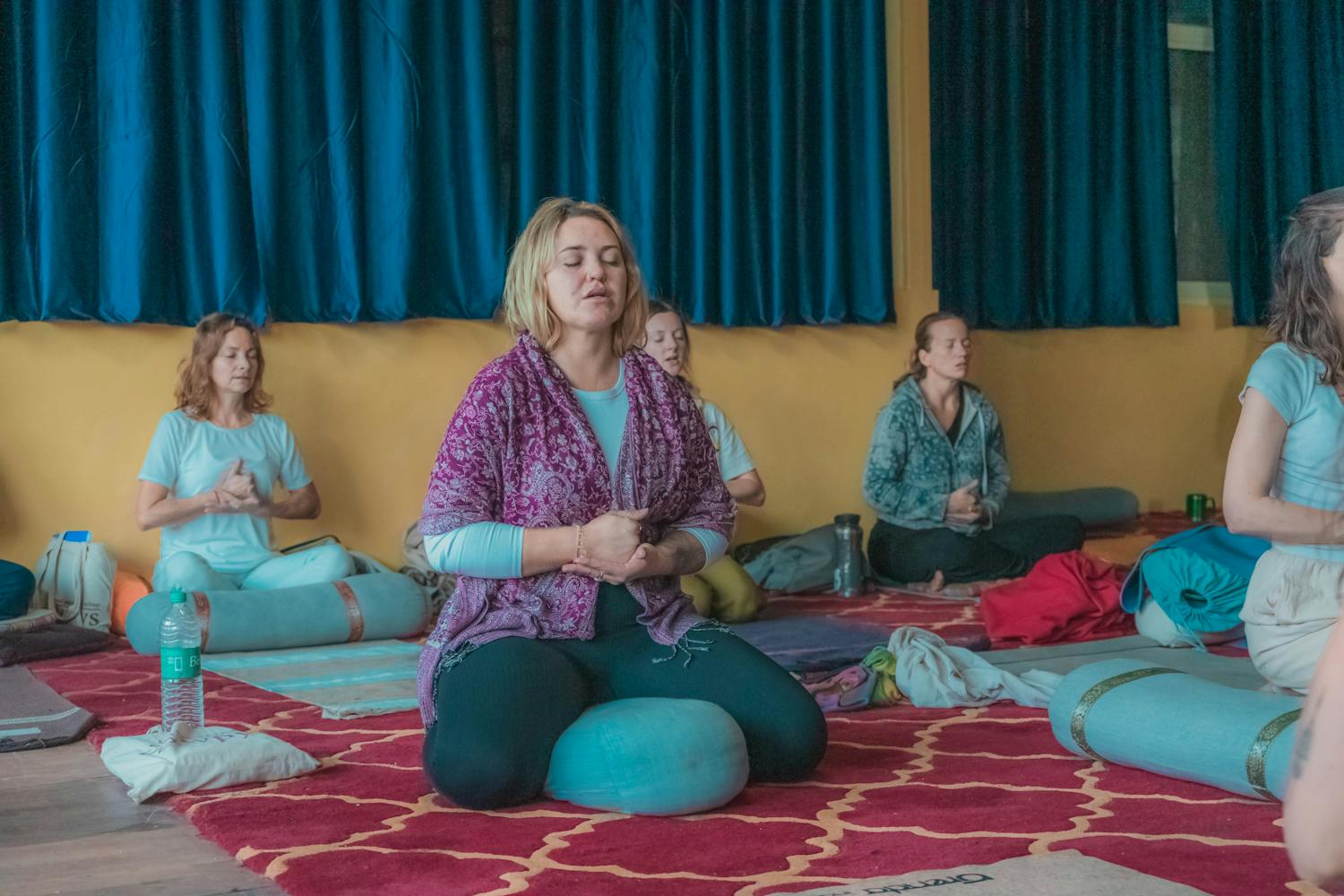
Most ashrams have dedicated meditation halls and hold regular group sittings, often open to non-residents. The atmosphere is traditional and devotional, embedded in the rhythm of ashram life — a beautiful setting for practice, and free or by donation.
Yoga schools
Nearly every yoga school includes meditation and pranayama in its programme, and many open these sessions to visitors. Convenient if you are already doing yoga, and a natural way to combine movement and stillness.
Silent-retreat & Vipassana centres
For deep immersion, dedicated centres run silent retreats — including the renowned 10-day Vipassana courses in the wider region. These are residential, disciplined and transformative; see our meditation guide for how they work.
Riverside & natural spots
Not every “centre” has walls. Many practitioners meditate at quiet ghats, on the beaches, or in the small caves and forest spots around Rishikesh — free, beautiful and deeply atmospheric, especially at dawn.
💡 Tip: The “best” centre depends entirely on your goal. Want to learn a technique properly? A dedicated school. Want devotional atmosphere? An ashram hall. Want a free morning sit? The riverside. Match the venue to what you actually need.
What facilities to expect
- A meditation hall or quiet room — cushions or mats provided; some halls are simple, others purpose-built and beautiful.
- Instruction — from guided sessions to self-practice with a teacher available; varies by centre.
- Group sittings — scheduled times for communal practice, often morning and evening.
- Courses — multi-day or residential programmes at schools and retreat centres.
- Accommodation — at residential centres, ashrams and retreats (basic, sattvic).
- A calm setting — the best centres are quiet, clean and conducive to stillness; some have river or garden views.
Facilities range from a simple ashram hall to well-equipped dedicated centres. Drop-in sessions need almost nothing; residential courses provide room and board. Always check what is included.
What makes a good meditation centre
Beyond facilities, a few qualities separate a genuinely good meditation venue from a merely adequate one:
- Genuine quiet — the single most important factor; a centre away from traffic, music and bustle makes practice immeasurably easier.
- An experienced, present teacher — for instruction-led centres, someone who actually meditates deeply and can guide you, not just press play on a recording.
- A supportive structure — regular session times and a clear approach help a wandering mind settle into routine.
- An unhurried, non-commercial atmosphere — the best centres feel like sanctuaries, not businesses processing customers.
- Cleanliness and simplicity — a calm, uncluttered space supports a calm, uncluttered mind.
- Respect for silence — staff and fellow practitioners who honour quiet, especially before and after sessions.
You can often sense these qualities within minutes of arriving. Trust that feeling — a space that immediately makes you breathe more slowly is usually one where you will practise well.
💡 Tip: Visit a drop-in session before committing to a longer course at any centre. Half an hour in the space tells you more about whether it suits you than any website or review.
Drop-in, course or residential?
| Format | What it is | Best for |
|---|---|---|
| Drop-in session | A single guided or group sitting (free–₹600) | Travellers passing through; a taste |
| Short course | A few days learning a technique | Beginners wanting structure |
| Residential retreat | Multi-day live-in immersion | Deep practice & reset |
| Silent / Vipassana | 10-day silent residential course | Experienced or committed seekers |
| Ashram sittings | Daily group meditation in an ashram | Devotional, immersive practice |
See our meditation guide for costs and what each format involves in depth.
What a day at a residential centre looks like
If you choose a residential meditation retreat or centre, the rhythm is deliberately calm and structured — designed to support deep practice rather than fill the day. A representative schedule:
- 5:30–6:00am – Wake; early-morning meditation when the mind is naturally quiet
- 7:30am – Gentle yoga or walking meditation
- 8:30am – Breakfast, often in silence
- Late morning – Guided technique session or a teaching
- Midday – Lunch and rest
- Afternoon – Practice sessions, self-study or a talk
- Evening – Group meditation, sometimes by the river, then an early night
The pace surprises people used to busy holidays — there is a lot of stillness and rest, which is the point. Silent retreats are stricter still, observing quiet throughout. The simplicity strips away distraction and lets the practice deepen quickly; most guests find that by day three the routine has become deeply calming. For the full picture of formats and the 10-day Vipassana, see our meditation guide.
How to choose a meditation centre
- Match the format to your time — a drop-in for a day, a course for a few days, a retreat for a deep dive.
- Match the style — some centres teach Vipassana, others yogic, mindfulness or mantra meditation; pick what calls you (see our meditation guide).
- Consider the atmosphere — devotional ashram vs secular dedicated centre vs natural riverside.
- Check teacher credentials for courses and residential programmes.
- Read recent reviews from other travellers at your level.
- Mind the location — quieter areas like Ram Jhula and Swarg Ashram suit meditation better than busy streets.
Where the centres are
Meditation venues cluster in the calmer, more spiritual parts of town:
- Ram Jhula & Swarg Ashram: the spiritual core — ashram halls, dedicated centres and a devotional atmosphere.
- Tapovan: yoga schools with meditation, plus some dedicated centres; convenient and traveller-friendly.
- Upriver & quieter spots: retreat centres and natural settings away from the bustle, for deeper immersion.
- The wider region: dedicated Vipassana and silent-retreat centres, often a short distance from town.
💡 Tip: For a pure meditation focus, base yourself in Ram Jhula or Swarg Ashram rather than busy Tapovan or Laxman Jhula — the calmer surroundings make it far easier to settle into stillness between sessions.
Centre, ashram or retreat: which word means what?
The terms overlap confusingly in Rishikesh, so here is a quick clarification to help you search and book the right thing:
- Meditation centre — a venue focused on teaching and facilitating meditation. May offer drop-in sessions, courses or residential programmes. Your best bet if meditation is your specific goal.
- Ashram — a spiritual community where meditation is one part of a wider life of practice, prayer and service. Offers meditation halls and sittings within an immersive, devotional setting. See our ashrams guide.
- Meditation / silent retreat — a fixed-length residential programme of intensive practice (e.g. a 7-day retreat or 10-day Vipassana). A deep dive rather than an ongoing venue.
- Yoga school — primarily teaches yoga but usually includes meditation; good if you want both. See our yoga schools guide.
In short: choose a centre for focused meditation instruction, an ashram for devotional immersion, a retreat for a time-bound deep dive, and a yoga school for movement plus stillness. Knowing which you actually want saves a lot of confusion when booking.
Who are meditation centres for?
| Traveller type | Recommendation |
|---|---|
| Curious beginner | A drop-in session or short course at a dedicated centre or yoga school. |
| Spiritual seeker | An ashram meditation hall; see our spiritual guide. |
| Experienced meditator | A silent retreat or dedicated centre for deep practice. |
| Yoga student | Your school’s meditation sessions, plus a dedicated centre for depth. |
| Budget traveller | Free ashram sittings and riverside spots; see our backpacker guide. |
| Stressed / burnt out | A residential retreat for a genuine reset. |
Booking & practical considerations
A few practical points smooth your search for the right meditation space:
- Drop-ins rarely need booking — just turn up at the listed time; ask at the gate for ashram sittings.
- Courses and residential retreats need advance booking — especially popular silent retreats, which can fill weeks or months ahead.
- Confirm what is included for residential options — accommodation, meals, instruction and any materials.
- Check the daily schedule and rules before committing to a multi-day stay — early starts and silence are common.
- Carry cash — many centres and ashrams prefer it; cards are rarely reliable.
- Allow time to settle — arriving a day before a course helps you adjust to the early rhythm.
- Tell them about any health needs — dietary, mobility or medical — in advance.
None of this is complicated — meditation in Rishikesh is wonderfully accessible — but a little planning ensures you land in a space and format that genuinely fits. For costs across all formats, and the techniques themselves, our meditation guide is the companion to read next.
Common mistakes
- Choosing a busy-area centre when you wanted calm — location matters for stillness.
- Booking a 10-day silent retreat as a total beginner — start with a drop-in or short course.
- Ignoring the style — Vipassana, yogic and mantra centres are different experiences.
- Not checking teacher credentials for residential courses.
- Expecting luxury — meditation centres are simple by design.
- Overlooking free options — ashram sittings and the riverside cost nothing.
Local tips you should know
- Ask at ashrams whether visitors can join their daily meditation — many welcome guests free or by donation.
- Check cafe and guesthouse noticeboards for drop-in sessions and courses.
- Try a sunrise meditation by the river — the quietest, most beautiful time to sit.
- Pair meditation with satsang and sound healing for a complete inner practice.
- Choose Ram Jhula or Swarg Ashram for a meditation-focused stay.
- Apply for your tourist e-Visa early; see how to reach Rishikesh.
Related guides & nearby
- Meditation in Rishikesh — styles, techniques & costs.
- Ashrams in Rishikesh — meditation halls & daily practice.
- Satsangs — spiritual talks & chanting.
- Sound healing — an easy gateway to stillness.
- Rishikesh for spiritual seekers — the full hub.
Frequently asked questions
Where can I meditate in Rishikesh?
At dedicated meditation schools, ashram meditation halls, yoga schools that include meditation, silent-retreat and Vipassana centres, and natural spots like the ghats and riverside — mostly around Ram Jhula, Swarg Ashram and Tapovan.
What types of meditation centre are there?
Dedicated meditation schools (with courses and instruction), ashram meditation halls (devotional, often free), yoga schools offering meditation, residential silent-retreat and Vipassana centres, and informal riverside or cave spots.
Are there free meditation centres in Rishikesh?
Yes — many ashrams hold daily group meditations open to visitors free or by donation, and you can meditate for free at the ghats, beaches and quiet natural spots. Dedicated courses and retreats charge fees.
How do I choose a meditation centre?
Match the format to your available time (drop-in, course or residential), the style to what you want (Vipassana, yogic, mindfulness, mantra), and the atmosphere to your preference (devotional ashram vs secular centre vs nature). Check teacher credentials and reviews.
Can beginners meditate at these centres?
Absolutely — dedicated centres and yoga schools offer beginner-friendly drop-in sessions and short courses with guidance. Only deeper silent retreats assume some prior practice.
What is the difference between a meditation centre and an ashram?
An ashram is a spiritual community where meditation is part of a wider daily life of practice and service; a dedicated meditation centre focuses specifically on teaching and facilitating meditation. Both offer places to sit; ashrams are more immersive and devotional.
Do meditation centres provide accommodation?
Residential centres, ashrams and retreats do — typically simple rooms and sattvic meals. Drop-in sessions and day courses do not; you arrange your own stay nearby.
Which area is best for meditation in Rishikesh?
Ram Jhula and Swarg Ashram — the calm, devotional spiritual core — suit meditation better than the busier Tapovan and Laxman Jhula. Quieter and more conducive to stillness.
How much does it cost to meditate at a centre?
Drop-in sessions are free to around ₹600, short courses cost more, and residential retreats are roughly ₹1,500–₹4,000+ per day. Ashram sittings are often free or by donation, and the 10-day Vipassana is free on donation. See our meditation guide.
Can I just drop in, or do I need to book?
Many centres and ashrams welcome drop-ins for daily sessions, while courses and residential retreats require booking in advance — especially popular silent retreats, which fill up. Check ahead for anything multi-day.
Are there silent meditation retreats near Rishikesh?
Yes — dedicated silent-retreat centres operate in and around Rishikesh, including the renowned 10-day Vipassana courses in the wider region. These are residential and disciplined; see our meditation guide for how they work.
Can I combine meditation with yoga at the same centre?
Often yes — most yoga schools include meditation and pranayama in their programmes, and many ashrams and retreat centres offer both. It is an ideal pairing, with gentle yoga making seated meditation more comfortable.
Find your place to sit
Whether you want a single sunrise sitting by the river or a deep silent retreat, Rishikesh has a meditation space for you. Match the venue to your goal, settle into the calm, and begin. These guides will help:
- Meditation in Rishikesh — styles, techniques & costs
- Ashram stays — immersive daily practice
- Satsangs — talks & chanting
- Rishikesh for spiritual seekers — plan the whole trip