Spiritual
Satsangs in Rishikesh
Gatherings of truth — talks, chanting and the deepest questions, in the company of the wise.
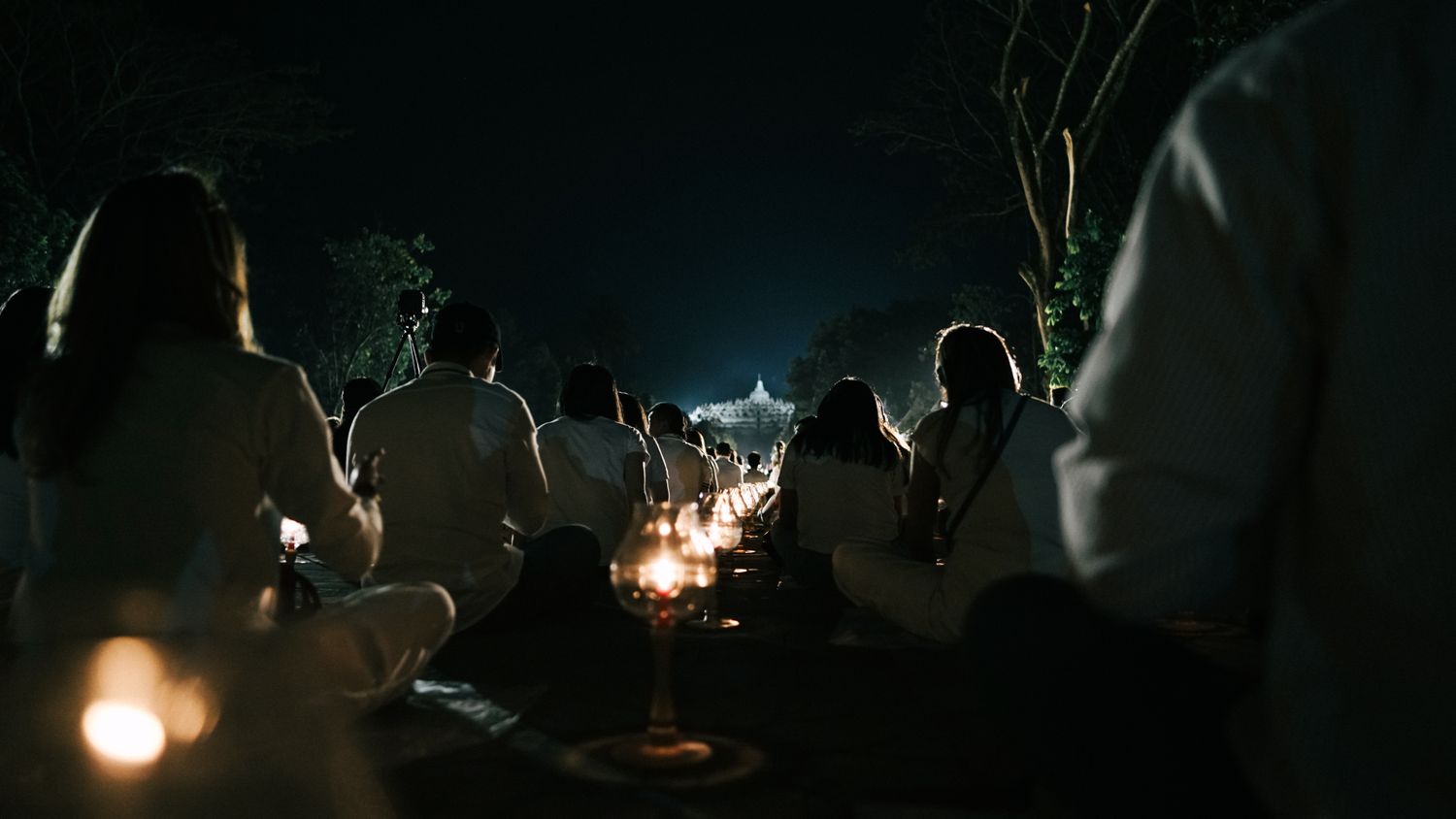
Beyond the yoga mats and the rapids, a quieter Rishikesh hums with conversation about the deepest questions of life — and that is the world of satsang. A satsang is a gathering for spiritual truth: sitting with a teacher or in community to listen, chant, ask questions and reflect on the nature of existence, the self and the divine. For many seekers it is the heart of why they come. This guide explains what a satsang really is, where to find them in Rishikesh, what to expect, the different styles you will encounter, and how to attend respectfully — whether you are a committed seeker or simply curious.
Quick answer: A satsang (Sanskrit for “association with truth”) is a spiritual gathering — typically a teacher giving a talk, leading chanting (kirtan), answering questions, and sitting in shared silence or meditation. In Rishikesh you will find satsangs at ashrams, yoga schools, cafes and temples, mostly around Ram Jhula and Swarg Ashram. Most are free or by donation and open to all. They range from formal scriptural discourses to informal Q&A and devotional singing. Best for spiritual seekers, but welcoming to the curious.
What is a satsang?
The word satsang comes from Sanskrit: sat (truth, being) and sanga (company, association) — literally “keeping company with truth,” or gathering in the presence of the wise — often a guru or realised teacher. In Indian spiritual tradition, satsang is one of the oldest and most valued practices: the idea that simply being in the company of a realised teacher and like-minded seekers, listening to spiritual teaching and turning the mind toward the eternal, is itself a powerful path to inner growth.
In practice a satsang can take many forms. It might be a guru or teacher giving a discourse on a scripture like the Bhagavad Gita or the Upanishads; an informal question-and-answer session where seekers ask about meditation, suffering or the self; a session of devotional chanting (kirtan and bhajan); shared silent meditation; or a blend of all of these. What unites them is the focus: turning attention, together, toward truth and the deeper questions of life.
The role of the teacher
At the centre of most satsangs is a teacher — a guru, swami, or senior practitioner whose presence and words give the gathering its focus. In the Indian tradition, the teacher is not merely a lecturer but a living example of the teaching, someone who has walked the path and can point others toward it. The very act of sitting with such a person — absorbing their presence, not just their words — is considered transformative, which is why satsang is valued as a practice in its own right rather than simply a class.
That said, Rishikesh hosts a huge spectrum of teachers, from revered masters with decades of practice to charismatic newcomers and travelling Western teachers. Most are sincere and worthwhile; a few are not. Approach with both openness and discernment — a great teacher inspires clarity, humility and self-reliance, never dependence or fear. You do not need to adopt a guru to benefit from satsang; many seekers simply attend talks by various teachers and take what genuinely helps, which is a perfectly valid and common approach.
Where to find satsangs in Rishikesh
Ashrams
The most authentic setting. Many ashrams hold regular satsangs — morning or evening gatherings led by resident teachers or visiting masters, often open to non-residents. The atmosphere is traditional and devotional, and attending is one of the best reasons to spend time in or near an ashram.
Yoga schools & retreat centres
Many yoga schools weave satsang into their programmes — evening talks, philosophy sessions and Q&A with senior teachers. If you are doing a course, satsang is often part of it; some schools also open these to outside visitors.
Cafes & informal gatherings
Rishikesh’s spiritual cafes and community spaces often host informal satsangs, kirtan evenings, and talks by travelling teachers — a more relaxed, accessible entry point, frequently advertised on noticeboards around Tapovan and Laxman Jhula.
Temples & the riverside
Around the ghats and temples, especially near the evening Ganga Aarti, you will find spontaneous and scheduled gatherings of chanting and teaching — satsang in its most public, communal form.
💡 Tip: Watch the noticeboards in cafes and guesthouses around Tapovan and Ram Jhula, and ask other travellers — many of the best satsangs, especially with visiting teachers, are shared by word of mouth rather than formally advertised.
What to expect at a satsang
Formats vary, but a typical satsang might include:
- Opening chant or prayer — settling the gathering and invoking a sacred atmosphere.
- A talk or discourse — the teacher speaks on a spiritual theme, scripture or practice.
- Question & answer — seekers ask, and the teacher responds; often the most illuminating part.
- Kirtan / bhajan — call-and-response devotional singing, sometimes with harmonium and drums.
- Silent meditation — a shared period of stillness.
- Prasad — a blessed snack or tea may be shared at the close.
Satsangs may run from 45 minutes to a couple of hours. Some are in English, some in Hindi, many in a mix; teachers used to international audiences often speak in English or have translation. The mood ranges from solemn and philosophical to joyful and musical — there is great variety, so it is worth trying a few.
Why satsang matters: what you gain
Satsang might sound abstract, but its benefits are surprisingly concrete and often deeply felt:
- Clarity on the big questions — hearing teachings on the self, suffering and meaning can reframe how you see your own life.
- Inspiration for practice — satsang gives yoga and meditation their deeper context and renewed motivation.
- A quiet mind — chanting and shared silence calm the nervous system as effectively as a meditation session.
- Community — the company of fellow seekers is encouraging and connecting, easing the loneliness the inner path can bring.
- Direct enquiry — the chance to ask a wise person your own real questions is rare and valuable.
- Joy — devotional kirtan is simply uplifting, regardless of belief.
The traditional teaching holds that “the company you keep shapes the mind” — spend time amid truth-seekers and wisdom, and your own thoughts and tendencies are quietly elevated. Whether or not you accept the metaphysics, most people leave a good satsang calmer, clearer and a little more reflective than they arrived.
💡 Tip: Even if a particular talk goes over your head philosophically, the chanting, the silence and the atmosphere alone make satsang worthwhile. You do not have to understand everything to receive its benefits.
Styles & traditions you will encounter
- Vedanta / self-enquiry — talks and Q&A on the nature of the self and reality, in the Advaita (non-dual) tradition; intellectually rich and inward.
- Bhakti / devotional — centred on love and devotion, with lots of kirtan and chanting; warm and heart-opening.
- Scriptural study — systematic teaching on texts like the Bhagavad Gita, Upanishads or Yoga Sutras.
- Meditation-focused — guidance and shared practice, overlapping with meditation sessions.
- Guru-lineage satsangs — in the tradition of a particular teacher, following their specific teaching style.
- Western-friendly / neo-Advaita — contemporary teachers, often blending Eastern teaching with accessible, conversational delivery.
You do not need to commit to any one tradition — part of the richness of Rishikesh is sampling different teachers and styles to find what resonates.
Satsang etiquette
- Dress modestly and remove shoes where required (often, especially at ashrams/temples).
- Arrive on time and settle quietly — sit on the floor as others do.
- Silence your phone and avoid filming unless clearly permitted.
- Listen respectfully — you need not agree with everything; simply receive it openly.
- Ask sincere questions if invited — genuine enquiry is welcomed; showing off is not.
- Join the chanting if you wish — participation is welcome, but quiet listening is fine too.
- Receive prasad with your right hand; a small donation supports the teacher/venue.
💡 Tip: You are not expected to believe anything or convert to anything. Come as a respectful guest, listen with an open mind, and take what is useful — sincere curiosity is exactly the right attitude for satsang.
Your first satsang: how to start
If satsang sounds appealing but you are not sure how to begin, here is a simple, low-pressure way in for a first-timer:
- Start with a kirtan evening — devotional singing needs no philosophy or background; it is joyful, communal and instantly accessible. Many cafes and ashrams hold them.
- Or attend an ashram’s open evening satsang — ask at the gate of a nearby ashram whether visitors may join; many warmly welcome guests.
- Go with an open, unhurried mind — do not worry about “getting” everything; just be present and let it unfold.
- Sit near the back at first if you feel unsure — you can observe the etiquette and simply soak up the atmosphere.
- Stay for the whole session if you can — satsangs often build, with the silence or chanting at the end being the most powerful part.
- Reflect afterwards — a quiet walk by the river to digest what you heard is part of the practice.
Do not overthink it. Satsang is one of the most welcoming and accessible aspects of spiritual Rishikesh — there is no membership, no commitment and no judgement. Simply show up respectfully, listen, and see what resonates. Many travellers who arrive curious or sceptical find that an evening of chanting and shared stillness becomes one of the warmest, most memorable experiences of their whole trip.
Who is satsang for?
| Traveller type | Recommendation |
|---|---|
| Spiritual seekers | The heart of the journey — seek out teachers in the tradition that calls you; see our spiritual guide. |
| Yoga / meditation students | A natural complement to practice; deepens the philosophy behind it. |
| The curious & open-minded | A fascinating window into Indian thought; try an informal cafe satsang or kirtan first. |
| Music lovers | Kirtan-based satsangs are joyful and accessible even without the philosophy. |
| Strictly secular travellers | Still worthwhile as cultural insight; a devotional kirtan evening is the easiest entry. |
| Solo travellers | A great way to meet like-minded people; see our solo guide. |
Choosing a teacher wisely
With so many teachers in Rishikesh, a little discernment serves you well — especially if you are drawn to study with someone over time:
- Look for humility, not showmanship — the best teachers point you to your own insight rather than to themselves.
- Notice the effect on you — a good satsang leaves you clearer, calmer and more self-reliant, not confused, fearful or dependent.
- Be wary of pressure — demands for money, secrecy, exclusivity or unquestioning obedience are warning signs.
- Sample widely first — attend different teachers and traditions before committing your time to any one.
- Trust your own judgement — sincere enquiry and common sense are your best guides; you are not obliged to accept anything that does not ring true.
- Talk to long-term students — their experience reveals a teacher’s real character over time.
The vast majority of satsangs in Rishikesh are safe, sincere and rewarding. Keeping a clear, open mind — receptive but not gullible — lets you draw deeply from this tradition while staying grounded in your own good sense.
Common mistakes
- Expecting a fixed format — satsangs vary hugely; try several styles.
- Treating it as a performance — it is participatory spiritual practice, not a show.
- Filming without permission — always ask; many teachers prefer presence over phones.
- Asking questions to debate or impress — satsang Q&A is for sincere enquiry.
- Judging by one session — if a teacher or style does not resonate, try another.
- Skipping it entirely — even sceptics often find satsang the most memorable part of spiritual Rishikesh.
Local tips you should know
- Check cafe and guesthouse noticeboards around Tapovan, Laxman Jhula and Ram Jhula for schedules.
- Many ashrams hold regular evening satsangs open to visitors — just ask at the gate.
- A kirtan evening is the easiest, most joyful first satsang if the philosophy feels daunting.
- Pair satsang with the Ganga Aarti and an ashram stay for a full spiritual immersion.
- Carry a small donation to support teachers and venues; satsangs run on goodwill.
- Apply for your tourist e-Visa early; see how to reach Rishikesh.
Related guides & nearby
- Ashrams in Rishikesh — where many satsangs are held.
- Meditation in Rishikesh — the companion practice.
- Spiritual retreats — go deeper into self-enquiry.
- Ganga Aarti — communal devotion by the river.
- Rishikesh for spiritual seekers — the full hub.
Frequently asked questions
What is a satsang?
A satsang is a spiritual gathering — the Sanskrit means “association with truth.” It typically involves a teacher giving a talk, leading devotional chanting (kirtan), answering seekers’ questions, and sitting in shared silence or meditation, all focused on spiritual truth and self-understanding.
Where can I find satsangs in Rishikesh?
At ashrams, yoga schools, spiritual cafes, retreat centres and around the temples and ghats — mostly in the Ram Jhula, Swarg Ashram, Tapovan and Laxman Jhula areas. Check noticeboards and ask at ashrams; many are shared by word of mouth.
Are satsangs free?
Most are free or run by donation, and open to everyone. A small donation to support the teacher or venue is appreciated. Some structured courses or retreats that include satsang charge a fee.
Can non-Hindus and beginners attend a satsang?
Absolutely — satsangs welcome people of all backgrounds and levels. You are not expected to believe anything or know the tradition. Come respectfully, listen with an open mind, and take what is useful.
What happens at a satsang?
Formats vary but often include an opening chant, a talk or discourse on a spiritual theme, a question-and-answer session, devotional singing (kirtan), shared silent meditation, and sometimes prasad (a blessed snack or tea) at the end.
How long does a satsang last?
Typically anywhere from 45 minutes to a couple of hours, depending on the teacher and format. Kirtan evenings and informal gatherings can be shorter or longer.
Are satsangs in English?
Many are, especially those led by teachers used to international audiences, and some offer translation. Others are in Hindi or a mix. Ask in advance if language matters to you; kirtan (chanting) needs no translation.
What should I wear to a satsang?
Dress modestly — cover shoulders and knees, especially at ashrams and temples. You will often sit on the floor and remove your shoes, so wear comfortable, easy clothing and slip-on footwear.
What is the etiquette at a satsang?
Dress modestly, remove shoes where required, arrive on time and sit quietly, silence your phone, avoid filming unless permitted, listen respectfully, ask only sincere questions, and receive prasad with your right hand. A small donation is welcome.
What is the difference between satsang and kirtan?
Kirtan is devotional call-and-response chanting, often part of a satsang. Satsang is the broader gathering for spiritual truth, which may include kirtan along with talks, Q&A and meditation. A kirtan-focused satsang centres on the singing.
Do I need to follow a particular guru or tradition?
No — you are free to attend satsangs across different teachers and traditions to find what resonates. Sampling Vedanta, devotional and meditation-focused satsangs is part of the richness of spiritual Rishikesh.
Is satsang worth attending if I am not religious?
Yes — many secular and curious travellers find satsang fascinating and moving, as a window into Indian thought and a chance for reflection. A joyful kirtan evening is the easiest, most accessible entry point.
Keep company with truth
Satsang is the quiet, profound core of spiritual Rishikesh — a chance to sit with wisdom, ask the big questions, and chant your heart open. Try a few teachers and styles, come with sincere curiosity, and see what speaks to you. These guides will help:
- Ashram stays — where satsangs are held
- Meditation in Rishikesh — the companion practice
- Spiritual retreats — go deeper
- Rishikesh for spiritual seekers — plan the whole trip