Spiritual
Ashrams in Rishikesh
Live the spiritual life — simple rooms, daily practice and the rhythm of the river.
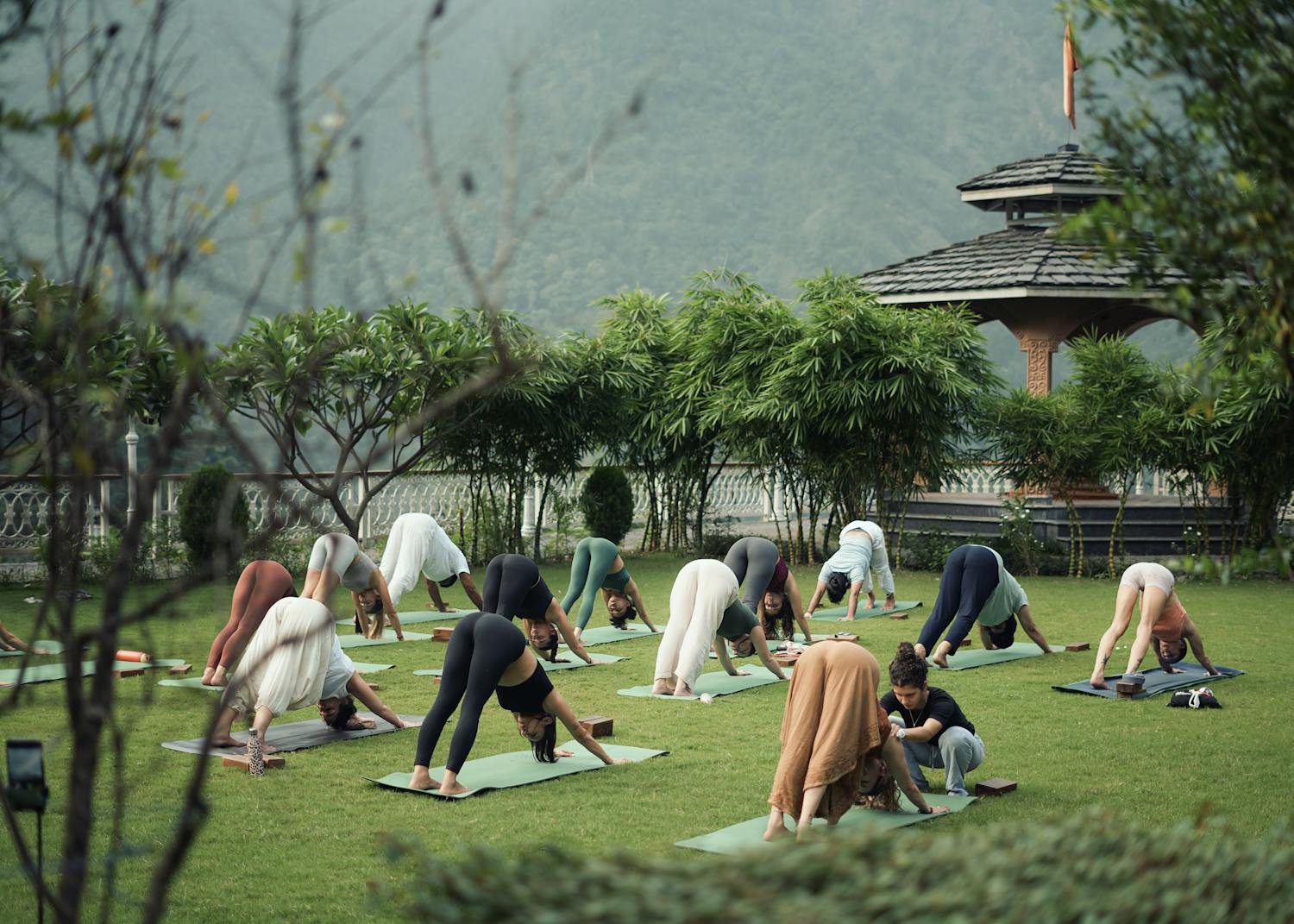
To truly understand Rishikesh, you have to step inside an ashram — a spiritual community where life revolves around practice, simplicity and self-enquiry rather than sightseeing. An ashram stay is the most authentic way to experience the town’s spiritual heart: early mornings, yoga and meditation, simple sattvic food, and a rhythm of life stripped of distraction. This guide explains what an ashram is, what daily life and the rules are really like, how to choose and book one, what it costs, and who it suits — so you arrive knowing exactly what you are signing up for.
Quick answer: An ashram in Rishikesh is a spiritual community where you can stay as a guest and join its daily routine of yoga, meditation, prayer and simple living. Most cluster around Ram Jhula and Swarg Ashram. Stays are cheap — often ₹300–₹1,500/day or by donation — and usually include a simple room and sattvic meals. Expect rules: no alcohol/meat, modest dress, early starts, set timings, sometimes silence. Best for spiritual seekers, yoga students and curious, respectful travellers; less suited to those wanting hotel comforts or nightlife.
What is an ashram?
An ashram is a spiritual hermitage or monastery in the Indian tradition — historically a secluded place where a guru and disciples lived and pursued spiritual practice (sadhana) — the ashrama of classical Hindu tradition. Today many Rishikesh ashrams welcome guests, including foreigners, who want to experience that life: rising before dawn, practising yoga and meditation, studying philosophy, eating simple vegetarian food, and living with discipline and minimal distraction. The emphasis is on inner work and simplicity, not comfort or service.
This is the crucial mindset shift: an ashram is not a hotel. You are a guest in a spiritual community with its own rules and routine, not a customer being served. Rooms are basic, the day is structured, and you are expected to participate respectfully. For many travellers that is precisely the appeal — a rare chance to live, however briefly, the contemplative life this town is built around.
Types of ashram: not all are the same
“Ashram” covers a wide range of communities, and knowing the type helps you choose well. Broadly, you will find:
- Yoga-focused ashrams — daily asana and pranayama at the centre, often with structured courses; closest to a yoga school but within a spiritual community.
- Meditation-focused ashrams — emphasis on stillness, silence and inner practice; overlaps with meditation retreats.
- Devotional (bhakti) ashrams — centred on chanting, kirtan, prayer and devotion to a deity or guru; warm and musical.
- Philosophy / Vedanta ashrams — study of scripture and self-enquiry, with talks and discussion.
- Guru-lineage ashrams — built around a particular teacher or tradition, following their specific practices and schedule.
- Large institutional ashrams — well-organised, foreigner-friendly, with set programmes; vs smaller, more traditional and informal ones.
Match the type to what you actually want: daily yoga, deep silence, devotional warmth or philosophical study are quite different experiences. Read each ashram’s focus before applying.
Daily life in an ashram
Routines vary, but a typical ashram day looks something like this:
- 5:00–5:30am – Wake (often to a bell); some ashrams begin with prayer or chanting
- 6:00am – Meditation and/or yoga practice
- 7:30am – Pranayama or a philosophy/scripture session
- 8:30am – Simple breakfast (often in silence)
- Daytime – Karma yoga (selfless service/chores), study, self-practice or rest
- Afternoon – A second yoga or meditation session, or a talk (satsang)
- Evening – Aarti, kirtan (devotional singing) or meditation; the Ganga Aarti at riverside ashrams
- 9:00–9:30pm – Lights out — early to bed for the early start
The structure is the point: a disciplined rhythm clears mental clutter and lets the practice deepen. Days are full but not rushed, and the simplicity is restorative once you settle into it.
💡 Tip: Expect the first day or two to feel like a shock — the early start, the simple food, the lack of comforts and stimulation. Push through; most people find the routine becomes deeply calming by day three.
The rules (and why they exist)
Ashrams have rules, and they are non-negotiable — part of respecting the community you are joining. Common ones:
- No alcohol, drugs, meat, eggs (often no onion/garlic too) — the sattvic lifestyle.
- Modest dress — shoulders and knees covered; clean, simple clothing.
- Set timings for meals, gates and practice — turn up on time or miss them.
- Silence at certain times or places (some ashrams observe more silence than others).
- No smoking anywhere on the premises.
- Respect for others’ practice — quiet, no loud music or phone calls.
- Sometimes a gate curfew — you are expected back by a set evening hour.
- Participation in the daily routine and sometimes karma yoga (service).
These are not arbitrary — they create the conditions for inner practice and protect the atmosphere for everyone. If they feel too restrictive, an ashram may not be the right choice; a yoga school or guesthouse offers more freedom.
Karma yoga & seva: service as practice
Many ashrams ask guests to take part in karma yoga (also called seva) — selfless service to the community. This might mean helping in the kitchen, cleaning common areas, gardening, or assisting with the ashram’s work. Far from being unpaid labour, it is considered a core spiritual practice: working without attachment to reward, as a form of meditation in action and a way of giving back to the community that hosts you.
For many guests, karma yoga becomes an unexpected highlight — a grounding, humbling counterbalance to the inward focus of meditation and study, and a way to genuinely belong rather than merely visit. Approach it in the right spirit: not as a chore to get through, but as part of the practice. Helping chop vegetables in companionable near-silence, or sweeping a courtyard at dawn, can be quietly profound. If an ashram includes seva, embrace it — it is one of the things that distinguishes a real ashram stay from simply renting a cheap, quiet room.
💡 Tip: Volunteer willingly and do whatever task you are given without complaint or seeking praise — that attitude is the practice. Guests who embrace seva are remembered fondly; those who avoid it miss the point of being there.
What does an ashram stay cost?
Ashram stays are remarkably affordable, and the pricing model varies:
- Donation-based: some traditional ashrams ask only for a donation (dakshina) — give what you can; a fair amount covers your room and food.
- Fixed modest fee: many charge roughly ₹300–₹1,500 per day, including a simple room and sattvic meals.
- Programme-based: ashrams running structured yoga/meditation courses charge course fees on top, varying by length.
Even the fixed fees are low because the ashram’s purpose is spiritual, not commercial. See our yoga & wellness costs guide and budget guide to plan overall spend.
💡 Tip: With donation-based ashrams, give generously and honestly — your stay genuinely costs the ashram money for food and upkeep, and these places run on the goodwill of guests. Treating a donation ashram as “free” is poor form.
How to choose an ashram
- Match the focus — some ashrams emphasise yoga, others meditation, philosophy, devotion (bhakti) or service; pick one aligned with what you seek.
- Check the rules & intensity — how strict, how much silence, how early the start; be honest about what you can sustain.
- Foreigner-friendly? — some ashrams are well set up for international guests with English-language sessions; others are more traditional.
- Read recent reviews from other travellers for the real atmosphere and conditions.
- Confirm booking & requirements — many require advance application, a minimum stay, and sometimes references or a registration form.
- Location — most are around Ram Jhula and Swarg Ashram, the calm spiritual core.
How to book
Booking an ashram is different from booking a hotel. Many require you to apply in advance — by email or an online form — stating your interest, dates and any experience, and to agree to their rules. Some have minimum stays (a few days to a week or more). Walk-in availability exists at some, but the well-known ashrams fill up, especially in peak season and during festivals. Always confirm: the daily fee or donation, what is included, the rules, gate timings, and whether a specific programme is running during your dates.
💡 Tip: Apply early and read the ashram’s guidelines carefully before you commit. Arriving without understanding the rules — then chafing against them — is the most common cause of a disappointing stay.
Ashram vs yoga school vs guesthouse
If you are unsure whether an ashram is right for you, it helps to compare it with the alternatives that draw similar travellers:
| Ashram | Yoga school | Guesthouse | |
|---|---|---|---|
| Focus | Spiritual life | Yoga training | Just accommodation |
| Rules | Strict, structured | Some, course-led | Minimal |
| Comfort | Basic | Basic–moderate | Your choice |
| Freedom | Low (set routine) | Moderate | High |
| Cost | Very low / donation | Course fee | Varies |
| Best for | Immersive spiritual life | Learning yoga | Independence & comfort |
The honest steer: choose an ashram if you want to live the spiritual life and embrace structure; a yoga school if your main goal is learning yoga with some freedom; and a guesthouse or hotel if you value independence, comfort and your own schedule. Many travellers do a mix — an ashram stretch for depth, then a guesthouse to relax.
Who is an ashram stay for?
| Traveller type | Recommendation |
|---|---|
| Spiritual seeker | Ideal — the most authentic way to experience spiritual Rishikesh; see our spiritual guide. |
| Yoga / meditation student | A deep, immersive complement to practice; pair with yoga or meditation. |
| Curious, respectful traveller | A profound experience if you embrace the rules and simplicity. |
| Wanting comfort / nightlife | Not for you — choose a guesthouse or hotel instead. |
| Solo female traveller | Generally very suitable and safe; choose an established ashram — see our solo guide. |
| Families | Some welcome families; check rules and suitability for children first. |
What an ashram stay gives you
Beyond the cheap room and the daily yoga, what do people actually take away from an ashram stay? The benefits tend to be quieter and more lasting than a typical holiday:
- A reset of the nervous system — days of early nights, simple food, no alcohol and little screen time leave most people calmer and clearer than they have felt in months.
- A genuine taste of a different way of living — disciplined, communal and inward, which can quietly reframe your relationship with your own busy life back home.
- Deeper practice — with no distractions and a supportive routine, yoga, meditation and self-study progress faster than they ever do at home.
- Perspective and stillness — space to think, feel and notice what usually gets drowned out by noise and busyness.
- Simple, portable habits — rising early, eating mindfully, sitting quietly — that many guests carry home long after the trip.
- Connection — with fellow seekers from around the world, and with a centuries-old living tradition.
You do not have to be religious to receive these gifts. Many guests arrive curious rather than devout and leave having found exactly the reset and perspective they did not know they needed. That is the quiet power of an ashram: it asks very little of your beliefs and a great deal of your attention, and it rewards that attention generously — which is exactly why an ashram stay so often becomes the part of a Rishikesh trip that people remember, and return for.
Common mistakes
- Expecting a hotel — ashrams are spiritual communities with basic rooms and rules.
- Not reading the rules before booking, then resenting them.
- Treating donation ashrams as free — give fairly; they rely on it.
- Choosing a mismatched focus — a bhakti ashram if you wanted silent meditation, say.
- Booking too short — it takes a couple of days to settle into the rhythm.
- Disrespecting the routine — turning up late or skipping practice undermines the experience for everyone.
Local tips you should know
- Most ashrams are in Ram Jhula / Swarg Ashram — the vehicle-free, vegetarian spiritual core.
- Pack modest, simple clothing and a shawl; see the packing list.
- Bring a positive, open attitude — the experience is what you make of it.
- Attend the riverside Ganga Aarti — many ashrams host or are near it.
- Carry some cash for donations and fees; cards are rarely accepted.
- Apply for your tourist e-Visa early; see how to reach Rishikesh.
Related guides & nearby
- Ganga Aarti — the evening ceremony at riverside ashrams.
- Meditation in Rishikesh — deepen the inner practice.
- Satsangs — spiritual talks and gatherings.
- Yoga in Rishikesh — schools and trainings.
- Rishikesh for spiritual seekers — the full hub.
Frequently asked questions
What is an ashram?
An ashram is a spiritual hermitage or community in the Indian tradition where people live and pursue spiritual practice. Many Rishikesh ashrams welcome guests to join their daily routine of yoga, meditation, prayer and simple living.
Can foreigners stay in a Rishikesh ashram?
Yes — many ashrams welcome international guests, and some are well set up for them with English-language sessions. You usually need to apply in advance, agree to the rules, and respect the daily routine.
How much does an ashram stay cost?
It is very affordable — often ₹300–₹1,500 per day including a simple room and sattvic meals, and some traditional ashrams run on donation. Structured courses cost extra.
What are the rules in an ashram?
Common rules include no alcohol, drugs, meat or eggs; modest dress; set timings for meals and practice; no smoking; quiet and respect for others; sometimes silence and a gate curfew; and participation in the daily routine.
What is daily life like in an ashram?
Early starts (around 5–5:30am), morning meditation and yoga, simple vegetarian meals often in silence, philosophy or scripture sessions, sometimes karma yoga (service), evening prayer or aarti, and an early bedtime.
Is an ashram stay like a hotel?
No — an ashram is a spiritual community, not a hotel. Rooms are basic, the day is structured around practice, and you are a participating guest rather than a served customer. Embracing the simplicity is part of the experience.
Where are the ashrams in Rishikesh?
Most cluster around Ram Jhula and Swarg Ashram — the calm, vegetarian, largely vehicle-free spiritual core of Rishikesh, often right by the river.
Do I need to book an ashram in advance?
Usually yes — many require advance application by email or form, agreement to their rules, and sometimes a minimum stay. Well-known ashrams fill up in peak season and during festivals, so book early.
Are ashrams safe for solo female travellers?
Generally yes — ashrams are typically safe and many solo women stay in them. Choose an established ashram, follow its guidelines, and use normal precautions.
What should I pack for an ashram stay?
Modest, simple clothing covering shoulders and knees, a shawl, comfortable layers, personal toiletries, any medication, and some cash for fees or donations. Keep it minimal in keeping with the simple lifestyle.
How long should I stay in an ashram?
At least a few days — it takes a couple of days to settle into the early starts and routine before the benefits set in. Some ashrams have minimum stays, and longer immersions deepen the experience.
Can I drink alcohol or eat meat in an ashram?
No — ashrams follow a sattvic lifestyle with no alcohol, drugs, meat or eggs (often no onion or garlic either). Rishikesh as a whole is largely alcohol-free and vegetarian.
Experience ashram life
An ashram stay is the deepest way to know Rishikesh — a rare chance to live simply, practise daily, and step out of the noise of ordinary life. Choose one that matches your path, embrace the rules, and arrive open. These guides will help:
- Ganga Aarti — the evening ceremony
- Meditation in Rishikesh — deepen your practice
- Yoga in Rishikesh — schools & trainings
- Rishikesh for spiritual seekers — plan the whole trip