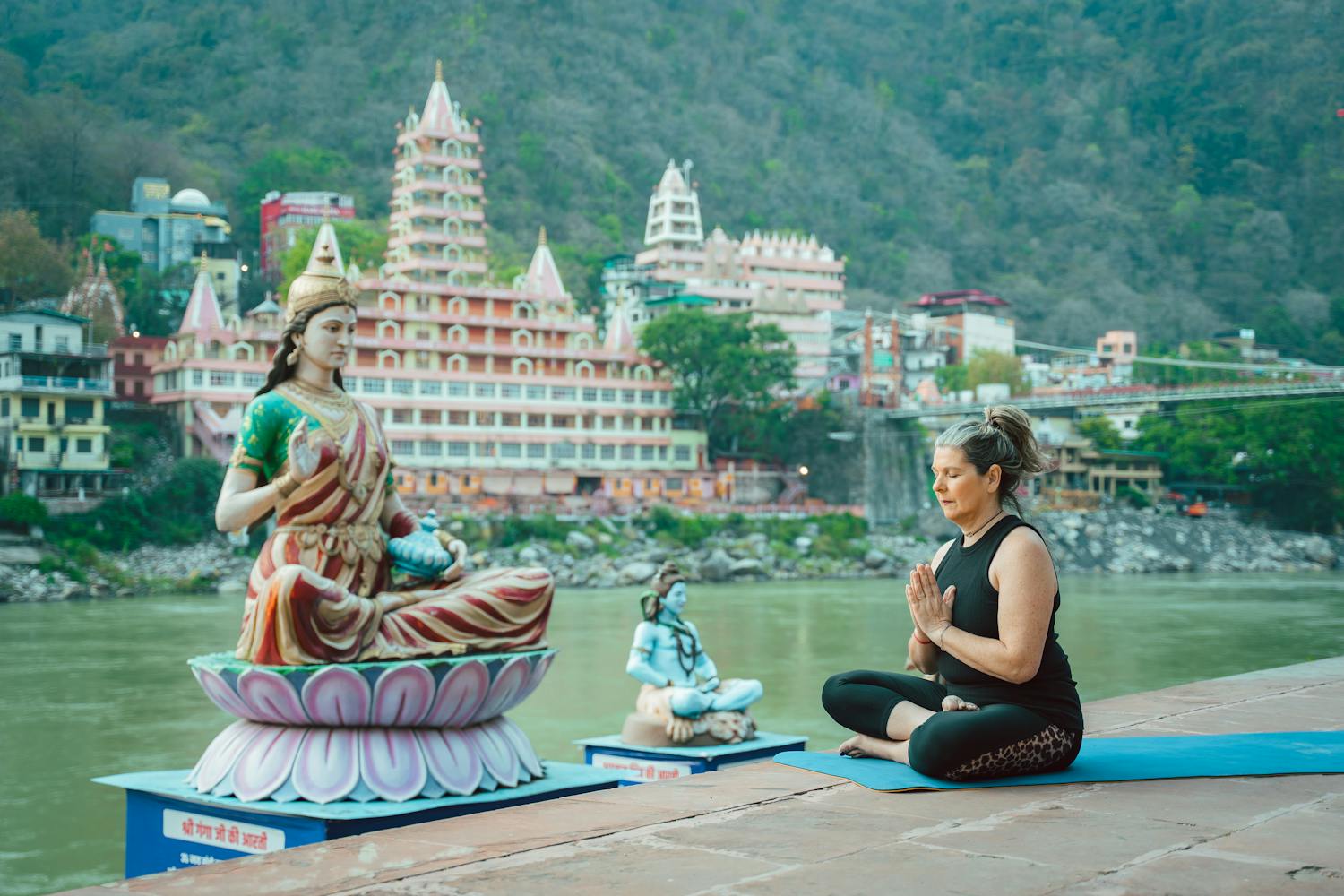
Areas & Neighbourhoods
Ram Jhula, Rishikesh
The ashram and pilgrim heart of Rishikesh — a guide to the bridge, the great ashrams, the ghats and the famous riverside aarti.
Quick answer
Ram Jhula is the ashram and pilgrim quarter of Rishikesh, centred on its own suspension footbridge a little downstream of Laxman Jhula. It’s the gateway to the great riverside ashrams — Sivananda, Parmarth Niketan, Geeta Bhawan — and to Swarg Ashram on the east bank. The atmosphere is devotional and traditional: ghats, temples, pilgrims, and one of the most famous Ganga Aartis at Parmarth Niketan. Quieter and more spiritual than Tapovan. For stays, see the where to stay hub.
Where is Ram Jhula and what is it like?
Ram Jhula sits on the Ganga a short way downstream of Laxman Jhula, where its own suspension footbridge links the two banks. If Laxman Jhula is the photogenic, cafe-lined crossing and Tapovan is the yoga-and-traveller hub, Ram Jhula is the spiritual and devotional heart of Rishikesh — the area most associated with its great ashrams, its pilgrims, and the deep tradition of study and worship that made the town a magnet for seekers in the first place.
Cross the bridge and you enter a world of ashram gates, temple spires, ghats crowded with bathers and worshippers, bookstalls of scripture, and the steady murmur of bells and chanting. It is generally quieter and more traditional than the traveller-heavy lanes upstream — less about cafes and shopping, more about pilgrimage, learning and the river. This is where many visitors come for the famous evening aarti, to stay in an ashram, or simply to feel the older, devotional Rishikesh. This guide is the neighbourhood companion to the Swarg Ashram guide (the ashram complex on the east bank) and the wider areas overview.
Ram Jhula at a glance
| Feature | Details |
|---|---|
| Location | Around the Ram Jhula crossing, downstream of Laxman Jhula |
| Known for | Great ashrams, ghats, the Parmarth Niketan aarti |
| Vibe | Devotional, traditional, quieter, pilgrim-focused |
| Best for | Ashram stays, spiritual study, the aarti, pilgrims |
| Getting around | On foot; the bridge links to Swarg Ashram |
| Pairs with | Swarg Ashram (east bank), Laxman Jhula & Tapovan (upstream) |
Things to do around Ram Jhula
Ram Jhula’s draws are spiritual and riverside rather than commercial. The area rewards a slow, respectful pace — here’s what not to miss.
Witness the Parmarth Niketan aarti
The evening Ganga Aarti at Parmarth Niketan, on the east bank, is among the most famous in India — children in robes chanting, lamps and song, and the river glowing with floating lights at dusk. It’s free, deeply moving, and the highlight of an evening here. Arrive early and sit on the ghat steps.
Visit the great ashrams
Ram Jhula is the gateway to Rishikesh’s most renowned ashrams — names like Sivananda (Divine Life Society), Parmarth Niketan and Geeta Bhawan. Many welcome visitors for the aarti, classes, satsangs or a stay; the tradition of ashram learning here is part of why Rishikesh became a global spiritual centre.
Bathe and sit at the ghats
The ghats around Ram Jhula are alive with pilgrims taking a holy dip in the cold, clear Ganga, performing rituals, or simply sitting in contemplation. You’re welcome to sit, watch and dip your feet — with care for the strong current and respect for those at worship.
Browse the markets & bookstalls
The lanes near the bridge sell prayer beads, religious books, incense, ayurvedic remedies and simple snacks — more devotional and practical than the souvenir-heavy shopping of Laxman Jhula. Look out for the famous Chotiwala restaurants near the bridge, a long-running local institution.
Attend satsangs, yoga & lectures
The ashrams run satsangs, yoga classes, meditation and philosophy lectures, often open to visitors. It’s a chance to experience the teaching tradition at its source rather than in a commercial school.
The vibe: who Ram Jhula suits
- Pilgrims & the spiritually-minded — the devotional heart of Rishikesh.
- Ashram-stay seekers — the great ashrams cluster here; see ashram stays.
- Aarti-goers — the Parmarth Niketan ceremony is a short walk away.
- Quiet-seekers — calmer and more traditional than the traveller lanes upstream.
- Budget & pilgrim travellers — ashrams and dharamshalas keep costs very low.
- Those interested in yoga philosophy — satsangs and lectures at the source.
It suits you less if you want cafes, shopping and a buzzing traveller scene (Tapovan), or adventure and riverside seclusion (Shivpuri). Ram Jhula is about the sacred river and the ashrams, first and foremost.
Getting around Ram Jhula
- On foot — the bridge, ghats, ashrams and markets are all walkable on both banks.
- The Ram Jhula footbridge links the west bank to Swarg Ashram and the big ashrams on the east side.
- To Laxman Jhula & Tapovan — a short auto ride or riverside walk upstream.
- Ferry boats sometimes cross the river here too — a scenic alternative to the bridge.
- Autos & taxis wait at the road head for the stations, airport and the main town.
Local tip: dress and behave a notch more conservatively here than in Tapovan. Ram Jhula is a working pilgrimage centre, not a traveller hangout — cover shoulders and knees, lower your voice near the ashrams and ghats, and you’ll be warmly received.
What is an ashram — and staying in one here
Since Ram Jhula is defined by its ashrams, it helps to know what one is. An ashram is a spiritual hermitage or community built around a teacher and a daily discipline of practice, study and service. Rishikesh’s ashrams range from large, organised institutions offering structured courses and comfortable rooms to simple, donation-based houses. Staying in one means accepting a routine — early starts, set meal times, modest dress, sometimes silence or a no-phone rule — in exchange for depth, simplicity and very low cost. Ram Jhula is the best place in Rishikesh to do this; our ashram stays guide explains how to choose and book one.
How Ram Jhula compares to other areas
Each Rishikesh neighbourhood has a distinct role — here’s where Ram Jhula fits, with all of them in the areas hub:
| Area | Character | Best for |
|---|---|---|
| Ram Jhula | Ashrams, ghats, devotional, quieter | Spiritual study, ashram stays, the aarti |
| Swarg Ashram | Traffic-free ashram complex (east bank) | Temples, pilgrims, immersion |
| Laxman Jhula | Atmospheric, temples, river views | Sightseeing, photography, couples |
| Tapovan | Yoga hub, cafes, lively | Yoga, nomads, food, first-timers |
| Shivpuri | Riverside, adventure, secluded | Rafting, camping, nature |
Ram Jhula and Swarg Ashram together form the ashram quarter, linked by the bridge; Laxman Jhula and Tapovan are a short ride upstream for cafes and yoga.
Best time to visit Ram Jhula
Ram Jhula is rewarding year-round, with the season shaping the experience — see the best time to visit and weather guides:
- Autumn & spring (Oct–Nov, Mar–Apr) — ideal: pleasant weather for ghats, aarti and ashram life.
- Winter (Dec–Feb) — cold but serene; ashrams are quieter and deeply atmospheric.
- Summer (May–Jun) — hot midday; early mornings at the ghats are best.
- Festivals — times around major Hindu festivals bring huge pilgrim crowds and intense devotional energy — unforgettable, but very busy.
Practical tips for Ram Jhula
A few pointers for a respectful, smooth visit. India’s tourism portal, Incredible India, offers a useful overview of Rishikesh, and foreign visitors usually enter on an electronic visa obtained only through the official portal at indianvisaonline.gov.in — keep a printout for ashram and hotel check-ins. Then:
- Dress conservatively — this is a pilgrimage centre; cover shoulders and knees, carry a scarf. See the packing list.
- Respect ashram rules — timings, silence, photography limits and shoe removal; follow signs and ask if unsure.
- Be discreet at the ghats & aarti — ask before photographing worshippers.
- Carry cash — ashrams, stalls and donations are cash-based; see the budget guide.
- Mind the river & monkeys — strong current, bold monkeys; see the safety guide.
- Note it’s largely vegetarian & dry — in keeping with its sacred character.
What’s nearby
- Swarg Ashram — the traffic-free ashram complex across the bridge
- Laxman Jhula & Tapovan — cafes, temples and yoga upstream
- Beatles Ashram — Chaurasi Kutia, a short distance away on the east bank
- Triveni Ghat — the main-town ghat with its own grand aarti, downstream
- Neelkanth Mahadev — a hilltop temple day trip from here
Why Ram Jhula matters
Ram Jhula is, in many ways, the reason Rishikesh became Rishikesh. Long before yoga studios and rooftop cafes, this was a centre of spiritual learning where renowned teachers established ashrams on the banks of the sacred Ganga, attracting students and pilgrims from across India and, eventually, the world. The great institutions here — with their schools of yoga, Vedanta and meditation — helped carry these teachings to a global audience over the twentieth century, laying the groundwork for the town’s modern reputation.
Standing at the ghats during the evening aarti, surrounded by chanting and lamplight with the ashram towers behind you, you feel that continuity directly. This is not a heritage display but a living tradition, still practised daily by thousands. For visitors, that authenticity is the gift of Ram Jhula: a chance to encounter the spiritual culture of Rishikesh at its source, rather than in a packaged form. Even if you stay in Tapovan, an evening here is one of the most meaningful things you can do in the town.
A day around Ram Jhula
To picture the rhythm:
- Dawn — pilgrims bathing at the ghats, ashram bells, morning prayers carrying over the water
- Morning — yoga and philosophy classes in the ashrams; a quiet walk across the bridge
- Midday — a simple thali at Chotiwala or an ashram canteen; rest through the heat
- Afternoon — a satsang or lecture, browsing scripture stalls, sitting by the river
- Dusk — the Parmarth Niketan aarti, the emotional high point of the day
- Evening — an early, simple dinner; the ashrams settle into quiet
It’s a slower, more inward rhythm than the traveller areas — and for many visitors, an unexpectedly affecting one.
The bottom line on Ram Jhula
Ram Jhula is the spiritual heart of Rishikesh — the place to encounter its ashrams, its ghats and its living devotional tradition, crowned by one of the most famous aartis in India. It’s quieter and more traditional than the cafe-and-yoga areas upstream, ideal for pilgrims, ashram-stayers, and any traveller drawn to the older, deeper side of the town. Pair it with the adjoining Swarg Ashram across the bridge for the full experience.
Whether you base here for an ashram stay or simply walk over from Tapovan for the evening aarti, Ram Jhula offers something the rest of Rishikesh can only hint at: the sacred river and its tradition, up close and unfiltered. Explore the other neighbourhoods and plan the practical side from the trip-planning hub.
Etiquette at the ashrams and ghats
Ram Jhula is a working place of worship, and a little awareness goes a long way — both out of respect and to get the most from your visit. A few simple guidelines:
- Dress modestly — cover shoulders and knees; women may wish to carry a scarf for the head at certain shrines.
- Remove shoes before entering temples and many ashram halls; follow the lead of those around you.
- Keep quiet and still during prayers, the aarti and meditation — it’s a ceremony, not a show.
- Ask before photographing people at worship, sadhus, or inside ashrams; many places restrict photography entirely.
- Don’t touch offerings or step over people seated at the ghats.
- Accept prasad (blessed food) graciously with your right hand if it’s offered.
- Move gently through bathing areas — the ghats are sacred, not a swimming spot.
None of this is complicated; it simply reflects that you’re a guest in a living tradition. Travellers who arrive with that mindset find Ram Jhula far more rewarding — and locals far more welcoming.
Combining Ram Jhula with your trip
Ram Jhula works beautifully as a half-day or evening within a wider Rishikesh stay. A classic plan: spend your days in Tapovan for yoga and cafes, then head down to Ram Jhula in the late afternoon to wander the ghats, browse the bookstalls, and stay for the Parmarth Niketan aarti at dusk. If the spiritual side is your main draw, do the reverse — base yourself in an ashram here and day-trip up to Laxman Jhula and Tapovan for variety. Either way, cross the bridge to explore Swarg Ashram, the traffic-free ashram complex on the east bank, which together with Ram Jhula forms the devotional core of the town. Map it all out from the trip-planning hub.
Ram Jhula in a nutshell
If Tapovan is where modern Rishikesh plays and Laxman Jhula is where it poses for photographs, Ram Jhula is where it prays. It is the town’s spiritual anchor — the ashrams, the ghats, the chanting and the great aarti — and a visit here grounds the whole trip in the tradition that drew seekers to this bend of the Ganga in the first place. Come with a little time, a respectful manner and an open mind, and Ram Jhula offers the most authentic spiritual experience in Rishikesh. Find your base via the where to stay hub, deepen the experience with an ashram stay, and let the rest of the town unfold around it.
Frequently asked questions
What is Ram Jhula known for?
Ram Jhula is the ashram and pilgrim quarter of Rishikesh, centred on its suspension footbridge. It is known for the great riverside ashrams such as Sivananda, Parmarth Niketan and Geeta Bhawan, busy bathing ghats, and the famous evening Ganga Aarti at Parmarth Niketan. The atmosphere is devotional and traditional.
Where is Ram Jhula in Rishikesh?
Ram Jhula sits on the Ganga a short way downstream of Laxman Jhula, with its own footbridge linking the two banks. The west bank connects to the road and main town side, while the bridge leads east to Swarg Ashram and the largest cluster of ashrams.
What is the difference between Ram Jhula and Laxman Jhula?
Both are bridge neighbourhoods on the Ganga, but Ram Jhula is more devotional and traditional, defined by its great ashrams, ghats and the Parmarth Niketan aarti. Laxman Jhula, a little upstream, is more atmospheric and cafe-lined, popular for sightseeing and rooftop views.
Is the Parmarth Niketan aarti at Ram Jhula?
Yes, the famous Ganga Aarti at Parmarth Niketan takes place on the east bank by the Ram Jhula area each evening at dusk. With children chanting, lamps and floating lights, it is among the most renowned aartis in India and a highlight of visiting Ram Jhula. Arrive early for a seat.
Can I stay in an ashram at Ram Jhula?
Yes, Ram Jhula is the best area in Rishikesh for ashram stays, home to renowned ashrams that welcome guests for courses, satsangs or a simple residential stay. Expect a daily routine, modest dress and very low cost in exchange for depth and simplicity. See our ashram stays guide.
Is Ram Jhula good for a quiet, spiritual stay?
Yes. Ram Jhula and the adjoining Swarg Ashram are quieter and more traditional than the traveller lanes of Tapovan and Laxman Jhula, focused on ashrams, ghats and worship rather than cafes and shopping. It suits pilgrims and those wanting a contemplative, spiritual base.
How do I cross the river at Ram Jhula?
You cross on the Ram Jhula suspension footbridge, which links the west bank to Swarg Ashram and the ashrams on the east side. Seasonal ferry boats sometimes cross the river here too, offering a scenic alternative. Both are short, easy ways to reach the east bank.
What can I do around Ram Jhula?
Witness the Parmarth Niketan aarti, visit the great ashrams, bathe or sit at the ghats, browse devotional markets and bookstalls, eat at the long-running Chotiwala restaurants, and attend satsangs, yoga or philosophy lectures at the ashrams. The focus is spiritual rather than commercial.
Is Ram Jhula suitable for non-Hindu or first-time visitors?
Yes, visitors of all backgrounds are welcome at the aarti, the ghats and many ashram activities, and the area is fascinating for anyone interested in living spiritual tradition. Dress modestly, behave respectfully near worship, and follow ashram rules, and you will be warmly received.
Are there cafes and shops in Ram Jhula?
There are markets, bookstalls and simple eateries, including the famous Chotiwala restaurants, but the scene is more devotional and practical than the cafe-and-souvenir culture of Tapovan and Laxman Jhula. For varied cafes and shopping, head upstream; for ashram life and the river, stay around Ram Jhula.
Is Ram Jhula safe?
Yes, Ram Jhula is very safe, with a calm, devotional atmosphere and a strong pilgrim presence. Take normal care with valuables, respect the strong river current at the ghats, watch out for bold monkeys, and dress and behave conservatively in keeping with the area. See our safety guide.
When is the best time to visit Ram Jhula?
October to April brings the most pleasant weather, with spring and autumn ideal for the ghats and aarti. Winter is cold but serene and quiet at the ashrams. Major Hindu festivals fill the area with pilgrims and intense energy, which is unforgettable but very crowded.
Experience the ashram quarter
Explore ashram stays and the Ganga Aarti, see Swarg Ashram across the bridge, or browse all the areas of Rishikesh.