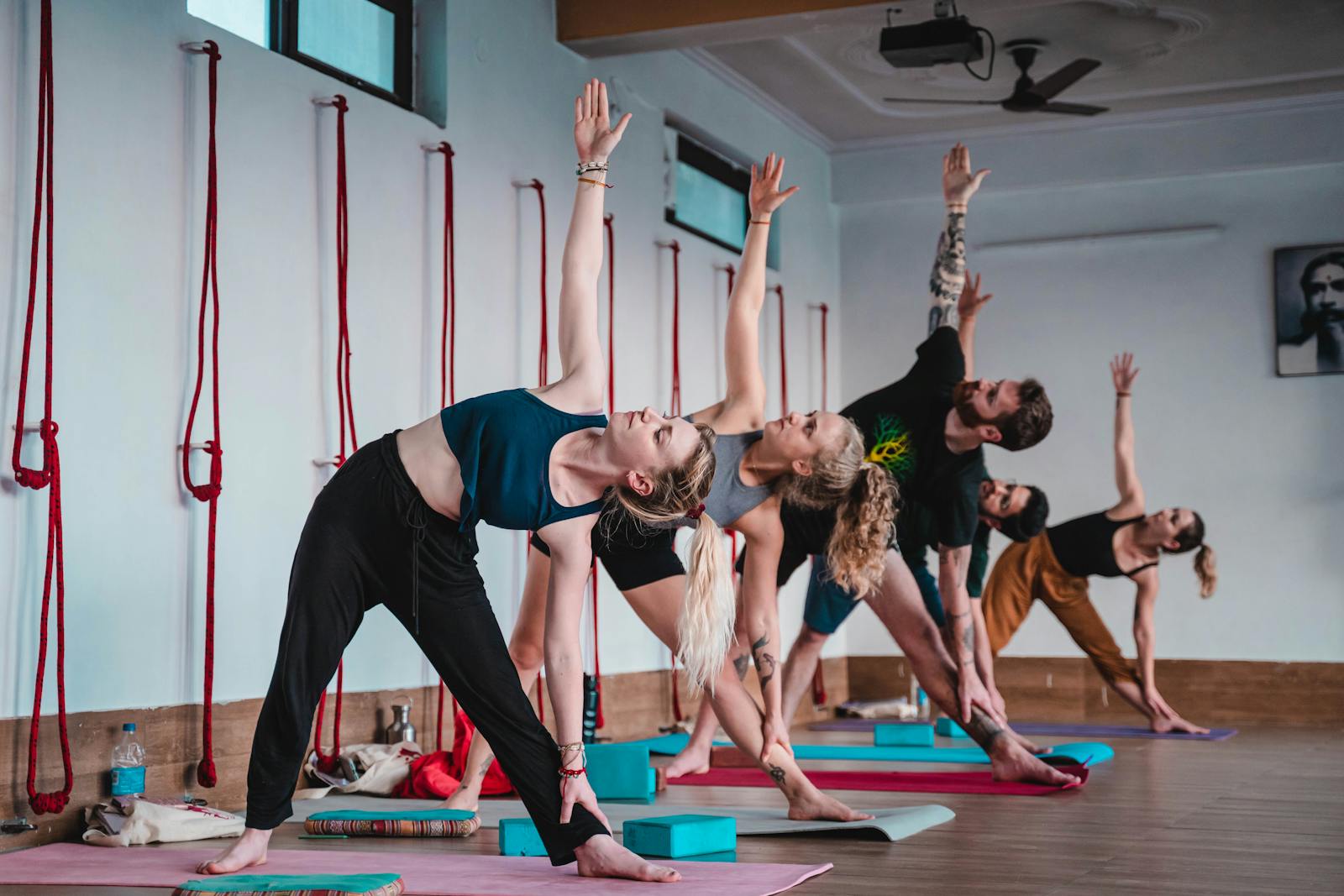
Yoga & Wellness
Yoga Teacher Training in Rishikesh
200hr vs 300hr, real costs, certification and how to choose a school you won’t regret — from people who know the town.
Rishikesh is, without exaggeration, the world capital of yoga teacher training. More 200-hour and 300-hour courses run here, beside the Ganga in the Himalayan foothills, than anywhere else on earth. That is a blessing and a problem: the choice is enormous, the quality varies wildly, and the marketing is relentless. This guide cuts through it — what a Yoga Teacher Training (YTT) in Rishikesh actually involves, what it costs, how to choose a school you won’t regret, and the mistakes that catch first-timers out.
Quick answer: A Yoga Alliance-certified 200-hour YTT in Rishikesh typically runs 22–28 days and costs roughly ₹85,000–₹150,000 (about $1,000–$1,800) including accommodation and sattvic meals. It is open to all levels — you do not need to be advanced — and qualifies you to teach worldwide. The best months are September–November and February–April. Choose a Yoga Alliance Registered School (RYS) and prioritise small group sizes and named, experienced teachers over price.
Why do a YTT in Rishikesh?
Is a Rishikesh YTT worth it? Honest expectations
For most people, yes — but it helps to know what it is and isn’t. A YTT here is intense, communal and occasionally uncomfortable in the best way: early mornings, long days, unfamiliar food, and a month of looking closely at your own habits on and off the mat. Students routinely describe it as one of the most rewarding things they have done, but rarely as relaxing.
You will likely arrive thinking the goal is to perfect your postures and leave realising the real curriculum was philosophy, breath and self-discipline. The asana improves almost as a side effect. If you come open to the whole tradition — not just the physical practice — Rishikesh rewards you in a way few places can. If you only want a fitness intensive in a pretty location, you may find the chanting, kriyas and 6am meditations surprising. Knowing that in advance is the difference between a transformative month and a frustrated one.
People come to Rishikesh for teacher training for three reasons, and only one of them is about becoming a teacher. Many students enrol simply to deepen their own practice in a focused, immersive month. Others want the internationally recognised certification. And some come for the place itself — there is something about practising pranayama at sunrise with the Ganga below and the Himalaya beyond that a studio in a Western city cannot replicate.
- Authenticity & lineage: many teachers here trained in traditional Indian lineages, so you get philosophy, chanting and pranayama, not just asana.
- Cost: a comparable Yoga Alliance course in Europe, the US or Australia often costs 2–4× more.
- Immersion: living on campus with the same small group for a month accelerates learning in a way weekend courses cannot.
- Community: you leave with friends from around the world and a global network of fellow teachers.
200-hour vs 300-hour: which YTT is right for you?
This is the first decision, and it is simple once you know the rule: the 200-hour is the foundation, the 300-hour is the advanced top-up. You must complete a 200-hour before a 300-hour. Together they make you a 500-hour certified teacher.
The 200-hour YTT
This is where almost everyone starts. It assumes no teaching experience and often suits people who have practised for as little as 6–12 months. It covers foundational asana, alignment, basic anatomy, pranayama, meditation, teaching methodology and yoga philosophy. By the end you can lead a general class — and you can register with Yoga Alliance as an RYT-200.
The 300-hour YTT
Designed for people who already hold a 200-hour and want to go deeper — advanced asana, subtler anatomy, sequencing, therapeutic applications and often a specialisation (yin, ashtanga, kundalini). Combined with your 200-hour, it upgrades you to RYT-500. Choose this only once you have taught, or at least practised seriously, for a while.
💡 Tip: Beware schools that suggest a beginner can jump straight to a 300-hour or do both back-to-back in a single short trip. Reputable schools require proof of your 200-hour certificate before enrolling you in a 300-hour.
What does a YTT in Rishikesh cost?
Prices are usually quoted as an all-inclusive package — tuition, accommodation and three sattvic (yogic vegetarian) meals a day for the whole course. That makes them easy to compare once you know the bands:
- Budget (shared room): ~₹85,000–₹110,000 ($1,000–$1,300)
- Mid-range (private room): ~₹110,000–₹140,000 ($1,300–$1,700)
- Premium (boutique school / private en-suite): ₹150,000+ ($1,800+)
- 300-hour courses: generally similar to slightly higher than 200-hour
What is usually included: tuition, course materials, accommodation, daily meals, and often a Yoga Alliance certificate fee, a kit (mat, neti pot, notebook) and one or two local excursions. What is usually extra: flights, visa, airport transfer, laundry, optional Ayurvedic treatments, and any nights before/after the course.
💡 Tip: A price far below the budget band is a red flag, not a bargain — it usually means very large groups, inexperienced teachers, or a school that isn’t genuinely Yoga Alliance registered. See our full breakdown of yoga costs in Rishikesh.
How to choose a yoga school (the part that matters most)
The difference between a transformative month and a disappointing one is almost entirely the school. Use this checklist before you pay a deposit:
- Yoga Alliance RYS registration: verify the school directly on the Yoga Alliance website — do not just trust a logo on their page.
- Named teachers with bios: who actually teaches each subject? Anonymous “team of experts” is a warning sign.
- Group size: 12–20 is healthy. 40+ means little individual attention.
- The real schedule: ask for the daily timetable and the full curriculum document.
- Recent, detailed reviews: look for reviews mentioning teachers by name on independent sites, not just testimonials on the school’s own page.
- Style match: Hatha and Ashtanga-Vinyasa dominate Rishikesh. Make sure the school’s style matches what you want to teach.
- Accommodation & food: see photos of the actual rooms, and confirm dietary needs can be met.
What a typical day looks like
YTT days are full and start early — expect to be up by 5:30–6:00am. A representative daily schedule:
- 6:00am – Pranayama & meditation
- 7:00am – Morning asana practice
- 9:00am – Breakfast
- 10:30am – Yoga philosophy / anatomy lecture
- 12:30pm – Lunch & rest
- 2:30pm – Teaching methodology & alignment
- 4:00pm – Afternoon asana / adjustments practice
- 6:00pm – Evening meditation, mantra or self-study
- 7:30pm – Dinner, then rest
Most courses run six days a week with one rest day, often used for a waterfall trek, a visit to the Beatles Ashram, or the evening Ganga Aarti.
Certification & what you can do afterwards
On successful completion you receive a certificate from the school and can register with Yoga Alliance as an RYT-200 (or RYT-500 after your 300-hour). This is the most widely recognised credential globally and lets you teach in studios across most countries. It is a registration, not a licence — keep that in mind and check local requirements wherever you intend to teach.
What you will actually study
A Yoga Alliance 200-hour syllabus is broader than most beginners expect. It is not a month of back-to-back asana — roughly half the hours are theory, methodology and self-practice. Here is what a complete curriculum covers:
Asana (postures) & alignment
Daily practice of foundational postures with detailed alignment, the use of props, modifications for different bodies, and how to enter and exit safely. You will learn not just how to do a posture but how to teach and adjust it.
Pranayama & kriyas
Breath-control techniques (ujjayi, nadi shodhana, kapalabhati and more) and traditional cleansing kriyas such as jala neti. These are taken seriously in Rishikesh and are often a highlight students did not anticipate.
Anatomy & physiology
A practical grounding in the musculoskeletal and respiratory systems as they relate to yoga, plus the subtle body — nadis, chakras and prana — from the traditional perspective. Good schools keep this applied, not academic.
Yoga philosophy
Patanjali’s Yoga Sutras, the eight limbs of yoga, the Bhagavad Gita’s teachings on yoga, and the ethical foundations (yamas and niyamas). This is where Rishikesh training tends to outshine Western courses.
Teaching methodology & practicum
How to sequence a class, cue clearly, demonstrate, hold space and manage a room — then actually teach your peers under supervision. The practicum, where you teach real (short) classes, is usually the most nerve-wracking and most valuable part. Assessment is typically a mix of a teaching demonstration, a written test and attendance/participation.
Visa, flights & practical logistics
A YTT is a month-long commitment in another country, so handle the logistics early:
- Visa: most foreign students enter India on a tourist e-Visa, which is straightforward to apply for online via the official Indian e-Visa portal. Confirm with your school what they recommend and carry a printed copy of your enrolment.
- Flights: fly into Delhi (DEL) then continue to Rishikesh, or fly to Dehradun (DED), ~45 minutes away. See how to reach Rishikesh.
- Airport transfer: many schools arrange pickup from Dehradun or Delhi for a fee — worth it after a long flight.
- Travel insurance: get cover that includes your activities for the full month.
- Money: notify your bank, carry some cash, and read our budget guide and SIM & internet guide.
- Health: a basic medical kit, any personal medication, and a check-up before an intense physical month are sensible. See our safety guide.
💡 Tip: Book your flights only after your course dates and deposit are confirmed in writing, and read the school’s cancellation and refund policy before paying.
How to spot a school to avoid
For every excellent school in Rishikesh there is one coasting on marketing. These are the warning signs that should make you pause:
- No verifiable Yoga Alliance RYS listing — or a vague claim you cannot confirm on the Yoga Alliance website.
- Pressure tactics — “only 2 spots left, pay today for a discount.” Reputable schools rarely need to rush you.
- No named teachers or constantly changing staff.
- Prices well below the market with huge group sizes to compensate.
- Reviews that all sound identical or appear only on the school’s own website.
- Evasiveness about the daily schedule, curriculum or accommodation photos.
- Promises that sound too good — e.g. a beginner “500-hour” in a single short trip.
Cross-check any shortlist against independent reviews and, where you can, message a past graduate. A school confident in its quality will happily connect you with alumni.
Best time to do a YTT in Rishikesh
Because you will practise and study for a month, weather matters more than for a short trip. The most comfortable windows are September to November and February to April — mild, dry and clear. December–January is cold (early-morning practice can be chilly and rooms are often unheated). May–June is hot, and the monsoon (July–August) is humid with heavy rain. See our best time to visit Rishikesh guide for the full breakdown.
Which YTT is best for you?
| Traveller type | Recommendation |
|---|---|
| Complete beginner | 200-hour Hatha-based course; choose a small group and a school that explicitly welcomes beginners. |
| Experienced practitioner | 200-hour Ashtanga-Vinyasa, or a 300-hour if you already hold a 200-hour. |
| Solo female traveller | Established school with on-campus female accommodation and staff; see our solo female guide. |
| On a tight budget | Shared-room 200-hour in the budget band; avoid suspiciously cheap outliers. |
| Couples / friends | Mid-range school offering private rooms; confirm you can share. |
| Wanting to specialise | 300-hour with a named specialisation (yin, kundalini, therapy) and a teacher known for it. |
Common mistakes travellers make
- Booking on price alone — the cheapest course is rarely the best value.
- Not verifying Yoga Alliance status directly on the Yoga Alliance site.
- Ignoring group size — a 50-person “intensive” gives you almost no feedback.
- Choosing the wrong season — a December course can mean shivering through 6am pranayama.
- Underestimating intensity — this is a full-time month, not a holiday with some yoga.
- Skipping the visa detail — confirm whether your school requires a tourist visa and have documents ready.
Local tips you should know
- Arrive 1–2 days early to beat jet lag and settle in before the 5:30am starts.
- Most YTT schools cluster in Tapovan — base yourself there if booking accommodation separately.
- Rishikesh is a holy, alcohol-free, largely vegetarian town; the YTT lifestyle fits the surroundings.
- Bring modest clothing for temple visits and a warm layer for evenings, even in spring.
- Carry some cash — smaller schools and local cafes may not take cards reliably.
- Buy a local SIM on arrival for data; see our SIM & internet guide.
Related places & experiences nearby
- Beatles Ashram (Chaurasi Kutia) — ~10 min from Swarg Ashram; 1–2 hours; atmospheric, mural-filled ruins beloved by yoga students.
- Parmarth Niketan Ganga Aarti — at Ram Jhula; ~1 hour each evening; the spiritual highlight of most YTTs’ rest day.
- Kunjapuri Temple sunrise — ~1 hour away; half a morning; Himalayan sunrise, a popular YTT excursion.
- Neelkanth Mahadev — ~1–1.5 hours; half to full day; major Shiva temple reached by road or trek.
Frequently asked questions
Do I need to be advanced to do a 200-hour YTT in Rishikesh?
No. The 200-hour is a foundation course open to all levels. Most schools welcome students with as little as 6–12 months of regular practice, and some accept committed beginners. You do not need to do advanced postures to start.
How long does a 200-hour YTT take?
Typically 22 to 28 days as a residential, full-time course running about six days a week. Some schools offer slightly longer relaxed formats.
How much does a yoga teacher training in Rishikesh cost?
A 200-hour course usually costs roughly ₹85,000–₹150,000 ($1,000–$1,800) all-inclusive of tuition, accommodation and meals. Shared rooms are cheaper; private en-suite rooms and boutique schools cost more.
Is the certification recognised internationally?
Yes — if the school is a Yoga Alliance Registered School (RYS), you can register as an RYT-200 (or RYT-500) and teach in studios across most countries. Always verify the school’s status on the Yoga Alliance website.
What is the best time of year for a YTT?
September to November and February to April offer the most comfortable weather for a month of practice. Winter is cold for early starts; summer is hot; monsoon (July–August) is wet and humid.
200-hour or 300-hour — which should I do first?
Always the 200-hour first; it is the prerequisite for the 300-hour. Completing both makes you a 500-hour (RYT-500) teacher.
Is Rishikesh safe for solo female travellers doing a YTT?
Generally yes. Rishikesh is one of India’s safer towns and many YTT students are solo women. Choose an established school with on-campus female accommodation and use normal precautions. See our solo female travellers guide.
Will I be able to teach immediately after the course?
Yes, a 200-hour qualifies you to lead general classes, though most new teachers build confidence by assisting or teaching beginners first. Teaching skill grows with practice after certification.
What should I pack for a YTT?
Comfortable yoga clothing, a warm layer for evenings, modest clothing for temples, personal toiletries, any medication, and some cash. Mats and props are usually provided. See our Rishikesh packing list.
Do YTT prices include food and accommodation?
Almost always. Rishikesh YTT packages are typically all-inclusive of accommodation and three sattvic vegetarian meals a day for the duration. Flights, visa and personal extras are not included.
Which area of Rishikesh has the most yoga schools?
Tapovan has the densest concentration of yoga schools, cafes and traveller accommodation, making it the most convenient base. Some schools are also near Laxman Jhula and across the river near Swarg Ashram.
Can couples or friends do a YTT together?
Yes. Many schools offer private or twin rooms — confirm room-sharing when you book. The course days are shared with the whole group regardless of accommodation.
Ready to choose your training?
Take your time, verify the school, and pick the season that suits a full month of practice. When you are ready, these guides will help you decide:
- Best yoga schools in Rishikesh — how to compare and shortlist
- 200-hour YTT in detail and 300-hour YTT in detail
- Yoga costs in Rishikesh — budget realistically
- Rishikesh for yoga travellers — your full planning hub