Yoga & Wellness
300-Hour YTT in Rishikesh
The advanced training and your path to RYT-500 — prerequisites, curriculum, specialisations and costs.
The 300-hour Yoga Teacher Training is the advanced chapter of a teacher’s education — the course you take after your 200-hour, when you want to go deeper, teach with more authority, and complete the path to the RYT-500 credential. Rishikesh, already the world’s busiest hub for the 200-hour, is equally rich in advanced trainings. This guide is written specifically for the 300-hour: who it is for, how it differs from the foundation course, the prerequisites, what you study, specialisations, cost, and how to know you are actually ready. If you have not done a 200-hour yet, start with our 200-hour YTT guide and the broader Yoga Teacher Training overview.
Quick answer: The 300-hour YTT is an advanced, residential course of ~28–35 days costing roughly ₹110,000–₹170,000 ($1,300–$2,000) all-inclusive. You must already hold a 200-hour to enrol. Completing both makes you a 500-hour (RYT-500) teacher with Yoga Alliance. It suits teachers with real practice/teaching experience who want advanced asana, deeper philosophy and anatomy, and often a specialisation. Best months: Sept–Nov and Feb–Apr.
Why do a 300-hour in Rishikesh?
Many teachers do their 200-hour close to home and then come to Rishikesh specifically for the 300-hour — and it is easy to see why. The town’s long yoga lineage means advanced philosophy, pranayama and meditation are taught with a depth that is genuinely hard to find elsewhere, often by senior teachers who have spent decades in the tradition. The all-inclusive month is also remarkable value for the level of instruction, and the setting — the Ganga, the foothills, a quiet practice-friendly town — gives advanced study the space it needs.
There is also a practical advantage: because Rishikesh hosts so many advanced trainings, the range of specialisations on offer — yoga therapy, Yin, prenatal, Ashtanga, Kundalini — is far wider than in most single-studio markets. That makes it easier to find a 300-hour matched precisely to the teacher you want to become.
What is the 300-hour YTT?
Where the 200-hour builds a teacher from the ground up, the 300-hour assumes you already are one. It is the advanced tier of the Yoga Alliance framework, designed to refine and extend what you learned in your foundation training. The two stack together: 200 + 300 = 500 hours, qualifying you to register as an RYT-500 — the senior teaching credential that studios and serious students recognise worldwide.
Crucially, a 300-hour is not a repeat of the 200-hour at a higher altitude of effort. It goes into territory the foundation course only introduced — advanced asana and their preparation, subtler anatomy and biomechanics, therapeutic application, deeper philosophy, and refined teaching and sequencing skills. Many courses also let you specialise.
200-hour vs 300-hour: the real differences
| 200-hour | 300-hour | |
|---|---|---|
| Level | Foundation / entry | Advanced |
| Prerequisite | None (all levels) | Must hold a 200-hour |
| Focus | Learning to teach a general class | Refining teaching, advanced & therapeutic practice, specialisation |
| Credential | RYT-200 | RYT-500 (combined with 200) |
| Typical length | 22–28 days | 28–35 days |
| Typical cost | ₹85k–₹150k | ₹110k–₹170k |
Who is the 300-hour for?
The 300-hour suits you if:
- You already hold a 200-hour and want to reach the RYT-500 level.
- You have been teaching or practising seriously since your 200-hour and feel ready for more depth.
- You want to specialise — in a style (Yin, Ashtanga, Kundalini), in yoga therapy, in prenatal, or in advanced pranayama and meditation.
- You want more credibility and confidence as a teacher, and access to studios that prefer RYT-500.
- You simply want to deepen your own practice and study well beyond what the foundation course allowed.
It is not for someone brand new to yoga — that is what the 200-hour is for. Reputable schools will require proof of your 200-hour before enrolling you.
Are you ready for a 300-hour?
There is no fixed rule, but honest signs you are ready include:
- You have integrated your 200-hour — ideally taught real classes, or maintained a committed daily practice, for several months at least.
- You can hold a steady, pain-free foundational practice and are curious about (not intimidated by) advanced work.
- You have a sense of what you want to deepen — a style, a population to teach, or an area like anatomy or philosophy.
- You are seeking refinement, not rescue — a 300-hour polishes an existing teacher; it cannot substitute for a weak foundation.
💡 Tip: If you finished your 200-hour very recently and have not taught at all, consider waiting a few months and teaching first. You will get far more from a 300-hour once you have met real students and discovered what you actually need to learn.
What you study in a 300-hour
Advanced asana & safe progression
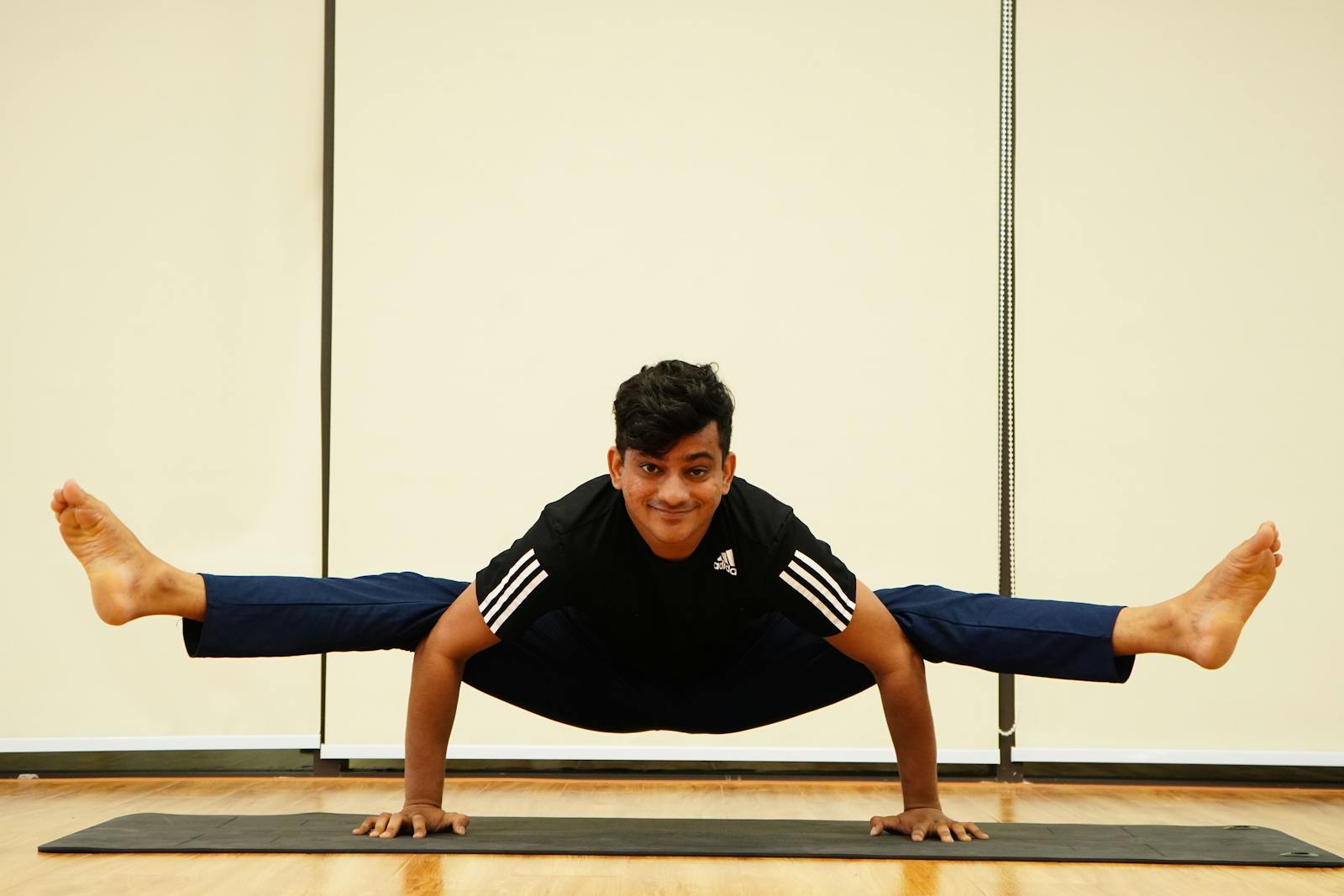
Deeper backbends, arm balances, inversions and their preparation — not as party tricks, but with the biomechanics and conditioning to approach them safely and teach them responsibly.
Advanced anatomy & yoga therapy
Functional anatomy applied to real bodies: how to work with injuries, limitations and common conditions, and how to adapt a practice therapeutically rather than push through.
Deeper philosophy & subtle body
Beyond an introduction to the Yoga Sutras — more of the classical texts, the subtle body, the bandhas and advanced pranayama, and how philosophy informs the way you teach.
Refined teaching & sequencing
Designing intelligent, themed sequences; teaching advanced postures and transitions; sharper observation, cueing and adjustment; and developing your own authentic voice as a teacher.
Specialisation
Many 300-hours let you lean into a focus — Yin, Ashtanga, Vinyasa, therapy, prenatal, Kundalini, or meditation and sound. Choose a school known specifically for the specialisation you want.
The RYT-500 pathway
“RYT-500” is not a separate single course — it is the registration you earn once you have completed both a 200-hour and a 300-hour (200 + 300 = 500) at Yoga Alliance Registered Schools. You do not have to do both at the same school, though some students do. After your 300-hour you update your registration with Yoga Alliance to RYT-500, which signals senior-level training to studios and students.
💡 Tip: If you trained for your 200-hour elsewhere, that is fine — you can do your 300-hour in Rishikesh and still combine them toward RYT-500, as long as both schools are genuine RYS. Keep your 200-hour certificate handy for enrolment.
What does a 300-hour cost in Rishikesh?
Like the 200-hour, prices are all-inclusive of tuition, accommodation and sattvic meals — generally a little higher because the course is longer and more advanced:
- Budget (shared room): ~₹110,000–₹130,000 ($1,300–$1,550)
- Mid-range (private room): ~₹130,000–₹160,000 ($1,550–$1,900)
- Premium (boutique / specialisation): ₹170,000+ ($2,000+)
See our full yoga costs guide for everything that is and isn’t included. The same warning applies as for the 200-hour: a price far below the band usually means large groups or junior teachers.
When to do your 300-hour
As with any month-long training, weather matters. September to November and February to April are the most comfortable. Winter is cold for early practice, summer is hot, and the monsoon (July–August) is humid — see our best time to visit guide. Note the 300-hour often runs a little longer than the 200-hour, so check the exact dates against the seasons.
A typical day on a 300-hour
The rhythm resembles a 200-hour — early starts, two practice blocks, lectures and methodology — but the content is pitched higher and you are expected to take more ownership of your learning. A representative day:
- 6:00am – Advanced pranayama, bandhas & meditation
- 7:00am – Morning practice: advanced asana & safe progressions
- 9:00am – Breakfast & break
- 10:30am – Advanced anatomy / yoga therapy
- 12:30pm – Lunch & rest
- 2:30pm – Philosophy or your specialisation module
- 4:00pm – Teaching practicum: sequencing, adjustments, your own classes
- 6:00pm – Self-practice, mentoring or study
- 7:30pm – Dinner, then rest
The biggest difference from the 200-hour is the practicum and self-direction: you teach more, receive sharper feedback, and are trusted to refine your own practice rather than be led through every step. Expect more independent study and project-style work (sequencing assignments, teaching observations) than in your foundation month.
Choosing your specialisation
The single best way to make a 300-hour pay off is to align it with where you actually want to teach. Common specialisation routes in Rishikesh:
- Yin & restorative — slow, deep, fascia- and recovery-focused; great if you want to teach calmer, therapeutic classes.
- Ashtanga / Vinyasa — dynamic, sequence-driven; for teachers who want to lead strong, flowing classes.
- Yoga therapy — working with injuries, posture and specific conditions; highly employable and meaningful.
- Prenatal & postnatal — a defined, in-demand niche many studios specifically seek.
- Kundalini — energy, breath and mantra-led; a distinct tradition with its own following.
- Meditation & pranayama — for those drawn to the inner practice; pairs well with meditation retreats and sound healing.
💡 Tip: Pick the specialisation by imagining the classes you most want to teach in two years, not the postures you find most impressive now. The right niche makes you more employable and more fulfilled — and helps you stand out in a crowded market.
Is the 300-hour worth it?
For the right person, at the right time, yes — but the qualifier matters. If you are an active teacher who has hit the edges of your 200-hour training, the 300-hour is genuinely transformative: it gives you depth, confidence, a specialisation, and the RYT-500 credential that opens doors to better studios and advanced classes. Many teachers describe it as the point where they stopped imitating their own teachers and found their own voice.
It is not worth rushing into straight after a 200-hour with no teaching behind you — you will get a fraction of the value, because you will not yet know what questions to ask. Nor is it a fix for a shaky foundation; if your 200-hour felt thin, you may be better served by quality mentoring or a strong workshop before committing to another month-long course. Done at the right moment, though, it is one of the best investments a serious teacher can make — and Rishikesh offers it with more depth and better value than almost anywhere.
Is a 300-hour right for you?
| Traveller type | Recommendation |
|---|---|
| Brand-new to yoga | No — do a 200-hour first; the 300-hour requires it. |
| Recently certified (200hr), not yet taught | Consider waiting; teach for a few months first, then return. |
| Practising/teaching teacher | Ideal — the 300-hour is exactly your next step toward RYT-500. |
| Wanting to specialise | Yes — pick a school known for your chosen specialisation (Yin, therapy, prenatal, etc.). |
| Solo female traveller | Yes — choose an established school with female accommodation; see our solo female guide. |
| Just want to deepen, not teach | Worthwhile if you hold a 200-hour and want serious depth; otherwise a retreat may suit better. |
Choosing a 300-hour school: what changes
Vetting a 300-hour school uses the same fundamentals as choosing any school — verify Yoga Alliance registration, check group size, demand named teachers — but at the advanced level a few priorities shift. You are no longer just looking for a competent general training; you are looking for genuine depth and specialism.
- Teacher seniority matters more. At 300-hour level you want senior, experienced teachers who can actually take you further than your 200-hour did — not the same generalist faculty teaching a notch harder.
- Specialisation track record. If you want yoga therapy or Yin, choose a school genuinely known for it, with teachers who specialise — not a generic course that lists it as a bullet point.
- Curriculum depth. Ask to see how the advanced anatomy, philosophy and practicum hours are actually spent. A weak 300-hour just repeats 200-hour material; a strong one breaks new ground.
- Smaller cohorts help even more. Advanced feedback on your teaching and adjustments is the whole point — large groups dilute exactly what you came for.
- Mentoring & teaching time. The best 300-hours give you substantial supervised teaching practice and individual feedback, not just more lectures.
For the full vetting framework — red flags, questions to ask, and how to avoid paid-placement “top 10” lists — see our guide to choosing a yoga school, which applies just as much at the 300-hour level.
Common mistakes with 300-hour courses
- Doing it too soon after the 200-hour, before teaching or integrating the foundation.
- Expecting a repeat of the 200-hour — it is genuinely more demanding and self-directed.
- Ignoring specialisation fit — picking a generic course when you wanted, say, yoga therapy.
- Not verifying Yoga Alliance status of the 300-hour school directly on the registry.
- Assuming any 200-hour qualifies you — confirm the school accepts your specific certificate.
- Choosing the wrong season for a longer course — check the full date range.
Local tips you should know
- Bring your 200-hour certificate (digital and printed) for enrolment.
- Most advanced schools are in or near Tapovan; base there if booking your stay separately.
- Apply for your tourist e-Visa via the official Indian e-Visa portal well ahead of a longer course.
- Tell the school about any injuries — advanced asana is where unmanaged issues flare up.
- Arrive a couple of days early; see how to reach Rishikesh and the packing list.
Related guides & nearby
- 200-hour YTT — the prerequisite foundation course.
- Yoga Teacher Training overview — the big picture.
- Best yoga schools — how to vet an advanced school.
- Yoga costs — budget for the 300-hour.
- Rishikesh for yoga travellers — plan the whole trip.
Frequently asked questions
Can I do a 300-hour without a 200-hour?
No. A 200-hour is a prerequisite for the 300-hour. Reputable schools require proof of your 200-hour certificate before enrolling you.
How long is a 300-hour YTT in Rishikesh?
Typically 28 to 35 days — usually a little longer than a 200-hour because the material is more advanced and self-directed.
How much does a 300-hour cost in Rishikesh?
Roughly ₹110,000–₹170,000 ($1,300–$2,000) all-inclusive of tuition, accommodation and sattvic meals. Specialised and boutique courses cost more.
What is RYT-500?
RYT-500 is the Yoga Alliance registration you earn after completing both a 200-hour and a 300-hour (200 + 300 = 500) at Registered Yoga Schools. It signals senior-level training.
Do I have to do my 300-hour at the same school as my 200-hour?
No. You can do them at different Yoga Alliance Registered Schools and still combine them toward RYT-500. Bring your 200-hour certificate to enrol.
How is a 300-hour different from a 200-hour?
The 200-hour teaches you to lead a general class from scratch; the 300-hour refines teaching and goes into advanced asana, deeper anatomy and philosophy, therapeutic application and often a specialisation.
When am I ready for a 300-hour?
Ideally once you have integrated your 200-hour — taught real classes or kept a committed practice for several months — and have a sense of what you want to deepen.
Can I specialise during a 300-hour?
Yes. Many 300-hour courses offer or focus on a specialisation — Yin, Ashtanga, Vinyasa, yoga therapy, prenatal, Kundalini or meditation. Choose a school known for your chosen area.
Is the 300-hour internationally recognised?
Yes — completed at a Yoga Alliance RYS and combined with your 200-hour, it lets you register as an RYT-500, recognised by studios across most countries.
When is the best time to do a 300-hour in Rishikesh?
September to November and February to April are most comfortable. Because the course runs longer, check the full date range against the seasons.
Will a 300-hour help me get teaching work?
It can. Many studios prefer or require RYT-500 teachers, and the added depth and specialisation make you more employable and confident, especially for advanced or specialised classes.
Do I need to be able to do advanced postures before starting?
No — you will work toward them safely during the course. You should have a steady, pain-free foundational practice and be willing to progress gradually.
Ready for the next level?
If you hold a 200-hour and feel the pull to go deeper, the 300-hour is your path to RYT-500. Verify your school, pick your specialisation, and choose a comfortable season. These guides will help:
- How to choose a yoga school
- Yoga costs in Rishikesh
- 200-hour YTT — the prerequisite
- Rishikesh for yoga travellers — plan the whole trip