Adventure
Trekking near Rishikesh
From waterfall walks to Himalayan summits — the gateway to the Garhwal mountains.
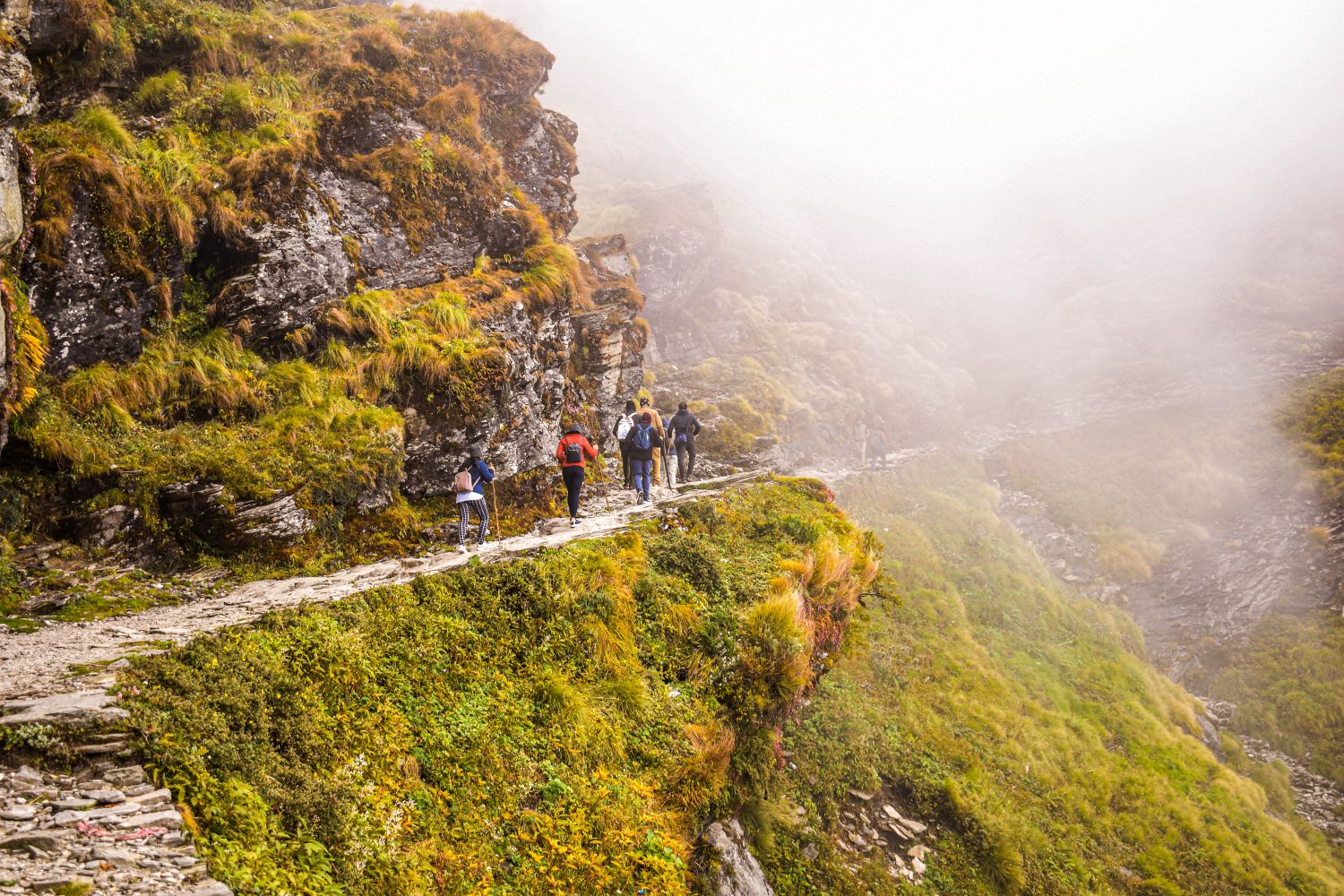
Rishikesh is not just a river town — it is a doorway to the Himalaya. From gentle waterfall walks and sunrise temple climbs you can do in a morning, to classic multi-day Himalayan treks that start a short drive away, the trekking here spans every level. Whether you want a two-hour leg-stretch between yoga classes or a snow-capped summit view, this guide covers the best day walks and multi-day treks near Rishikesh, their difficulty and season, what to bring, and whether to go guided or solo.
Quick answer: Trekking near Rishikesh ranges from easy day walks (waterfall trails, the Kunjapuri sunrise climb) to classic multi-day Himalayan treks like Nag Tibba (2 days) and, further afield, Kuari Pass and the Valley of Flowers. Day walks are free or low-cost; guided multi-day treks run ₹2,000–₹5,000+ per day all-inclusive. Best seasons: Mar–Jun and Sept–Nov (some high treks have snow in winter; avoid the monsoon for landslides). Day walks suit everyone; multi-day treks need basic fitness. Hire a registered guide for anything beyond easy local trails.
Why trek from Rishikesh?
Rishikesh sits where the Ganga leaves the mountains, which makes it the perfect base camp for the Garhwal Himalaya. Within a morning you can be on a forest trail to a waterfall; within a couple of hours’ drive you reach trailheads for some of India’s most loved treks. That range is the appeal: you do not have to commit to an expedition to taste the mountains. Many travellers slot a half-day waterfall walk or a Kunjapuri sunrise into an otherwise yoga- or adventure-focused trip, while serious trekkers use Rishikesh to stock up and acclimatise before heading deeper into the range.
It is worth understanding why Rishikesh works so well as a trekking base, beyond just being near the hills. The town has the infrastructure serious trekkers need without the remoteness of higher hill stations: trekking operators who run regular departures to the classic Garhwal routes, shops in Tapovan where you can buy or rent gear, easy onward transport via Dehradun, and comfortable places to rest and acclimatise before and after a trek. You can land, sort your permits and kit, do a warm-up day walk, and be on a Himalayan trail within a day or two — all while enjoying the cafes, yoga and river in between.
That combination of mountain access and traveller comfort is genuinely unusual, and it is exactly why so many trekkers choose to start and finish their Garhwal adventures here rather than in a remote trailhead village. It means you can treat trekking as one ingredient of a varied Rishikesh trip rather than a separate expedition — a sunrise hike here, a multi-day trek there, woven around rafting, wellness and rest.
Easy day walks & short treks
Waterfall trails
Several short forest trails near Rishikesh lead to seasonal waterfalls — popular options include walks around the Neer Garh and Patna waterfall areas. Mostly easy, an hour or two each way, and gorgeous after the monsoon when the water is full. A great low-effort half-day; carry water and watch footing on wet rock.
Kunjapuri Temple sunrise
A short, steep climb to the Kunjapuri Devi temple (~1.5 hours’ drive then a flight of steps) rewards you with a panoramic Himalayan sunrise — on a clear day you can see peaks like Swargarohini, Gangotri and Banderpunch glowing pink. A classic early-morning excursion, often combined with a yoga or meditation trip.
Neelkanth trek
The pilgrimage route to Neelkanth Mahadev temple can be walked through forest (around 3–4 hours uphill) instead of driven — a rewarding moderate day hike that combines nature and spirituality.
Day walk or multi-day trek: how to choose
The right choice comes down to three things — time, fitness and what you actually want from the mountains:
- Pick a day walk if you have a spare morning, limited fitness, no gear, or you are mainly in Rishikesh for yoga, rafting or rest and just want a taste of nature. Waterfall trails and Kunjapuri deliver scenery for minimal commitment.
- Pick a multi-day trek if you specifically want the high Himalaya — alpine meadows, snow, summit views and nights in the mountains — and can give it 2 to 7 days plus some preparation.
- Bridge the two with Nag Tibba if you want a real summit but only have a weekend; it is the natural stepping stone between a day hike and a long trek.
A common pattern for first-timers: do a waterfall walk or Kunjapuri early in the trip to test your legs and the altitude, then commit to Nag Tibba or a longer trek later if you catch the bug. There is no need to choose only one — many travellers stack a day walk and a multi-day trek into the same visit.
Classic multi-day Himalayan treks
For the real mountains, these treks start within a few hours of Rishikesh and are commonly booked through Rishikesh-based operators:
| Trek | Duration | Difficulty | Highlight |
|---|---|---|---|
| Nag Tibba | 2 days | Easy–moderate | The best weekend Himalayan summit; great for beginners |
| Kuari Pass | ~5–6 days | Moderate | Iconic Nanda Devi views; runnable in winter snow |
| Valley of Flowers | ~5–6 days | Moderate | UNESCO meadow of wildflowers (monsoon-season bloom) |
| Har Ki Dun | ~6–7 days | Moderate | Cradle valley, ancient villages, alpine scenery |
| Kedarkantha | ~5–6 days | Moderate | India’s favourite winter snow trek & summit |
Nag Tibba is the standout for anyone short on time — a genuine Himalayan summit (~3,000m) doable as a 2-day weekend trip from Rishikesh, suitable for fit beginners. The longer treks require booking, transport to trailheads (often via Dehradun or Sankri), and proper preparation.
💡 Tip: Many famous Garhwal treks lie within national parks and reserves and require permits and often a registered guide. Reputable operators handle this for you — see the Uttarakhand Forest Department for the framework behind protected-area access.
Nag Tibba: the perfect weekend trek
If you take one multi-day trek from Rishikesh, make it Nag Tibba (“Serpent’s Peak”). At around 3,000m it is the highest point you can summit on a relaxed two-day trip, and it packs a full Himalayan experience into a weekend — forest trails, a night camping under the stars, a pre-dawn summit push, and a panorama of snow peaks including Swargarohini, Bandarpunch and the Gangotri range at the top.
The trailhead at Pantwari is roughly a 4–5 hour drive from Rishikesh (via Mussoorie). A typical itinerary: drive in and trek to the base camp on day one (about 3–4 hours of moderate uphill through oak and rhododendron forest), camp overnight, then summit at sunrise on day two before descending and driving back. It is achievable for any reasonably fit beginner, runs almost year-round, and is especially magical under winter snow (Dec–Feb), when it becomes an accessible snow trek. Most Rishikesh operators offer it as an all-inclusive weekend package with transport, guide, tents and meals.
💡 Tip: Nag Tibba is popular precisely because it is so accessible, so weekends can be busy. For solitude, go midweek or just outside peak season — and still expect company at the summit on clear winter weekends.
Trek difficulty & grades
Roughly how to read trek levels here:
- Easy: day walks and waterfall trails — no experience needed, basic fitness, a few hours.
- Easy–moderate: Nag Tibba and similar — some uphill stamina needed, but achievable for fit first-timers with a guide.
- Moderate: 5–7 day treks (Kuari Pass, Har Ki Dun, Kedarkantha) — multiple days of walking at altitude; train beforehand.
- Challenging: higher-altitude or longer expeditions — require real fitness, acclimatisation and experience.
Altitude matters more than distance on the longer treks; ascend gradually and watch for signs of altitude sickness above ~3,000m.
When to trek: season by trek
- Day walks & waterfalls: best Sept–Nov (full waterfalls, clear air) and Mar–Jun; slippery in the monsoon.
- Nag Tibba: almost year-round; magical with winter snow (Dec–Feb).
- Kuari Pass & Kedarkantha: superb winter snow treks (Dec–Apr) and clear in autumn.
- Valley of Flowers: uniquely a monsoon trek — the flowers bloom roughly Jul–Sept.
- Avoid high treks in deep winter without winter experience, and most trails in peak monsoon for landslide risk.
See best time to visit Rishikesh and our weather guide for the wider picture.
Guided or solo?
Honest guidance: it depends entirely on the trek.
- Easy local day walks (waterfalls, Kunjapuri steps) — fine to do independently with basic care and offline maps.
- Multi-day Himalayan treks — go with a registered guide or organised operator. Permits, navigation, weather, altitude and remote terrain make solo trekking genuinely risky here, and some protected areas require a guide by rule.
- Anything involving snow or altitude — always guided, with proper gear.
💡 Tip: Choose operators who provide trained guides, proper safety gear and reasonable group sizes, and who handle permits transparently — the same “verify before you book” care you would apply to any adventure operator.
Altitude & mountain safety
The mountains near Rishikesh are forgiving by Himalayan standards, but they still demand respect — especially on the higher treks. A few essentials keep you safe:
- Acclimatise gradually — above ~3,000m, ascend slowly and do not gain too much height in one day. Most Rishikesh-area treks are moderate altitude, but Kedarkantha and Kuari Pass do reach higher.
- Know altitude-sickness signs — headache, nausea, dizziness, breathlessness at rest. If they worsen, descend; do not push higher.
- Hydrate and eat well — both help your body adapt; dehydration worsens altitude symptoms.
- Respect the weather — mountain conditions change fast; a clear morning can turn to cloud or snow by afternoon. Start early and heed your guide.
- Carry the basics — layers, water, snacks, a headtorch and a small first-aid kit, even on “easy” days.
- Do not trek beyond your level — choose a grade you can comfortably manage; the mountains will still be there next trip.
For broader health and emergency guidance, see our Rishikesh safety guide.
What to bring
- Sturdy footwear — trail/hiking shoes with grip; broken-in, not brand new.
- Layers — mountain weather swings fast; pack warm layers and a waterproof even on day walks.
- Water & snacks — carry more water than you think; refills are scarce on trails.
- Sun protection — hat, sunscreen, sunglasses; the high-altitude sun is fierce.
- A small first-aid kit and any personal medication.
- For multi-day: a proper daypack, headtorch, and gear per your operator’s list (often rentable). See our packing list.
Who is trekking for?
| Traveller type | Recommendation |
|---|---|
| Casual visitor | A waterfall walk or the Kunjapuri sunrise — easy, scenic, half a day. |
| Yoga/wellness traveller | Gentle day walks between practice; Kunjapuri sunrise is a favourite. |
| Weekend adventurer | Nag Tibba — a real Himalayan summit in 2 days. |
| Serious trekker | Kuari Pass, Har Ki Dun or Kedarkantha with an operator. |
| Families | Short waterfall trails; see our family guide. |
| Solo female traveller | Join an organised group for multi-day treks; see our solo guide. |
Common mistakes
- Trekking high trails in the monsoon — landslide and slip risk; pick the right season.
- Going solo on a remote multi-day trek — risky and sometimes against the rules; use a guide.
- Underestimating altitude — ascend gradually; do not rush above 3,000m.
- Wrong footwear — trainers on a snow or scree trail end in injury.
- Carrying too little water — refills are rare; dehydration creeps up fast.
- Ignoring permits — protected-area treks need them; a good operator sorts this.
Local tips you should know
- For a no-planning taste of the mountains, book a Kunjapuri sunrise tour — transport and timing sorted.
- Acclimatise and stock up in Rishikesh before longer treks; gear can be rented in Tapovan.
- Combine a trek with camping or rafting for a full adventure trip.
- Start day walks early to beat heat and afternoon cloud.
- Tell someone your route and carry offline maps — signal drops in the hills.
- Apply for your tourist e-Visa early; see how to reach Rishikesh.
Related adventures & nearby
- Camping — pair a trek with a night under the stars.
- River rafting — the other must-do adventure.
- Neelkanth Mahadev — trek to the temple.
- Rock climbing — more mountain adventure.
- All adventure in Rishikesh — the full hub.
Frequently asked questions
What treks can you do near Rishikesh?
Options range from easy day walks (waterfall trails, the Kunjapuri sunrise climb, the Neelkanth forest route) to multi-day Himalayan treks like Nag Tibba (2 days), Kuari Pass, Har Ki Dun, Kedarkantha and the Valley of Flowers.
What is the best short trek from Rishikesh?
Nag Tibba is the standout — a genuine Himalayan summit around 3,000m that can be done as a 2-day weekend trek from Rishikesh, suitable for fit beginners with a guide.
Do I need a guide to trek near Rishikesh?
Easy local day walks can be done independently, but multi-day Himalayan treks should be done with a registered guide or operator. Permits, navigation, altitude and remote terrain make solo trekking risky, and some protected areas require a guide.
How much does trekking cost near Rishikesh?
Day walks are free or low-cost. Guided multi-day treks typically run ₹2,000–₹5,000+ per day all-inclusive of guide, meals, tents and permits, depending on the trek and group size.
When is the best time to trek near Rishikesh?
March to June and September to November are best for most treks and day walks. Some high treks like Kedarkantha and Kuari Pass are superb winter snow treks (Dec–Apr), while the Valley of Flowers blooms in the monsoon (Jul–Sept). Avoid high trails in peak monsoon.
Is the Kunjapuri sunrise trek worth it?
Yes — a short steep climb to the Kunjapuri temple rewards you with a panoramic Himalayan sunrise over peaks like Swargarohini and Banderpunch on a clear day. It is a popular, easy half-day excursion.
How difficult are the multi-day treks?
Most classic treks near Rishikesh (Kuari Pass, Har Ki Dun, Kedarkantha) are graded moderate — several days of walking at altitude that fit beginners can manage with preparation. Nag Tibba is easy–moderate. Altitude matters more than distance.
Do I need permits to trek?
Many Garhwal treks lie within national parks and reserves that require permits and sometimes a registered guide. Reputable operators arrange permits for you as part of the package.
What should I pack for trekking?
Sturdy broken-in footwear, warm layers and a waterproof, plenty of water and snacks, sun protection, and a small first-aid kit. Multi-day treks need a daypack, headtorch and gear per your operator’s list, much of which can be rented.
Are there treks suitable for beginners?
Yes — waterfall day walks and the Kunjapuri climb suit everyone, and Nag Tibba is an excellent first Himalayan summit for fit beginners with a guide.
Can I combine trekking with other adventures?
Absolutely. Many travellers pair a trek with riverside camping or rafting, or add a waterfall walk to a camping trip, for a full adventure itinerary.
Is trekking near Rishikesh safe?
Day walks are low-risk with basic care. For multi-day treks, going with a registered operator, ascending gradually for altitude, carrying proper gear and choosing the right season keeps it safe. Avoid solo treks on remote or snowy trails.
How do I get to the trailheads?
Most multi-day trek trailheads are a few hours from Rishikesh, often via Dehradun or Sankri, with transport arranged by your operator. Day walks like waterfalls and Kunjapuri are short drives from town.
Ready to hit the trail?
From a sunrise temple climb to a snow-capped summit, Rishikesh puts the Himalaya within reach for every level. Pick a trek that matches your time and fitness, go guided when it counts, and head for the hills. These guides will help:
- Camping — pair your trek with a night out
- Neelkanth Mahadev — a trek with a temple
- Adventure trip itinerary — combine your adventures
- Best time to visit — plan your season