Adventure
Rock Climbing in Rishikesh
Scramble up and abseil down the Himalayan foothills — the underrated, beginner-friendly thrill.
Beyond the river and the bungee, Rishikesh hides a quieter adventure: scrambling up rugged rock faces and abseiling back down, with the Himalayan foothills and the Ganga valley as your backdrop. Rock climbing and rappelling (abseiling) are among the most underrated activities here — hands-on, genuinely thrilling, and almost always beginner-friendly because they are run as guided, gear-supplied sessions. Often bundled into camping and “adventure combo” packages, they are an easy add-on for anyone who wants to test their nerve and grip. This guide covers what is on offer, where, the cost, who it suits, and the safety essentials.
Quick answer: Rock climbing in Rishikesh usually means guided climbing and rappelling (abseiling) sessions on natural rock faces near Shivpuri and the camping areas — frequently bundled with camping or adventure combos. No experience needed; gear (harness, helmet, ropes) and instructors are provided. Costs run roughly ₹500–₹1,500 as an add-on, more for dedicated sessions. Best seasons: Sept–Jun (avoid the wet, slippery monsoon). Suitable for beginners, families and groups; a fun complement to rafting and camping.
Why rock climbing is underrated here
Rishikesh is so famous for rafting and bungee that climbing barely gets a mention — which is a shame, because it is one of the most satisfying adventures on offer. Unlike the few-seconds rush of a bungee or a rapid, climbing and rappelling are engaging: you problem-solve your way up a rock face, feel your confidence grow with each move, and earn a real sense of achievement at the top. It is adventure you actively participate in rather than simply survive.
It is also the best value of all the adventures — often included in a camping package almost as an afterthought — and among the most inclusive, suiting children, nervous first-timers and fit thrill-seekers alike on the same cliff. If you are building an adventure trip and think of climbing as an optional extra, consider flipping that: it may end up being the activity you most enjoy, precisely because it asks something of you and gives a genuine sense of accomplishment back.
It is worth understanding what kind of climbing this is. Rishikesh is not a destination for hardcore sport climbers chasing graded routes — there is no climbing gym or developed crag scene in the way you would find in a dedicated climbing town. Instead, what is on offer is guided outdoor climbing and rappelling on natural rock, set up and run by adventure operators as an accessible, supervised experience. That is exactly what makes it so beginner-friendly: you get the real thing — actual rock, actual height, actual rope work — with all the technical setup and safety handled for you. Manage your expectations accordingly and it delivers brilliantly; arrive expecting a polished climbing centre and you may be surprised by how informal and adventure-led it is.
Rock climbing & rappelling: what is on offer
Two related activities are commonly offered together:
Rock climbing
Ascending a natural rock face using hand- and foot-holds, protected by a rope from above (top-rope climbing). It is a full-body puzzle — part strength, part balance, part problem-solving — and surprisingly addictive. Beginners are belayed (rope-secured) by an instructor the whole way, so a slip just means you hang safely, not fall.
Rappelling (abseiling)
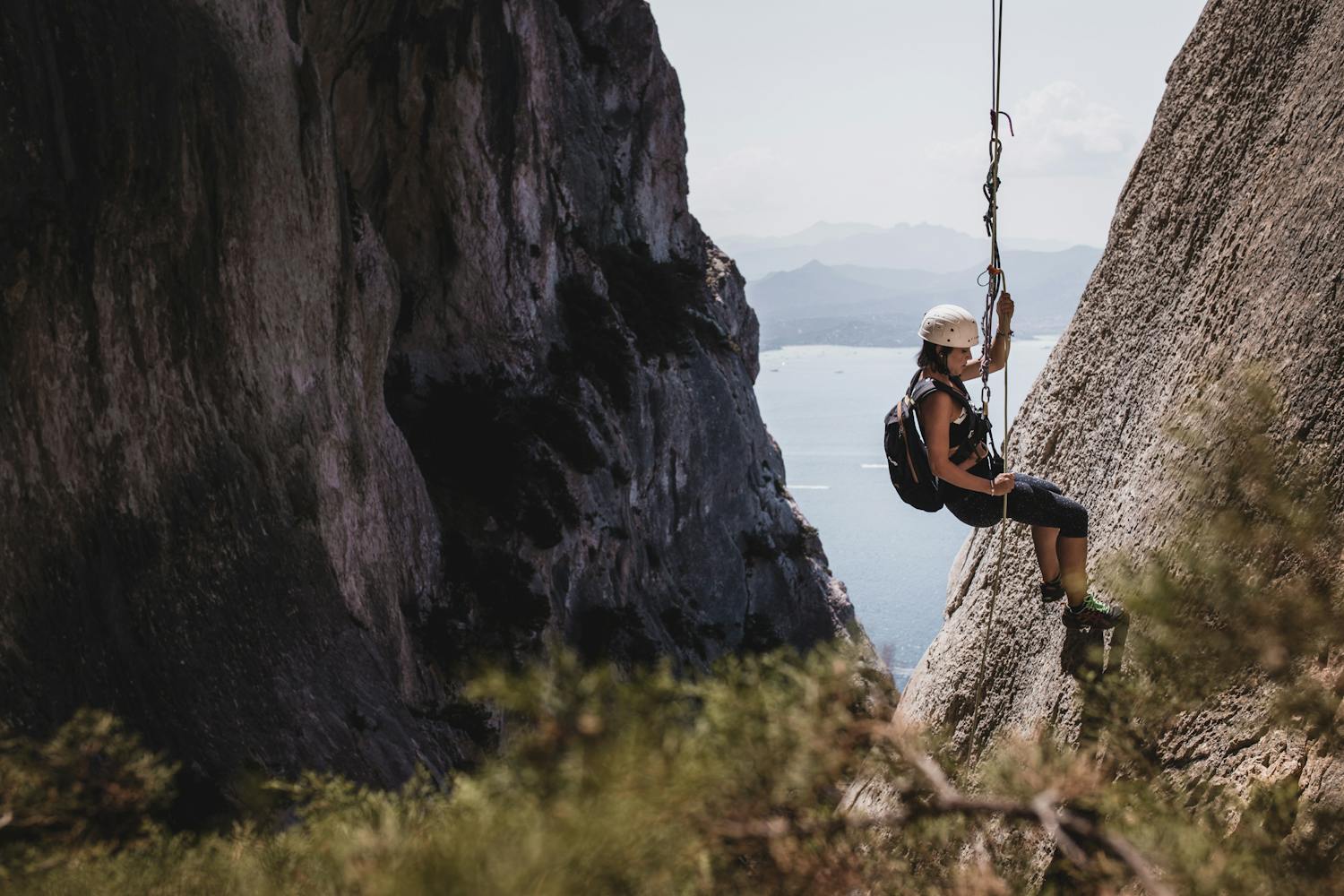
The reverse: descending a vertical rock face in a controlled slide down a rope, “walking” backwards down the cliff. It feels dramatic but is straightforward and well controlled — often people’s favourite, as it delivers a big adrenaline hit with a gentle learning curve.
Some operators also offer bouldering (low climbing without ropes over crash pads) and combine these with a via-ferrata-style scramble or a zip across a gap.
Where you climb
Rock climbing happens on natural cliffs and boulders in the hills around Rishikesh — most commonly near the Shivpuri adventure belt and the camping areas up the valley, where the same operators who run camps and rafting set up climbing and rappelling spots. Because it is usually run from these adventure bases rather than a fixed climbing centre, the exact crag depends on your operator and package.
💡 Tip: Rock climbing here is rarely a standalone booking — it is most often part of a camping or adventure-combo package. If you specifically want a proper climbing or rappelling session, ask operators directly, as availability varies.
Part of the combo: how most people climb
The most common way visitors experience rock climbing in Rishikesh is as one activity among several in an adventure package — typically alongside camping, rafting, a waterfall trek and a bonfire. A classic combo might include:
- A rafting trip on the Ganga
- An overnight at a riverside camp with a bonfire
- A rock climbing & rappelling session on nearby cliffs
- A short trek or waterfall walk
- Sometimes cliff jumping or a zip
This bundle is excellent value and the easiest way to try climbing — the gear, instruction and logistics are all handled, and you get a taste of several adventures in one trip. See our adventure itinerary for how it all fits together.
What a session is like
A guided climbing or rappelling session is welcoming and low-pressure:
- Gear up: instructors fit your harness and helmet and explain the basics.
- Safety briefing: how the rope, belay and commands work — simple and quick.
- For climbing: you start up the rock with the instructor belaying; they coach your route and hold the rope if you slip.
- For rappelling: you lean back over the edge (the scary-but-safe moment) and walk down in a controlled slide, braking with your hand on the rope.
- Repeat & progress: most people do several goes, building confidence and trying harder lines.
The hardest part is mental — trusting the rope and leaning back over an edge — but the equipment does the holding. Within a couple of attempts most people are grinning and pushing themselves higher.
The mental challenge of leaning back
The defining moment of rappelling — and the thing people remember — is the first lean-back over the edge. Everything in your body resists tipping backwards over a drop, even with a rope holding you. It is a small but real battle between instinct and trust, and overcoming it is genuinely empowering. Once you commit and feel the rope take your weight, the descent itself is smooth, controlled and exhilarating rather than frightening.
Climbing presents the opposite challenge: the urge to look down and freeze partway up. The trick is to focus on the next hold rather than the height, breathe, and trust that the rope has you if you slip. Instructors are skilled at coaching nervous beginners through both moments, and the breakthrough — that instant when fear flips into confidence — is exactly what makes climbing so rewarding. Many people arrive convinced they “can’t” and leave having surprised themselves, which is the best souvenir of all.
💡 Tip: On a rappel, get your feet flat and wide against the rock and lean further back than feels natural — counter-intuitively, leaning back gives you better grip and control than staying upright and timid.
Cost
- As part of a camping/adventure combo: often included or a small add-on (~₹500–₹1,000)
- Standalone climbing/rappelling session: ~₹800–₹1,500 depending on duration
- Longer / instructional sessions: priced per programme
Gear and instruction are included. Rock climbing is one of the cheapest adventures in Rishikesh, especially bundled into a package. See our budget guide to plan spend.
When to climb: season
Rock climbing runs roughly September to June. Avoid the monsoon (July–August), when wet rock is slippery and dangerous and sessions are generally suspended. The best conditions are Sept–Nov and Feb–Apr — dry rock, comfortable temperatures and clear skies. Climb in the morning before the rock heats up in warmer months. See best time to visit.
Who is rock climbing for?
| Traveller type | Recommendation |
|---|---|
| Curious beginner | Perfect — guided, gear-supplied, safe; try it in a combo package. |
| Families with older kids | Great supervised activity; check minimum age. See our family guide. |
| Groups / friends | A fun, social challenge — cheer each other up the rock. |
| Adrenaline seekers | Add rappelling and cliff jumping; pair with bungee. |
| Experienced climbers | Ask operators about harder natural lines and bouldering spots. |
| Nervous / fear of heights | Start with a low climb or rappel — the rope makes it safe to test yourself gently. |
Is rock climbing safe?
Guided rock climbing and rappelling are very safe when run by professionals — the whole activity is built around the rope and harness holding you. With a reputable operator:
- You are always rope-protected — belayed when climbing, secured when rappelling; a slip just means hanging safely.
- Helmets and harnesses are mandatory and provided; let staff fit and check them.
- Trained instructors manage the ropes and coach you throughout.
- Avoid wet rock — the main real hazard; sessions pause in rain and the monsoon.
- Listen and do not freelance — follow the instructor’s commands and route.
- Declare injuries — climbing is physical; mention any shoulder, knee or back issues.
For broader guidance see our Rishikesh safety guide. International best-practice for climbing safety and grading is maintained by bodies such as the British Mountaineering Council.
How climbing compares with other Rishikesh adventures
If you are weighing climbing against the town’s other thrills, here is the honest positioning:
- vs rafting: rafting is a one-off guided rush; climbing is a skill-based, participatory challenge you improve at within a single session.
- vs bungee/giant swing: those are pure adrenaline over in seconds; climbing is slower, more cerebral and more affordable, with achievement rather than just a scare.
- vs trekking: trekking is about distance and endurance over hours or days; climbing is about a short, intense vertical challenge.
- vs kayaking: both reward skill, but kayaking needs days to learn while climbing gives satisfaction in a single session.
The takeaway: climbing fills a unique niche — the only Rishikesh adventure that combines genuine challenge, quick reward, low cost and broad accessibility in one short session. That is why it works so well as part of a varied adventure day rather than as a standalone trip.
Common mistakes
- Expecting a dedicated climbing gym — it is outdoor, natural rock, usually via adventure operators.
- Trying to book it standalone when it is mostly sold in combos — ask operators directly.
- Climbing on wet rock — never; wait for dry conditions.
- Wrong footwear — grippy trainers or climbing shoes, not sandals.
- Fighting the rope — trust it; leaning back on a rappel feels wrong but is the safe technique.
- Skipping the season check — the monsoon shuts it down.
Caught the bug? Going further with climbing
Climbing has a way of hooking people — that first session often sparks a real appetite for more. If you find yourself wanting to push harder, Rishikesh and the wider Garhwal region can take you further:
- Ask for harder natural lines — experienced operators can set up tougher routes and longer rappels beyond the beginner cliffs.
- Try bouldering — rope-free climbing on lower rock over crash pads, focused on pure movement and problem-solving.
- Combine with a trek — some Himalayan routes involve scrambling and exposure that build on climbing confidence.
- Use it as a gateway to mountaineering — the Garhwal Himalaya is a serious mountaineering region, and basic rock skills are the first rung; institutes in Uttarakhand run formal courses.
- Keep practising back home — an indoor climbing wall is the easiest way to maintain the skill and strength you discover here.
For most visitors, a single guided session on a Rishikesh cliff is a perfect, self-contained adventure. But for some it becomes the start of a longer relationship with rock and mountains — and there are few more inspiring places to begin than the foothills of the Himalaya, with the Ganga winding below.
Local tips you should know
- Bundle climbing into a camping + rafting combo for the best value and the full adventure.
- Wear grippy closed shoes and fitted, flexible clothing.
- Climb in the morning for cooler rock and better grip.
- Bring water, sunscreen and a little cash; sessions are often at remote spots.
- Tell the instructor about any injuries or fear of heights so they can ease you in.
- Apply for your tourist e-Visa early; see how to reach Rishikesh.
Related adventures & nearby
- Camping — climbing is usually part of camp packages.
- River rafting — the classic combo partner.
- Trekking — more on-foot mountain adventure.
- Bungee & giant swing — for bigger thrills.
- Adventure trip itinerary — combine it all.
Frequently asked questions
Can beginners go rock climbing in Rishikesh?
Yes — climbing and rappelling here are run as guided, gear-supplied sessions where instructors belay and coach you throughout. No experience is needed, and a slip just means hanging safely on the rope.
What is the difference between rock climbing and rappelling?
Rock climbing is ascending a rock face using holds, protected by a rope. Rappelling (abseiling) is descending a face in a controlled slide down a rope. They are usually offered together, and rappelling is often the bigger crowd-pleaser.
How much does rock climbing cost in Rishikesh?
As part of a camping or adventure combo it is often included or a small add-on (around ₹500–₹1,000). A standalone session runs roughly ₹800–₹1,500. Gear and instruction are included.
Where can you rock climb near Rishikesh?
On natural cliffs and boulders in the hills around Rishikesh, most commonly near the Shivpuri adventure belt and the camping areas, run by the same operators who offer rafting and camping.
Do I need my own equipment?
No — operators provide the harness, helmet, ropes and all technical gear, plus instructors. You just need grippy closed shoes and comfortable, flexible clothing.
Is rock climbing safe in Rishikesh?
Yes, with a professional operator. You are always rope-protected, helmets and harnesses are mandatory and provided, and trained instructors manage the ropes. The main hazard is wet rock, so sessions pause in rain and the monsoon.
When is the best time for rock climbing?
September to November and February to April offer the best dry-rock conditions. Avoid the monsoon (July–August) when wet rock is slippery and sessions are suspended. Climb in the morning in warmer months.
Is rock climbing suitable for families and children?
Yes — it is a great supervised activity for families with older children, subject to the operator’s minimum age. The guided, rope-protected format makes it safe for first-timers.
Can I do rock climbing as a standalone activity?
You can, but it is most often sold as part of a camping or adventure-combo package. If you specifically want a dedicated climbing or rappelling session, ask operators directly, as standalone availability varies.
Do I need to be fit or strong to climb?
Not especially — beginner routes rely as much on balance and technique as strength, and instructors choose lines to match your level. Rappelling needs little strength at all. Mention any injuries beforehand.
What should I wear for rock climbing?
Grippy closed shoes (trainers or climbing shoes), fitted and flexible clothing you can move in, and sun protection. Avoid sandals and loose clothing. Bring water and a little cash.
Can rock climbing be combined with other adventures?
Absolutely — it is most commonly bundled with camping, rafting and a trek in an adventure package, making it an easy and great-value way to try several activities in one trip.
Ready to test your grip?
Rock climbing and rappelling are the underrated adventures of Rishikesh — cheap, hands-on and genuinely thrilling, with the rope doing the worrying for you. Add them to a camping trip and have a go. These guides will help:
- Camping — where climbing usually fits in
- River rafting — the classic combo
- Adventure trip itinerary — stack your adventures
- All adventure in Rishikesh — the full hub