Spiritual
Neelkanth Mahadev Temple
The great hilltop Shiva shrine — legend, journey and pilgrimage above Rishikesh.
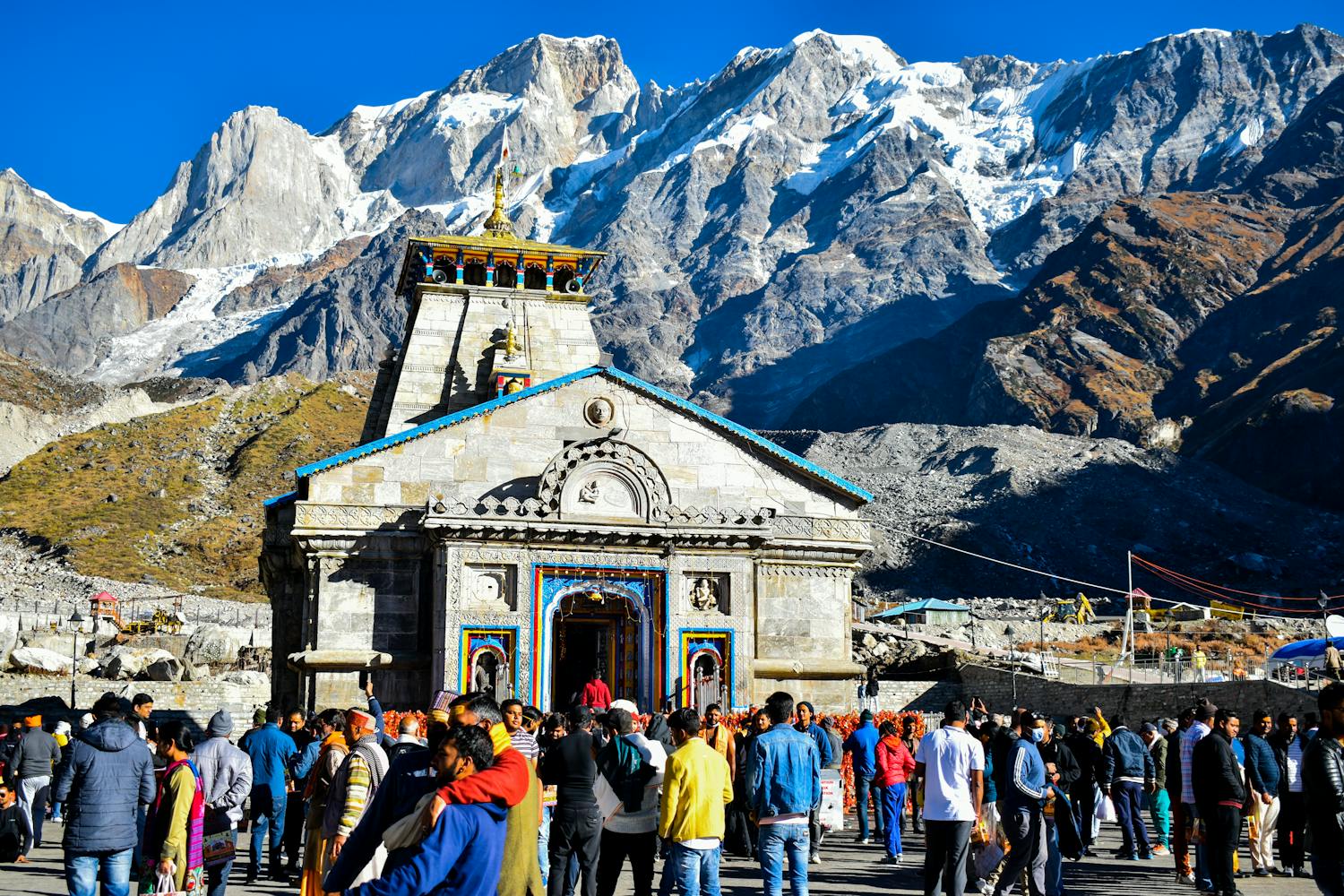
High in the forested hills above Rishikesh stands Neelkanth Mahadev, the region’s most revered temple and one of the holiest Shiva shrines in north India. It marks, by legend, the very spot where Lord Shiva drank the poison that emerged from the churning of the cosmic ocean — an act that turned his throat blue and gave him the name Neelkanth (“blue throat”). The journey up through the hills, the mountain setting, and the temple’s deep significance make it the standout pilgrimage and day trip from Rishikesh. This guide covers the legend, how to get there, timings, the great pilgrimage seasons, and how to make the most of your visit.
Quick answer: Neelkanth Mahadev is a major Shiva temple about 32km from Rishikesh, set at ~1,330m in the hills. Reach it by taxi or shared jeep (~1–1.5hr each way) or as a forest trek (~3–4hr uphill). It is free, open roughly 5am–7pm (confirm locally). It gets extremely crowded during Maha Shivratri and the monsoon Kanwar Yatra (Jul–Aug); visit outside those for a calmer darshan. Combine the trip with the forest scenery and nearby waterfalls. Dress modestly; carry water and cash.
The legend of Neelkanth
The temple’s story comes from one of Hinduism’s great myths, the Samudra Manthan (churning of the ocean). When the gods and demons churned the cosmic ocean to obtain the nectar of immortality, a deadly poison (halahala) emerged first, threatening to destroy all creation. To save the universe, Lord Shiva drank the poison, holding it in his throat — which turned blue, earning him the name Neelkanth, “the blue-throated one.”
Neelkanth Mahadev temple is believed to mark the place where Shiva meditated and consumed the poison, making it one of the most sacred Shiva sites in the region. For devotees, visiting is an act of deep reverence to the god who sacrificed himself to protect creation — and even for non-devotees, knowing the story lends the mountain setting a powerful resonance.
The Samudra Manthan, in full
The legend behind Neelkanth is worth knowing in detail, because it is one of the most vivid and meaningful stories in all of Hindu mythology. The Samudra Manthan — the churning of the ocean of milk — tells how the gods (devas) and demons (asuras), temporarily allied, set out to extract amrita, the nectar of immortality, from the cosmic ocean. They used the great serpent Vasuki as a churning rope and Mount Mandara as the churning stick, with the gods pulling one end and the demons the other.
As they churned, many treasures emerged from the ocean — but before the nectar came a terrible poison, halahala, so virulent it threatened to destroy all of creation. In their desperation the gods turned to Shiva, the great ascetic, who agreed to save the universe by drinking the poison himself. His consort Parvati, fearing for him, pressed her hand to his throat to stop the poison descending into his body — and so it remained held in his throat, which turned a deep blue. From this act Shiva earned the name Neelkanth, and the place where he is said to have meditated and consumed the poison became this sacred temple.
The story resonates far beyond ritual: it is a parable of sacrifice for the greater good, of holding suffering so that others may live. Standing in the temple with that legend in mind — the brightly painted scenes of the churning around you — gives the visit a depth that pure sightseeing never could.
Where it is & the setting
Neelkanth Mahadev sits at around 1,330 metres in the Nar-Narayan mountain ranges, roughly 32km from Rishikesh, surrounded by dense forest between the Pankaja and Madhumati rivers. The setting is half the appeal: the winding road (or trail) climbs through green hills with valley views, and the temple’s elevated, forested position gives it a serene, otherworldly atmosphere quite different from the riverside temples in town. The brightly painted temple, with its detailed depictions of the ocean-churning legend, rewards the journey.
How to reach Neelkanth Mahadev
By road (taxi or shared jeep)
The easiest way: a taxi or shared jeep from Rishikesh, taking around 1 to 1.5 hours each way on the winding hill road (about 32km). Private taxis can be hired for a return trip with waiting time; shared jeeps run from points in town and are cheaper. The drive itself, through forest and hills, is scenic and part of the experience.
By trek (the pilgrim path)
For the adventurous and devout, a forest trek leads up to the temple — commonly started from near Swarg Ashram, climbing roughly 3–4 hours through woodland (about 12km of trail). It is moderately strenuous but deeply rewarding, following the traditional pilgrim route. Carry water and start early; see our trekking guide. Many combine the trek up with a jeep ride down (or vice versa).
Combining road & trail
A popular approach is to trek up and drive down — earning the temple on foot through the forest, then resting your legs on the return. Arrange the jeep in advance or find shared transport at the top.
💡 Tip: If you only want the temple and the views with minimal effort, take a taxi both ways. If you want the journey to be part of the pilgrimage, trek at least one direction — the forest path is beautiful and meaningful.
The forest trek in detail
For those choosing to walk, the Neelkanth trek is one of the most rewarding pilgrim trails near Rishikesh — a genuine forest hike with spiritual purpose. The route climbs from near Swarg Ashram through dense woodland, gaining height steadily over roughly 12km. What to expect:
- The terrain: a mix of forest path and steps, mostly uphill, moderately strenuous but not technical — manageable for any reasonably fit walker.
- The scenery: shaded woodland, birdsong, valley glimpses and a sense of leaving the town behind for the quiet of the hills.
- Wildlife: the forest is home to monkeys and birds; keep food secured and do not feed the monkeys.
- Refreshment: simple stalls appear along the way and near the top selling water, tea and snacks — but carry your own water too.
- Time: allow 3–4 hours up at a comfortable pace, plus time at the temple and the descent (or a jeep down).
Start at first light to walk in the cool of the morning, reach the temple before the day’s crowds, and leave plenty of time to get back. Many pilgrims walk up as an act of devotion and take transport down — a sensible and popular approach. See our trekking guide for general preparation.
Timings & what to expect
The temple is generally open from early morning to evening (roughly 5am–7pm), with aarti performed morning and evening; exact hours vary and change during festivals, so confirm locally. On a normal day you will find a steady flow of pilgrims, priests performing rituals, the offering of Ganga water and bilva leaves to the Shiva lingam, and the bright, atmospheric temple interior. Darshan (viewing the deity) can involve queuing, especially on weekends and auspicious days. There are shops and stalls near the temple selling offerings, snacks and drinks.
What the temple looks like inside
Neelkanth Mahadev is visually striking — a brightly coloured temple in the South Indian-influenced style, its gopuram (tower) and walls covered in vivid sculptural depictions of deities and scenes from the Samudra Manthan legend. The central shrine houses a Shiva lingam, the aniconic form in which Shiva is most often worshipped, where devotees offer Ganga water, milk, bilva (bael) leaves and flowers.
Within the complex you will find a sacred spring and a natural water source where pilgrims bathe or wash before darshan, smaller shrines to other deities, and the constant activity of priests performing rituals. The atmosphere blends devotion and bustle — incense, bells, chanting and the steady movement of pilgrims through the queue to glimpse the lingam. Outside, the forested hills frame everything, and the contrast between the vivid temple colours and the green mountain backdrop is part of what makes Neelkanth so photogenic and memorable.
💡 Tip: Take a moment to look closely at the carvings depicting the ocean-churning — you can pick out the serpent Vasuki, the mountain, and the gods and demons pulling at either end. Knowing the story makes the temple’s art come alive.
The great pilgrimage seasons
Neelkanth transforms during two key periods — spectacular for the devout, overwhelming for the casual visitor:
- Maha Shivratri (Feb/Mar): the great night of Shiva; vast crowds, all-night worship and intense devotional energy.
- Kanwar Yatra (monsoon, Jul–Aug): millions of saffron-clad kanwariyas carry holy Ganga water on foot to offer at Shiva temples; Neelkanth is a major destination, and the routes and temple throng with pilgrims. An extraordinary spectacle, but expect huge crowds, heavy traffic and long waits.
- Shravan month (the monsoon lunar month): considered especially auspicious for Shiva worship, with heightened activity throughout.
If you want a calm, contemplative visit, avoid these periods and the major weekends. If you want to witness living Hindu pilgrimage at its most fervent, time your visit for them — but plan for the crowds.
💡 Tip: During Kanwar Yatra the roads around Rishikesh and up to Neelkanth can be heavily congested and partly restricted. Check conditions before setting out, and consider whether the spectacle is worth the difficulty for you.
Best time to visit
For a peaceful visit with good weather, come in Sept–Nov or Feb–Apr — clear hill views and comfortable temperatures, outside the biggest pilgrim rushes (mind Shivratri in Feb/Mar). Winter is cooler and quiet; the monsoon brings lush forest but also the Kanwar crowds and slippery trails. Go early in the day to beat both heat and crowds, and to leave time for the journey. See our best time to visit Rishikesh guide.
Make a day of it: nearby
- Forest & waterfalls — the route and hills around Neelkanth have scenic spots and seasonal waterfalls; pair with a short walk.
- The trek itself — treat the climb as the day’s adventure, with valley views along the way.
- Return for the Ganga Aarti — time your descent to catch the evening ceremony back in town.
- Other temples — combine with the town’s famous temples on separate days.
Who is a Neelkanth visit for?
| Traveller type | Recommendation |
|---|---|
| Pilgrims / devotees | Essential — one of the holiest Shiva temples in the region. |
| Spiritual seekers | A powerful day trip; trek up for the full experience. |
| Nature lovers / trekkers | The forest trail and hill setting are the draw; see trekking. |
| Sightseers | Worthwhile for the journey, views and atmosphere; go by taxi. |
| Families | Doable by road; the trek is for fit, older members. See our family guide. |
| Crowd-averse visitors | Avoid Shivratri & Kanwar Yatra; go on a quiet weekday. |
Common mistakes
- Visiting during Kanwar Yatra unprepared — immense crowds and traffic; only go if you want the spectacle.
- Starting the trek late — begin early to avoid heat and have time to descend.
- Going midday in summer — hot and crowded; mornings are far better.
- Dressing immodestly — it is an active, sacred temple.
- Not carrying water & cash — essential for the trek and the hilltop.
- Trying to combine it with Kunjapuri — different directions; plan separate days.
Local tips you should know
- Hire a return taxi with waiting time for ease, or take a shared jeep to save money.
- Trek up, drive down for the best of both — the forest path is the highlight.
- Carry water, snacks, sun protection and cash; facilities are basic.
- Visit early on a weekday outside festivals for a peaceful darshan.
- Remove shoes and dress modestly; carry a scarf.
- Apply for your tourist e-Visa early; see how to reach Rishikesh.
Related guides & nearby
- Famous temples in Rishikesh — the full temple round-up.
- Ganga Aarti — the evening ceremony back in town.
- Trekking near Rishikesh — the Neelkanth forest trail & more.
- Ashrams in Rishikesh — stay in the spiritual core.
- Rishikesh for spiritual seekers — the full hub.
Frequently asked questions
What is Neelkanth Mahadev temple?
Neelkanth Mahadev is one of the holiest Shiva temples in north India, set in the hills about 32km from Rishikesh. By legend it marks where Shiva drank the poison from the churning of the cosmic ocean, turning his throat blue — hence the name Neelkanth, “blue throat.”
How do I get to Neelkanth Mahadev from Rishikesh?
By taxi or shared jeep (around 1 to 1.5 hours each way over about 32km of hill road), or by a forest trek of roughly 3 to 4 hours uphill, commonly started near Swarg Ashram. Many trek up and drive down.
How long is the trek to Neelkanth?
The forest trek is about 12km and takes roughly 3 to 4 hours uphill from near Swarg Ashram. It is moderately strenuous; start early, carry water, and consider taking a jeep back down.
What are Neelkanth Mahadev temple timings?
The temple is generally open from early morning to evening, roughly 5am to 7pm, with morning and evening aarti. Exact hours vary and change during festivals, so confirm locally.
Is there an entry fee for Neelkanth temple?
No — entry is free. You will pay for transport (taxi or jeep), any offerings you buy, and possibly shoe storage. Carry cash, as facilities are basic.
When is the best time to visit Neelkanth Mahadev?
September to November and February to April offer comfortable weather and clear hill views, outside the biggest pilgrim rushes (note Maha Shivratri in Feb/Mar). Go early in the day to beat heat and crowds. Avoid the Kanwar Yatra (Jul–Aug) unless you want the spectacle.
What is the Kanwar Yatra at Neelkanth?
During the monsoon (Jul–Aug), millions of saffron-clad pilgrims (kanwariyas) carry holy Ganga water on foot to offer at Shiva temples, and Neelkanth is a major destination. It is an extraordinary spectacle but brings huge crowds, traffic and long waits.
Can I do Neelkanth and Kunjapuri temple on the same day?
It is not recommended — they are in different directions from Rishikesh and each needs a half-day. Plan them as separate trips for a comfortable visit.
Is the Neelkanth trek difficult?
It is moderately strenuous — about 3 to 4 hours of uphill walking through forest. Reasonably fit walkers manage it well; start early, carry water, and pace yourself. Less fit visitors can simply go by road.
What should I wear and bring to Neelkanth?
Dress modestly (cover shoulders and knees) and carry a scarf, as it is an active temple. Bring water, snacks, sun protection, comfortable shoes (especially for the trek) and cash. You will remove shoes at the temple.
How crowded does Neelkanth get?
On normal days it has a steady flow of pilgrims. During Maha Shivratri, the Kanwar Yatra and the holy month of Shravan, it becomes extremely crowded with long queues and heavy traffic. Weekdays outside festivals are calmest.
Is Neelkanth Mahadev worth visiting for non-Hindus?
Yes — beyond its religious significance, the forest setting, hill views, scenic journey and atmospheric temple make it a rewarding day trip for any traveller. Visit respectfully and you will find it memorable whatever your beliefs.
Visit the blue-throated lord
Neelkanth Mahadev is the great pilgrimage of Rishikesh — a sacred Shiva shrine in a stunning forest setting, reached by a scenic drive or a rewarding trek. Go early, dress respectfully, and let the journey be part of the worship. These guides will help:
- Famous temples — the full temple guide
- Trekking — the forest trail up
- Ganga Aarti — the evening ceremony
- Rishikesh for spiritual seekers — plan the whole trip