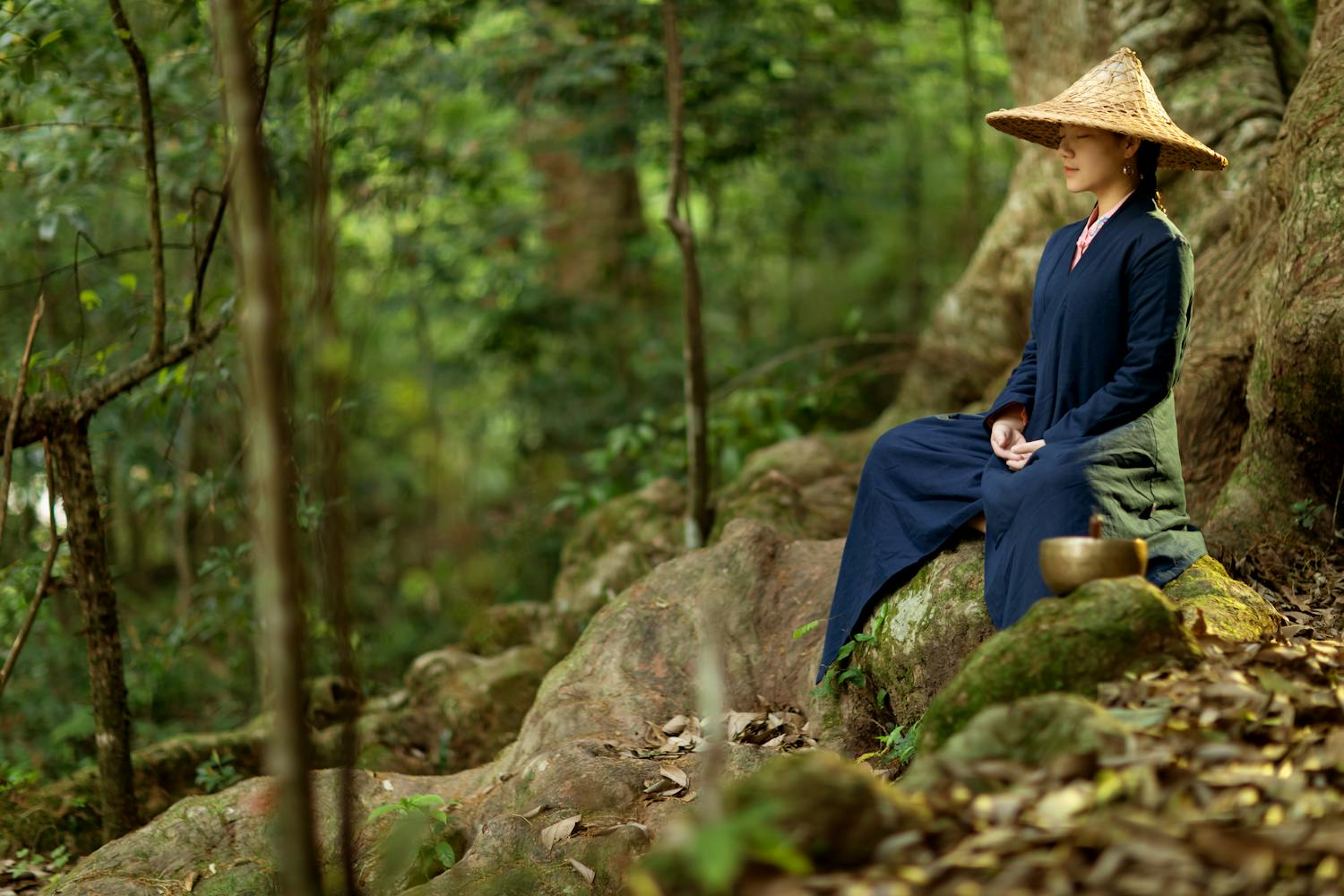
Spiritual
Spiritual Retreats in Rishikesh
The journey inward — silence, self-enquiry and healing in the world’s spiritual capital.
Some people come to Rishikesh not for the yoga or the rapids, but to go inward — to step out of their lives for a while and confront the bigger questions of who they are and what truly matters. That is the territory of the spiritual retreat: an immersive programme focused on inner transformation through silence, self-enquiry, philosophy, meditation and devotion, rather than physical practice alone. This guide explains what a spiritual retreat in Rishikesh actually is, how it differs from a yoga or meditation retreat, the types on offer, what to expect, and how to choose one that meets you where you are.
Quick answer: A spiritual retreat in Rishikesh is an immersive programme for inner growth — combining meditation, self-enquiry, philosophy, silence and devotion, often within an ashram or dedicated centre. It goes deeper than a yoga retreat, focusing on the mind and spirit rather than asana. Lengths range from a few days to several weeks; costs vary from donation-based ashram stays to structured paid programmes (~₹1,500–₹5,000+/day). Best for genuine seekers and anyone wanting a profound reset. For movement-led options see yoga retreats; for stillness, meditation.
What is a spiritual retreat?
A spiritual retreat is a dedicated period of withdrawal from everyday life to focus entirely on inner development. Where a yoga retreat centres on physical practice and a meditation retreat on a specific technique, a spiritual retreat is broader and deeper — it engages the whole inner life. A typical programme might weave together meditation, periods of silence, teachings on philosophy and the nature of the self, devotional practices like chanting, self-reflection, and time in nature, all guided by a teacher and held within a supportive, contemplative environment.
The goal is not fitness or relaxation (though both often follow) but transformation: clarity, inner peace, self-understanding, healing, or a shift in how you relate to your life. Rishikesh, with its ancient spiritual heritage rooted in the traditions of Hinduism, its abundance of teachers, and its uniquely contemplative atmosphere, is one of the world’s great places to undertake one.
Why Rishikesh for inner work
You can retreat anywhere, but few places support deep inner work like Rishikesh. The town has been a centre of spiritual seeking for thousands of years — sages, ascetics and teachers have come to these riverbanks and hills to meditate and realise truth since long before it became a global destination. That lineage is alive in the ashrams, the teachers, and the very atmosphere, giving any retreat here a depth of context and tradition that a wellness centre elsewhere cannot replicate.
The environment does much of the work too. An alcohol-free, vegetarian, unhurried town set on the sacred Ganga at the foot of the Himalaya naturally quiets the mind and body. The constant presence of the river, the dawn bells, the nightly aarti and the simple rhythm of life all gently support the turning inward that a spiritual retreat asks of you. And the sheer concentration of teachers and traditions means that whatever path calls you — silence, self-enquiry, devotion or healing — you can find a genuine, experienced guide for it. For many seekers, Rishikesh is simply the place to do this work.
How it differs from yoga & meditation retreats
| Yoga retreat | Meditation retreat | Spiritual retreat | |
|---|---|---|---|
| Core focus | Physical practice | One meditation technique | Whole inner life |
| Includes | Asana, pranayama | Meditation, silence | Meditation, philosophy, self-enquiry, devotion |
| Goal | Body & energy | A calm, trained mind | Transformation & self-understanding |
| Best for | Wellness & movement | Stillness & focus | Seekers & deep reset |
In reality the lines blur — many programmes combine elements of all three, and a good yoga retreat can be deeply spiritual. But if your primary aim is inner work rather than physical practice, a dedicated spiritual retreat is what you are looking for.
Types of spiritual retreat
Silent retreats
Observing noble silence for the duration, turning attention fully inward. The most intensive form, including the renowned 10-day Vipassana; profound but demanding. See our meditation guide.
Self-enquiry / Vedanta retreats
Centred on the question “who am I?” and the non-dual teachings of Advaita Vedanta — talks, contemplation and satsang with a teacher. Intellectually and spiritually deep; ideal for the philosophically inclined.
Ashram immersion retreats
Living the full ashram life — daily practice, service (karma yoga), study and devotion — as a structured retreat. Traditional and transformative.
Devotional (bhakti) retreats
Focused on the heart — chanting, kirtan, prayer and cultivating love and surrender. Warm, joyful and emotionally opening.
Healing & transformation retreats
Blending meditation with emotional healing, breathwork, sound and sometimes Ayurveda — aimed at release, recovery and renewal. Popular with those navigating stress, grief or burnout.
💡 Tip: Be honest about what you are seeking — intellectual clarity, emotional healing, devotional warmth, or deep silence. The types differ markedly, and matching the retreat to your real need is the key to a meaningful experience.
What to expect on a spiritual retreat
Programmes vary, but most share a calm, structured daily rhythm:
- Early mornings — meditation or practice at dawn when the mind is naturally quiet.
- Teachings & talks — sessions on philosophy, the self, or the practice, often with Q&A.
- Meditation & contemplation — guided and silent sittings through the day.
- Periods of silence — whole days or set times observing quiet.
- Devotional practice — chanting, kirtan or the evening aarti.
- Simple sattvic food — light vegetarian meals supporting clarity.
- Rest & reflection — deliberate space to integrate, journal, or simply be.
- Time in nature — by the river or in the hills.
The pace is unhurried and the distractions stripped away — that simplicity is what allows the deeper work to happen. Emotions can surface as you slow down; good retreats hold space for this, and it is part of the process rather than a sign anything is wrong.
What you can gain
- Clarity — perspective on your life, choices and what matters.
- Inner peace — a calmer, steadier baseline that often lasts well beyond the retreat.
- Self-understanding — insight into your patterns, mind and deeper nature.
- Emotional release & healing — space to process what daily life keeps buried.
- A spiritual foundation — practices and understanding to build on at home.
- Reconnection — with yourself, with stillness, and with a sense of meaning.
You do not need to be religious to benefit. Many people arrive simply exhausted or searching, and leave lighter, clearer and quietly changed.
Preparing for & integrating a retreat
A retreat’s value depends heavily on how you enter it and what you do afterward — the days on either side matter almost as much as the retreat itself.
Before you go: arrive a day or two early to shed travel fatigue and adjust to the early rhythm. Lower your expectations of “results” — go to show up and be present, not to achieve a particular outcome. Wind down your input beforehand where you can (less screen time, less stimulation) so the shift into stillness is less jarring. And set a simple, honest intention for why you are going.
Afterward — integration: this is the most overlooked part. The insights and calm of a retreat can fade fast if you plunge straight back into busyness. Build a buffer: a quiet day or two before flying home, time to journal and reflect, and a plan for one or two simple practices (a short daily meditation, an earlier bedtime) to carry the experience forward. The goal is not to recreate the retreat at home, but to keep a thread of it alive in your ordinary life.
💡 Tip: Write down, on the last day of your retreat, the two or three things you most want to carry home — a realisation, a habit, an attitude. A concrete note is far more likely to survive the return to everyday life than a vague good intention.
How to choose a spiritual retreat
- Clarify your intention — healing, clarity, devotion, silence or study; let it guide your choice.
- Match the type — silent, self-enquiry, ashram, devotional or healing (see above).
- Check the teacher — their tradition, experience and reputation matter greatly; look for humility over showmanship.
- Mind the intensity & length — be realistic about what you can sustain; start gentler if unsure.
- Read recent reviews from people with similar goals.
- Confirm the practicalities — schedule, rules, accommodation, food and what is included.
Our satsang and ashram guides cover how to judge teachers and communities, which applies to retreats too.
Who is a spiritual retreat for?
| Traveller type | Recommendation |
|---|---|
| Genuine seeker | The heart of why many come; choose by tradition. See our spiritual guide. |
| Stressed / burnt out | A healing or silent retreat for a genuine deep reset. |
| At a life crossroads | Self-enquiry or ashram immersion for clarity and perspective. |
| Curious beginner | A shorter, gentler retreat or an ashram stay first. |
| Grieving / healing | A transformation/healing retreat with proper emotional support. |
| Wanting movement too | A yoga retreat with a spiritual emphasis. |
Is a spiritual retreat right for you now?
A spiritual retreat is powerful, but timing and readiness matter. It is likely a good fit if you feel a genuine pull toward inner work, are navigating a transition or seeking clarity, can give it the time and openness it needs, and are prepared for the possibility that deep work is sometimes uncomfortable before it is rewarding. Many people know intuitively when the moment is right — a quiet sense that they need to stop, go inward and reset.
It may be worth waiting, or choosing a gentler option, if you are in acute crisis (some intensive retreats are not a substitute for professional mental-health support), if you are mainly looking to relax rather than do inner work (a yoga retreat or simple riverside stay may suit better), or if you cannot give it real time and attention. There is no rush: Rishikesh and its teachers will be here whenever you are ready. The most meaningful retreats happen when the inner readiness and the outer opportunity meet — and only you can sense that timing for yourself.
Common mistakes
- Choosing the wrong type — a silent retreat when you wanted devotional warmth, say.
- Going too intense too soon — a 10-day silent retreat as your first experience.
- Not vetting the teacher — reputation and integrity matter most here.
- Expecting only bliss — deep inner work can be uncomfortable before it is rewarding.
- Booking too short — it takes a few days to settle in before the depth comes.
- Treating it as a holiday — a retreat is inner work, not sightseeing with meditation.
How long should your retreat be?
Length shapes depth, and the right duration depends on your experience and goals:
- 2–4 days: a taster — enough to slow down, sample the practices and feel calmer. Good for first-timers, the time-poor, or testing whether deeper retreat work appeals.
- 5–7 days: the sweet spot for most people — long enough to truly settle past the initial restlessness and reach genuine stillness and insight, without an enormous commitment.
- 10–14 days: a deeper immersion (the 10-day Vipassana sits here) — where significant shifts and breakthroughs more often happen, for those ready to go further.
- Several weeks or more: for serious seekers or those at a major life juncture — a profound, sometimes life-changing depth, usually within ashram life or an extended programme.
A useful rule: the first two or three days of any retreat are largely about arriving — the body unwinds, the mind keeps racing, and you wonder if anything is happening. The real depth tends to come after that, which is why a week generally rewards you far more than a long weekend. If you are uncertain, start with a 5–7 day retreat; you can always return for longer once you know how you respond. Whatever you choose, give it your full attention rather than treating it as one item on a packed itinerary — depth, not duration alone, is what makes a retreat transformative.
Local tips you should know
- Base in Ram Jhula or Swarg Ashram for the most contemplative surroundings.
- Pair a retreat with the evening Ganga Aarti and satsangs for full immersion.
- Book ahead for structured and silent retreats — popular ones fill up.
- Arrive a day early to settle and adjust before the programme begins.
- Go with an open, unhurried mind — the experience is what you make of it.
- Apply for your tourist e-Visa early; see how to reach Rishikesh.
Related guides & nearby
- Ashrams in Rishikesh — where many retreats are held.
- Meditation in Rishikesh — silent & Vipassana retreats.
- Satsangs — teachings & self-enquiry.
- Yoga retreats — movement-led alternatives.
- Rishikesh for spiritual seekers — the full hub.
Frequently asked questions
What is a spiritual retreat?
A spiritual retreat is an immersive programme of inner development — combining meditation, silence, philosophy, self-enquiry and devotion to foster clarity, peace, self-understanding or healing. It goes deeper than a yoga or meditation retreat, engaging the whole inner life rather than just the body or a single technique.
How is a spiritual retreat different from a yoga retreat?
A yoga retreat centres on physical practice (asana and pranayama), while a spiritual retreat focuses on the mind and spirit — meditation, philosophy, self-enquiry and devotion — aiming at inner transformation rather than fitness or relaxation. Many programmes blend both.
What types of spiritual retreat are there in Rishikesh?
Silent retreats (including Vipassana), self-enquiry/Vedanta retreats, ashram immersion retreats, devotional (bhakti) retreats, and healing/transformation retreats blending meditation with emotional work, breathwork and sometimes Ayurveda.
How long is a spiritual retreat?
They range from a few days to several weeks. Shorter retreats suit beginners and the time-poor; longer immersions allow deeper transformation. Even a week is enough to settle in and feel real benefits.
How much does a spiritual retreat cost?
Costs vary widely — from donation-based ashram immersions to structured paid programmes at roughly ₹1,500–₹5,000+ per day, usually including accommodation and sattvic meals. The 10-day Vipassana is free on donation.
Do I need to be religious to attend?
No — spiritual retreats welcome people of all backgrounds and beliefs, including the secular and the simply searching. You take what is useful; many non-religious people find profound clarity and peace.
Which retreat is best for beginners?
A shorter, gentler retreat or an ashram immersion is best to start. Avoid jumping straight into a 10-day silent retreat — build up with a few days of guided practice first.
What happens on a spiritual retreat day?
Typically early-morning meditation, teachings or talks, guided and silent meditation, periods of silence, devotional practice like chanting, simple vegetarian meals, rest and reflection, and time in nature — all at an unhurried, contemplative pace.
Can a spiritual retreat help with stress or burnout?
Yes — healing and silent retreats in particular offer a genuine deep reset, with space to slow down, process emotions and restore inner calm. Choose one with proper support if you are navigating grief or significant stress.
How do I choose a spiritual retreat?
Clarify your intention (healing, clarity, devotion, silence or study), match the retreat type to it, vet the teacher’s tradition and reputation, be realistic about intensity and length, read recent reviews, and confirm the schedule, rules and inclusions.
Where are spiritual retreats held in Rishikesh?
Mostly at ashrams and dedicated retreat centres around Ram Jhula, Swarg Ashram and quieter spots upriver — the contemplative, devotional core of Rishikesh, away from the busiest tourist areas.
Is it normal to feel emotional during a retreat?
Yes — as you slow down and turn inward, emotions that daily life keeps buried can surface. Good retreats hold space for this, and it is considered part of the healing and growth process rather than a problem.
Go within
A spiritual retreat is the deepest journey Rishikesh offers — not across the river or up a mountain, but inward. Clarify what you seek, choose a teacher and tradition that resonate, and give yourself the time and openness to be changed. These guides will help:
- Ashram stays — immersive spiritual life
- Meditation in Rishikesh — silent & Vipassana retreats
- Satsangs — teachings & self-enquiry
- Rishikesh for spiritual seekers — plan the whole trip