Where to Stay
Where to Stay in Laxman Jhula
The most atmospheric corner of Rishikesh — temples, ghats and river views on your doorstep. Where to base yourself, and what to expect.
Quick answer
Laxman Jhula is Rishikesh at its most classic — a tangle of lanes around the famous footbridge, temples and ghats, with rooftop cafes and Ganga views in every direction. It is the most atmospheric base, ideal for sightseeing, the aarti and soaking up the town’s spiritual side. Expect guesthouses from ₹600, river-view hotels ₹2,000–6,000, and plenty of hostels. It’s a short walk from Tapovan’s yoga scene. For the neighbourhood itself, see the area guides.
Why stay in Laxman Jhula?
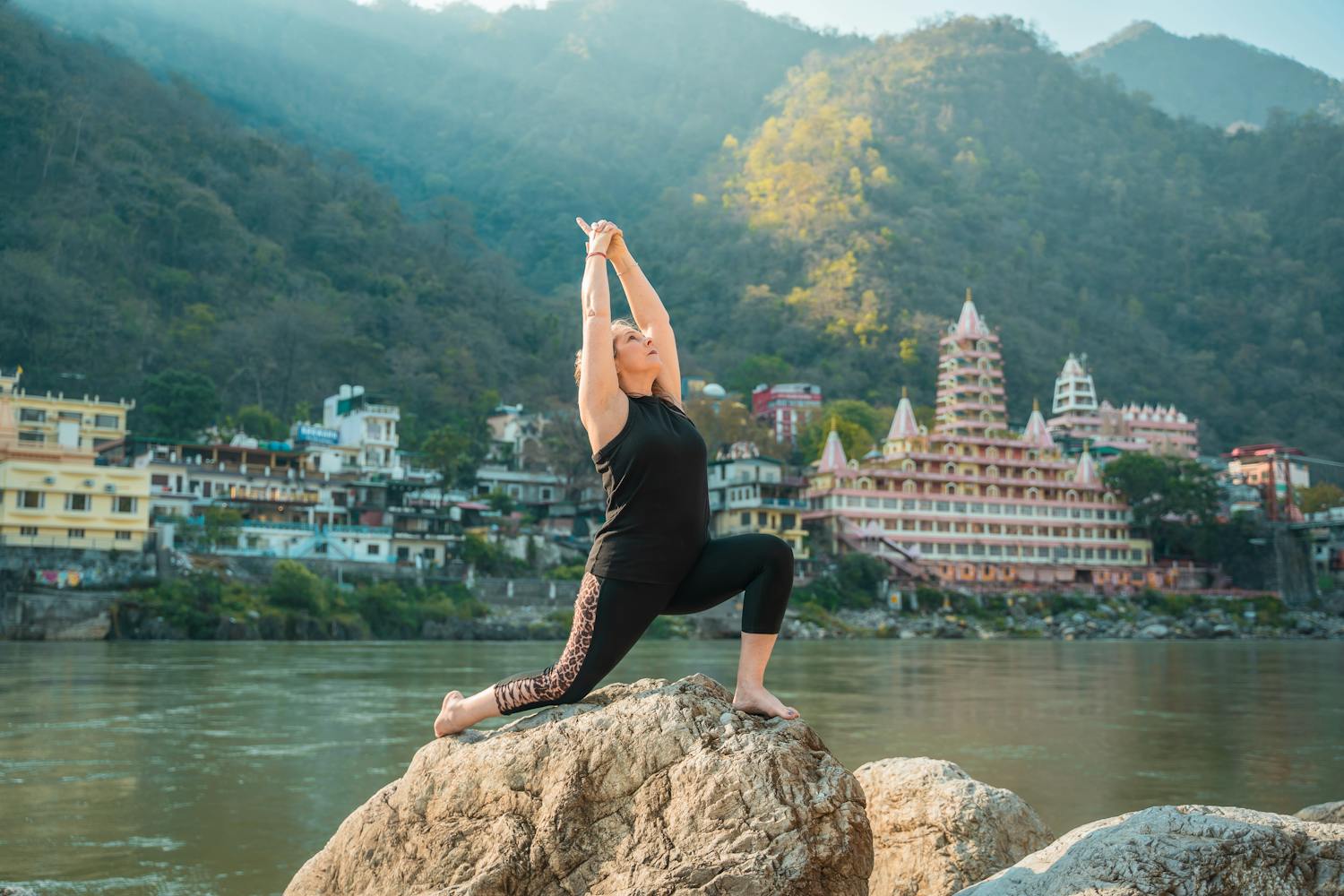
If Tapovan is the yoga heart of Rishikesh, Laxman Jhula is its postcard — the image most people carry of the town. Centred on the slender suspension footbridge that gives the area its name, it is a warren of stepped lanes climbing away from the Ganga, lined with temples, ghats, rooftop cafes, shops and guesthouses, with the river and the green foothills filling every gap. The famous bridge spans the Ganges here where it is wide, clear and fast, and the whole area hums with the rhythm of pilgrims, sadhus and travellers.
For accommodation, the appeal is atmosphere and access to the spiritual and scenic side of Rishikesh. You wake to temple bells and river light, step out to ghats and shrines, and end the day at an aarti a few minutes from your room. It is the choice for travellers who came for the soul of the place — the temples, the river, the timeless feel — rather than primarily for yoga classes or nightlife. This guide covers where to stay within Laxman Jhula, what each part is like, what you’ll pay, and how to choose, as a companion to the where to stay hub.
Laxman Jhula accommodation at a glance
| Option | Rough price/night | Best for |
|---|---|---|
| Hostel dorm | ₹400–900 | Backpackers, solo travellers |
| Guesthouse room | ₹600–1,500 | Budget travellers, couples, atmosphere |
| River-view hotel | ₹2,000–6,000 | Comfort with a Ganga view |
| Ashram / dharamshala | ₹300–800 | Pilgrims, spiritual stays, the thrifty |
| Boutique / upscale | ₹5,000–10,000 | Style near the temples & river |
These are typical 2026 ranges and rise in the Sep–Apr peak; see best time to visit. River-facing rooms command a premium — and are often worth it here, where the view is the whole point.
The parts of Laxman Jhula — and where to stay
The Laxman Jhula area straddles both banks of the Ganga around the bridge, and each pocket has a distinct feel. Knowing them helps you pick the right spot.
Right by the bridge & lanes — in the thick of it
The lanes immediately around the footbridge are the busiest and most atmospheric — temples, shops, rooftop cafes and a constant flow of pilgrims and travellers. Stay here for the full sensory experience and instant access to everything, accepting that it is lively and can be noisy. Best for short, sightseeing-focused stays and those who want the buzz.
The far (east) bank — quieter with views
Cross the bridge to the east bank and things calm a little, with guesthouses and hotels enjoying lovely views back across the river to the lanes and temples. A short walk from the action but noticeably more peaceful — a good balance of atmosphere and rest.
Up the hill toward Tapovan — the best of both
Climb the slope on the west side and Laxman Jhula blends into Tapovan, so you get river-and-temple atmosphere below and the yoga-and-cafe scene above, both within a walk. Ideal if you can’t decide between the two areas — honestly, the sweet spot for many visitors.
Ram Jhula & Swarg Ashram — the ashram quarter
A little downstream, the Ram Jhula bridge and Swarg Ashram area is the traditional ashram and pilgrim heart, with the cheapest, most devotional stays. Quieter and more spiritual than Laxman Jhula — worth considering if that’s your priority.
Who Laxman Jhula suits best
- First-time sightseers — the temples, bridge, ghats and aarti are all on your doorstep.
- Spiritually-minded travellers — closest to the river’s devotional life and the temples.
- View-seekers & photographers — rooftop and river-view rooms are the area’s signature.
- Couples — atmospheric, romantic, with characterful cafes and sunsets over the Ganga.
- Budget & pilgrim travellers — guesthouses, hostels and nearby ashrams keep costs low.
- Short stays — if you have a few days and want to feel the soul of Rishikesh fast.
It suits you a little less if your trip is built around daily yoga classes — then central Tapovan is more convenient — or if you want riverside seclusion, which means heading upstream to Shivpuri.
Getting around from Laxman Jhula
Like the rest of riverside Rishikesh, Laxman Jhula is built for feet, not wheels. A few orientation notes:
- The footbridge links the two banks — pedestrians and (historically) two-wheelers only; expect crowds and the odd cow.
- Cafes, temples and shops cluster within a few minutes’ walk on both banks.
- Tapovan’s yoga scene is a 10–15 minute uphill walk; Ram Jhula is a short auto ride or riverside walk downstream.
- Autos and taxis wait at the road heads; arrange them for the stations or airport and day trips.
- Steps everywhere — travel light with a backpack; see the packing list.
Local tip: for the magic of Laxman Jhula without the worst of the noise, book a room on the far bank or one floor up with a river view. You get the temple-and-bridge panorama and the sound of the Ganga, while the busiest lanes — and their late chatter — stay across the water.
Laxman Jhula vs Tapovan vs Shivpuri
Laxman Jhula is one of the classic bases — here’s how it compares to the other main options, all a short hop apart. Use the area guides for more.
| Area | Vibe | Best for |
|---|---|---|
| Laxman Jhula | Atmospheric, temples, ghats, river views | Sightseeing, spiritual side, couples, short stays |
| Tapovan | Yoga hub, cafes, lively, every budget | Yoga, nomads, solo travellers, long stays |
| Ram Jhula / Swarg Ashram | Traditional ashrams, devotional | Pilgrims, ashram stays, quiet |
| Shivpuri | Riverside, secluded, adventure | Camps, rafting, calm, nature |
Choose Laxman Jhula for atmosphere and the river’s spiritual life, Tapovan for yoga and cafes, Ram Jhula for ashrams, and Shivpuri for seclusion. Many travellers split a trip across two.
Choosing your Laxman Jhula stay by budget
Backpacker (under ₹1,000/night)
Hostels and simple guesthouses fill the lanes on both banks, many with a rooftop chai spot and a view. Add nearby ashrams and dharamshalas for the very cheapest, most devotional beds. See hostels and budget hotels.
Mid-range (₹2,000–6,000/night)
This is where Laxman Jhula shines — comfortable river-view hotels and guesthouses where you pay a premium for a Ganga-facing room and balcony. For many, that view at sunrise is the highlight of the whole trip and well worth it.
Upscale & boutique (₹5,000+/night)
A handful of boutique stays bring style and comfort near the temples and river. For full wellness luxury you’ll generally head upstream — see luxury resorts and riverside resorts.
What to check before booking in Laxman Jhula
- River view vs lane view — a Ganga-facing room is the area’s signature; confirm it’s a real view, not a glimpse.
- Noise — the bridge lanes are busy and devotional sounds start early; the far bank and upper floors are quieter.
- Steps & access — how far from where an auto drops you, and how many stairs with a bag.
- Hot water & AC/fan — confirm for your season.
- Which bank — decide if you want to be on the busy temple side or the calmer far side, and which is closer to your plans.
- Walk to Tapovan — if you also want yoga classes, check the uphill distance.
On your doorstep in Laxman Jhula
Few places put so much of Rishikesh’s character within a few minutes’ walk — a big reason India’s tourism board, Incredible India, features the area so prominently:
- The Laxman Jhula footbridge and its river views — the area’s icon.
- Temples — the striking multi-storey Tera Manzil (Trayambakeshwar) and others; see famous temples.
- Ghats & the Ganga Aarti — the riverside ceremony is close by.
- Rooftop cafes — some of the best Ganga-view dining in town; see the food guide.
- Markets — shops for clothes, books, malas and souvenirs line the lanes.
- Tapovan’s yoga scene — a short uphill walk when you want a class.
Booking, ID and arrival
Booking in Laxman Jhula is straightforward, with the usual practicalities. You must show photo ID at check-in, so carry your passport and, as a foreign visitor, your visa — most arrive on an electronic visa obtained only through the official portal at indianvisaonline.gov.in, with a printout kept for arrival. To get here, reach Rishikesh (see how to reach Rishikesh), then take an auto to the Laxman Jhula road head and walk in — the bridge and lanes are pedestrian-only. Arrive in daylight with a backpack, and if your room is across the bridge, be ready to carry your bag over on foot.
Related guides
- Where to stay in Rishikesh — the full lodging hub
- Tapovan & Shivpuri — the other base areas
- Hostels, budget hotels & riverside resorts
- Ganga Aarti & famous temples — what’s on your doorstep
- Ashram stays — the Ram Jhula option nearby
- Best time to visit & packing list — plan your stay
What a stay in Laxman Jhula feels like
Laxman Jhula wakes early and slowly. Before dawn the temple bells begin, mist hangs over the green river, and the first pilgrims cross the bridge as sadhus settle on the ghats. By mid-morning the lanes fill with colour — marigolds and incense, shopkeepers unrolling shawls, the murmur of mantras from a dozen shrines. From a rooftop cafe you can watch the whole scene unfold over a long breakfast, the Ganga rushing clear and cold below.
As the day cools, the area draws toward the river for the evening aarti — lamps, song and firelight reflected on the water — before lanes quieten and rooftop dinners stretch into a starlit evening. It is this timeless, devotional rhythm, more than any single sight, that makes staying in Laxman Jhula feel less like a holiday and more like stepping into the living heart of Rishikesh.
Laxman Jhula through the seasons
Time your stay with the season in mind — cross-check the weather guide:
- Autumn & spring (Oct–Nov, Mar–Apr) — the sweet spot: clear river, warm days, cool evenings; book river-view rooms ahead.
- Winter (Dec–Feb) — crisp, sunny days and cold nights; choose a room with heating and reliable hot water.
- Summer (May–Jun) — hot midday but quieter and cheaper; an AC room and a rooftop breeze help.
- Monsoon (Jul–Sep) — dramatic and green with a swollen, powerful river; fewer crowds, lower prices, frequent rain.
In every season, a river-facing room rewards you — but confirm hot water, heating or AC, and that the view is genuine before you book.
Common mistakes when choosing a Laxman Jhula stay
- Paying for a “river view” that isn’t one. Confirm the actual outlook — a real Ganga view is the whole point here.
- Booking on the busiest lane if you need quiet. The far bank or an upper floor keeps the view and loses the noise.
- Forgetting the bag-carry over the bridge. If your room is across the river, you’ll walk it over — pack light.
- Expecting it to be the yoga hub. For daily classes, Tapovan is more convenient.
- Underestimating winter cold in riverside rooms — confirm heating Dec–Feb.
- Missing the ashram option. Nearby Ram Jhula offers cheaper, more devotional stays if that’s your aim.
The bottom line on staying in Laxman Jhula
Laxman Jhula is the place to stay if you want to wake inside the postcard — temples, ghats, the famous bridge and the Ganga all within a few steps, and the evening aarti a short walk away. It is the most atmospheric base in Rishikesh, perfect for sightseeing, couples, the spiritual side and short, soulful stays, with Tapovan’s yoga and cafes an easy walk uphill when you want them. Choose a river-view room on the calmer far bank or an upper floor, run the quick checks on noise, steps and hot water, and you’ll have one of the most memorable stays in town.
Book a couple of nights to soak it in, then decide whether to settle here or split your time with Tapovan. When you’re ready, compare every option at the where to stay hub and plan the rest of your trip from the trip-planning hub.
Tips for the perfect Laxman Jhula stay
- Ask for a high room. An upper floor means better views, more breeze and less lane noise.
- Time your booking around the aarti. A room within walking distance lets you stroll down each evening without arranging transport.
- Pick your bank deliberately. The temple side buzzes; the far side is calmer with views back across the river.
- Use it as a sightseeing base. The temples, ghats and bridge are walkable, and Tapovan yoga is a short climb away.
- Eat on the rooftops. The Ganga-view cafes are part of the experience — see the food guide.
Get these small choices right and a Laxman Jhula stay becomes the part of your trip you’ll picture long after you’ve left — the bridge, the bells and the river, right outside your door.
Frequently asked questions
Is Laxman Jhula a good place to stay in Rishikesh?
Yes, especially if you want atmosphere and the spiritual side of Rishikesh. Centred on the famous footbridge, it offers temples, ghats, rooftop cafes and river views on your doorstep, with the Ganga Aarti close by. It is ideal for sightseeing, couples and short, character-filled stays.
How much does it cost to stay in Laxman Jhula?
Guesthouse rooms run about 600 to 1,500 rupees a night, hostel dorms 400 to 900, and comfortable river-view hotels 2,000 to 6,000. Nearby ashrams and dharamshalas can be as little as 300 to 800. River-facing rooms cost more but are often worth it for the view.
Is Laxman Jhula or Tapovan better for staying?
It depends on your trip. Laxman Jhula is more atmospheric and closer to temples, ghats and the aarti, ideal for sightseeing and the spiritual side. Tapovan is the yoga hub with the most schools, cafes and budget choice. They are a short uphill walk apart, so some travellers stay in each.
Where exactly should I stay in Laxman Jhula?
Stay by the bridge and lanes for the full atmospheric buzz, on the far east bank for quieter river views, or up the hill toward Tapovan for the best of both the temple and yoga scenes. The Ram Jhula and Swarg Ashram area nearby is best for traditional ashram stays.
Can I get a room with a Ganga view in Laxman Jhula?
Yes, river-view rooms are the area’s signature, with rooftop cafes and balconies overlooking the Ganga and the bridge. They cost more than lane-facing rooms, but the sunrise view over the river is a highlight for many visitors. Confirm it is a genuine river view when booking.
Is Laxman Jhula noisy?
The lanes right by the bridge are lively, with shops, cafes and devotional sounds that start early. For more quiet, choose a room on the far bank or an upper floor, which keep the river views while putting the busiest lanes and late chatter at a distance.
Is Laxman Jhula good for first-time visitors?
Very much so. It captures the classic image of Rishikesh, with the bridge, temples, ghats and aarti all within a short walk, so first-timers quickly feel the soul of the town. It is also walkable to Tapovan’s yoga scene, making it an easy, atmospheric base.
How do I get to Laxman Jhula and my hotel?
Reach Rishikesh first, then take an auto-rickshaw or taxi to the Laxman Jhula road head and walk in, as the bridge and lanes are pedestrian-only. If your room is across the bridge, you will carry your bag over on foot, so travel light with a backpack and arrive in daylight.
Are there ashrams to stay in near Laxman Jhula?
Yes. The nearby Ram Jhula and Swarg Ashram area is the traditional ashram quarter, with simple, low-cost rooms and a devotional atmosphere. Some ashrams are also found around Laxman Jhula itself. They offer the cheapest, most immersive spiritual stays in the area.
Is Laxman Jhula suitable for couples?
Yes, it is one of the most romantic bases in Rishikesh, with atmospheric lanes, rooftop cafes, river-view rooms and sunset over the Ganga. Couples who want character, scenery and the spiritual side of the town often prefer it to the more practical, yoga-focused Tapovan.
Is Laxman Jhula good for yoga?
It is close to yoga, rather than the centre of it. Tapovan, a short uphill walk away, has the densest cluster of schools and classes. If yoga is your main focus, base yourself in Tapovan; if you want atmosphere with yoga nearby, the upper Laxman Jhula lanes toward Tapovan are ideal.
When is the best time to stay in Laxman Jhula?
September to April brings the most pleasant weather and is the peak season, so book ahead, especially for river-view rooms. Spring and autumn are loveliest. Summer is hot but quieter, and the monsoon is lush and dramatic by the river but wet. Stays operate year-round.
Stay by the bridge
Compare Tapovan and riverside resorts, plan around the Ganga Aarti, or browse the full where to stay hub.